
Suaeda corniculata
Suaeda corniculata
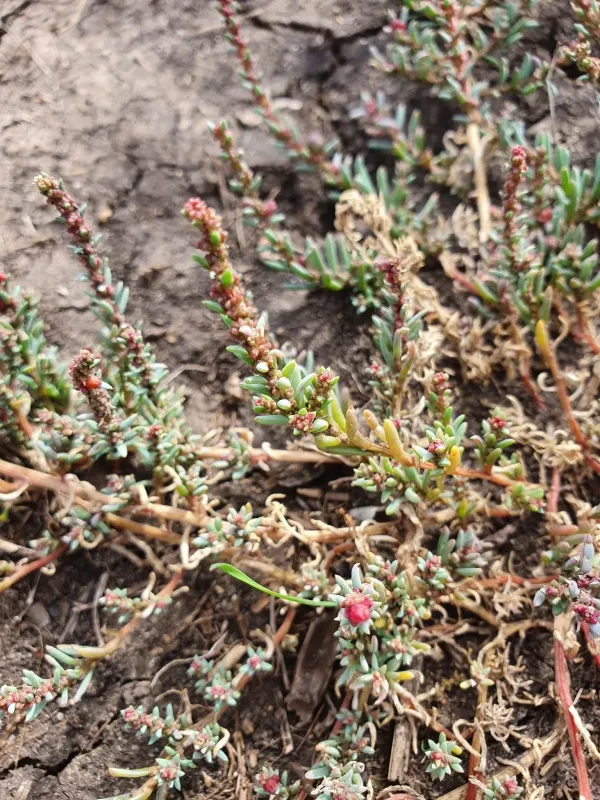
Description
Growing requirements
Suaeda corniculata belongs to the Amaranthaceae family and is recognized as a specialized halophyte, adapted to thrive in highly saline environments. This herbaceous annual is typically found in salt marshes and alkali flats, where soil salinity prevents the growth of standard agricultural crops.
The plant features succulent leaves and stems, which serve as essential storage for water and electrolytes. This adaptation allows the species to maintain physiological processes under osmotic stress, effectively regulating its internal salt concentration to survive in harsh conditions.
Climate requirements for this culture are centered on high light intensity and thermal tolerance. It performs best in arid and semi-arid regions where the intense sun promotes rapid metabolic growth. Excessive shading is detrimental, often leading to stunted development and reduced biomass production.
Soil requirements are unique, as the plant prefers clayey or loamy soils with significant salinity levels. Unlike conventional crops, Suaeda corniculata thrives on poor, salty lands, making it an excellent candidate for the reclamation of degraded fields that have been abandoned due to excessive soil salinity.
Agronomic management involves optimizing seeding rates to ensure uniform cover across the field. Proper spatial distribution is necessary to balance the plant's growth requirements with its role in stabilizing the soil surface and preventing the erosion often associated with bare saline areas.
Yield
The primary agricultural use of Suaeda corniculata is in the production of forage for livestock in regions where conventional crops fail. It provides essential grazing material for camels, sheep, and goats, serving as a reliable source of minerals and nutrients in salt-affected grazing lands.
Beyond its forage value, the plant is increasingly studied for its potential in phytoremediation. By accumulating salt and other minerals from the soil into its biomass, it helps in the gradual desalination of agricultural land, improving the environmental profile of previously unusable fields.
Historically, members of the Suaeda genus were harvested for the production of potash, a potassium-rich ash used in soap manufacturing and glass production. This historical utility provides a foundation for exploring the industrial use of Suaeda corniculata in modern bio-based production cycles.
Yield capacity is largely dependent on available moisture levels during the early stages of growth. While the plant is highly salt-tolerant, it still requires a period of adequate water availability to develop a robust root system and establish the vegetative biomass necessary for a productive harvest.
The sustainability of harvesting this crop depends on careful management of grazing patterns and biomass removal. By allowing the plants to seed periodically, producers ensure the longevity of the stand and maintain the ecological balance of the saline area for continuous future production.
Main diseases and pests
Typical plant diseases in Suaeda corniculata are limited due to its natural salt-accumulating chemistry, which acts as a deterrent to many common fungal pathogens. However, root rots can develop if the soil remains saturated or poorly drained for extended periods, particularly in cooler temperatures.
Insect pests include a small group of specialized herbivores that have evolved to consume halophytic vegetation. While these pests can cause minor defoliation, they rarely reach levels that threaten the overall crop survival unless the density of the planting is extremely low.
Weed competition is a significant concern only during the germination phase. As a slow-starting plant in some environments, Suaeda corniculata may need assistance to overcome faster-growing, salt-tolerant invasive species before it can fully establish its dominance in the field.
Overgrazing stands as a major threat to natural populations of this species. When livestock graze too heavily without intervals for recovery, the soil surface loses its protective cover, leading to erosion and the potential loss of the seed bank required for the next growth season.
Environmental stressors such as extreme soil compaction and severe wind erosion are potential threats that can impact plant vigor. However, the deep and extensive root systems of Suaeda corniculata act as a natural defense, stabilizing the soil and mitigating the impacts of these abiotic factors.