
Suaeda americana
Suaeda americana
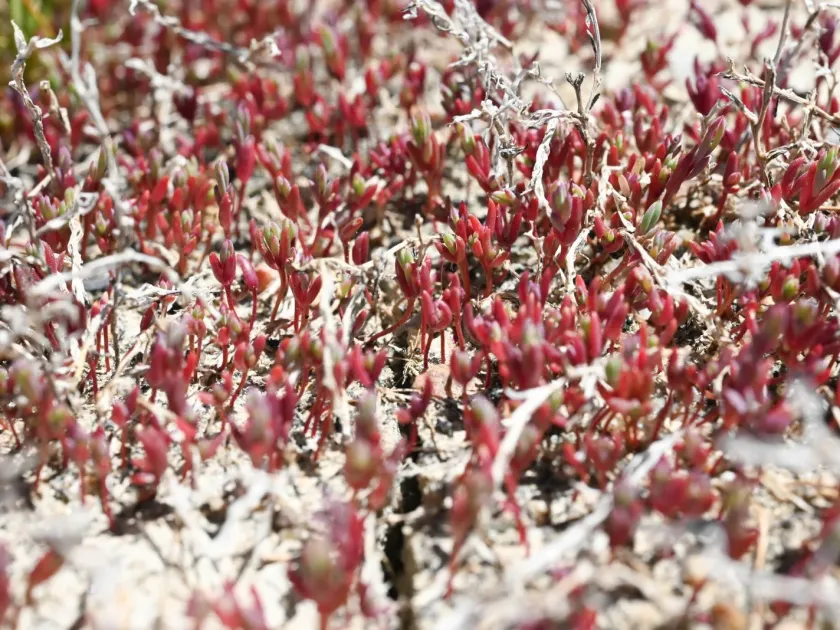
Description
Sowing dates
Suaeda americana is an annual halophytic plant belonging to the Amaranthaceae family, widely recognized for its ability to thrive in saline environments.
The sowing process begins in early spring, once the soil temperature is sufficient to support consistent germination and root establishment.
Seeds are typically sown at a depth of 1–2 centimeters, ensuring they maintain enough moisture to sprout while remaining accessible to sunlight.
Proper spacing is maintained between rows, usually ranging from 45 to 60 centimeters, to allow for equipment passage and effective weed management.
Seeding rates are carefully calculated based on seed purity and germination tests to achieve the desired plant density across the cultivation area.
Growing requirements
The primary environmental requirement for Suaeda americana is the presence of saline or alkaline soil, where it exhibits superior growth compared to other crops.
This species requires high light exposure throughout its growing season and does not perform well in shaded conditions or near competing structures.
While known for its drought tolerance, the crop shows improved biomass production when supplemented with limited irrigation, even using brackish water.
The soil structure should be relatively loose to facilitate root development, though the plant can adapt to various soil textures if drainage is adequate.
Maintaining a specific alkaline pH range is beneficial for the plant, aligning with its natural habitat where competitive pressure from other flora is low.
Yield
The yield of Suaeda americana depends largely on the management of soil salinity and the availability of water during critical growth phases.
This crop is primarily valued for its green biomass, which serves as a sustainable source of fodder in regions where traditional agriculture is challenging.
Optimal yields are achieved through precision management, ensuring that plants have enough space to develop their characteristic branched structure.
Seed production requires careful monitoring, as the plant's maturation period can be extended depending on local temperature fluctuations and moisture levels.
By leveraging saline land for this crop, farmers can achieve consistent production in areas that were previously considered unproductive or barren.
Main diseases and pests
Root rot represents the most significant threat to the crop, particularly when soil moisture levels are excessive due to poor drainage or over-irrigation.
Common insect pests, including various types of beetles and aphids, may occasionally affect young stands, necessitating timely field inspections.
Weed management is vital during the early establishment phase, as the plant grows slowly and can be easily outcompeted by aggressive weeds.
Disease prevention relies on maintaining a balanced rotation and avoiding the overuse of chemical agents that could disrupt the local soil ecology.
Early identification of pest populations is essential for implementing biological controls, which help preserve the quality of the green forage.
Harvesting
Harvesting for forage purposes should occur before the stems become overly lignified, ensuring the highest nutritional quality for livestock consumption.
When collecting seeds, the crop should be harvested once the fruits reach full maturity, evidenced by a distinct color change in the plant tissue.
Mechanical harvesting requires precise equipment settings to ensure that the small seeds are effectively captured and not lost during the cutting process.
Post-harvest processing involves cleaning the seeds of debris and drying them to a moisture content of approximately 12 percent to ensure stable storage.
The remaining plant residues can be effectively managed to enhance soil organic matter, promoting better conditions for subsequent crop cycles.