
Spiked seablite
Suaeda spicata
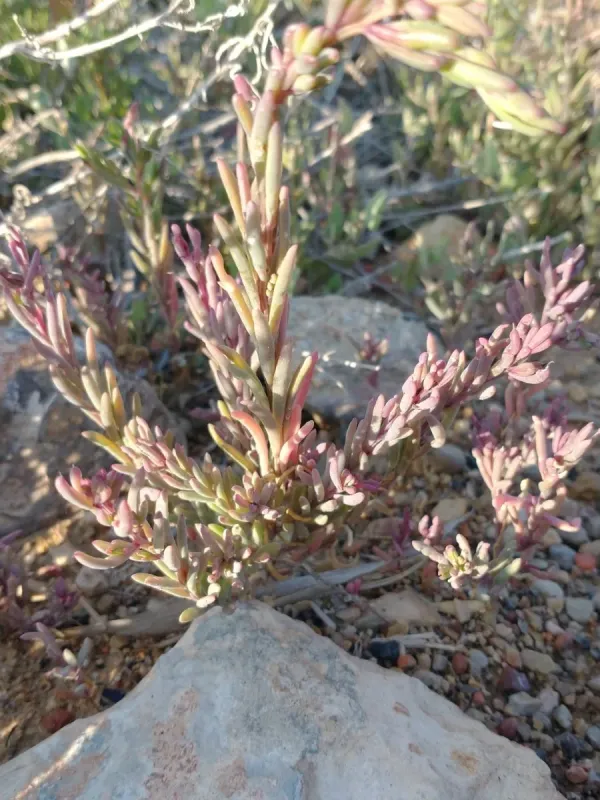
Description
Sowing dates
Spiked seablite is a typical halophyte, so sowing is performed during periods of sufficient moisture when soil salinity in the top layer is minimal. Early spring is considered the optimal time for planting, immediately after snowmelt, when the soil has been leached by rainfall or meltwater.
The seeds of this crop demonstrate high adaptability for germination under specific saline habitat conditions. Sowing is usually carried out via surface broadcasting or minimal soil covering, as the small seeds require close contact with a moist substrate to break dormancy.
In commercial cultivation, it is essential to ensure stable soil moisture during the initial seedling development phases. Moisture deficits at this stage lead to a sharp decline in germination rates, which negatively impacts the final stand density of the crop.
To improve germination energy, it is recommended to stratify the seed material under low-temperature conditions. This practice helps synchronize seedling emergence and ensures uniform development of the crop during the early stages of growth.
The sowing pattern depends on the production objective: row planting is typically used for biomass harvesting, while wide-row technology is applied for seed production plots. Wider spacing facilitates better development of the root system and reproductive structures.
Growing requirements
The crop belongs to the Amaranthaceae family and is a succulent plant adapted to extreme salinity. It possesses the capability to accumulate salts within its tissues, making it an indispensable tool for the reclamation of degraded solonchak (saline) lands.
Spiked seablite prefers open, sunny locations with high insolation levels, as the plant is highly heliophilic. Shading leads to stem elongation and a significant decrease in total biomass productivity per hectare.
Soils for cultivation should have a specific chemical composition with high concentrations of chlorides and sulfates. While conventional agricultural crops perish in such environments, spiked seablite thrives, acting effectively as a biological ameliorant.
The temperature regime should be moderately warm during the growing season. The plant exhibits high resistance to temperature fluctuations, allowing it to survive in sharply continental climates, provided there is a minimum level of available soil moisture.
A crucial requirement is the absence of standing water on the soil surface, despite the plant's salt tolerance. Prolonged waterlogging can induce root collar rot, especially under conditions of high ambient temperatures.
Yield
The productivity of spiked seablite is largely determined by the salinity level of the soil and the availability of nitrogen nutrition. Under favorable conditions, the yield of green biomass can reach levels suitable for forage utilization.
Seed yield varies significantly depending on weather conditions during the latter half of the summer. To obtain high-quality planting material, timely harvesting is required to prevent premature shedding of the fruits.
The biomass of the plant is rich in mineral substances, making it a valuable component when balancing rations for livestock in arid regions. However, the inclusion rates in animal feed must be managed carefully due to high salt content.
Spiked seablite provides stable results on saline plots where other crops are unable to form an economically viable harvest. Utilizing this crop allows for the conversion of marginal lands into productive agricultural areas.
Cultivation efficiency is enhanced through the use of specialized genotypes adapted for intensive biomass accumulation. Breeding efforts in this area are creating new opportunities for developing agribusiness on otherwise barren saline soils.
Main diseases and pests
The main threats to spiked seablite crops are specific pests of halophytic flora, including various weevil species and aphids. These insects damage young shoots, which can lead to significant losses in the marketable portion of the harvest.
Fungal diseases rarely affect the plant in natural conditions; however, when agronomic practices are violated, outbreaks of root rot are possible. This typically occurs under conditions of excessive freshwater irrigation and poor drainage.
Competition from weeds is a significant factor during the early stages of crop development. Spiked seablite grows slowly in the first month, thus necessitating timely inter-row cultivation to keep weed pressure low.
Seed-feeding pests can cause substantial damage during the maturation phase of the crop. Preventive strategies include integrated crop rotation and the deployment of resistant plant genotypes.
Climatic stresses, such as sudden late frosts after the beginning of the growing season, may cause seedling death. Protecting the crops from such unfavorable factors remains a vital element of successful agricultural production.
Harvesting
Harvesting the green biomass of spiked seablite is carried out during the phase of peak nutrient accumulation, before active stem lignification begins. The timing of this operation is critical for maintaining the nutritional value of the raw material.
Standard mowers adjusted to the appropriate cutting height are used for harvesting. It is important to avoid damaging the root system to allow for potential regrowth of the aftermath, provided that climatic conditions permit a second cut.
Direct combining in dry weather is the preferred method for seed harvesting. Because seeds are prone to shattering upon full maturity, it is advisable to begin harvesting when the seeds reach the waxy stage of ripeness.
Post-harvest seed processing includes thorough cleaning to remove vegetative residues and drying to standard moisture levels. This ensures long-term viability of the seed material during storage.
Managing post-harvest residues on the fields promotes natural soil enrichment with organic matter. This is an important aspect of maintaining the fertility of lands dedicated to the cultivation of halophytic crops.