
Spreading sea-blite
Suaeda prostrata
Description
Growing requirements
Spreading sea-blite (Suaeda prostrata) is an annual plant belonging to the Amaranthaceae family. It is a specialized halophyte, capable of thriving in highly saline environments where standard crops fail to establish or produce yield.
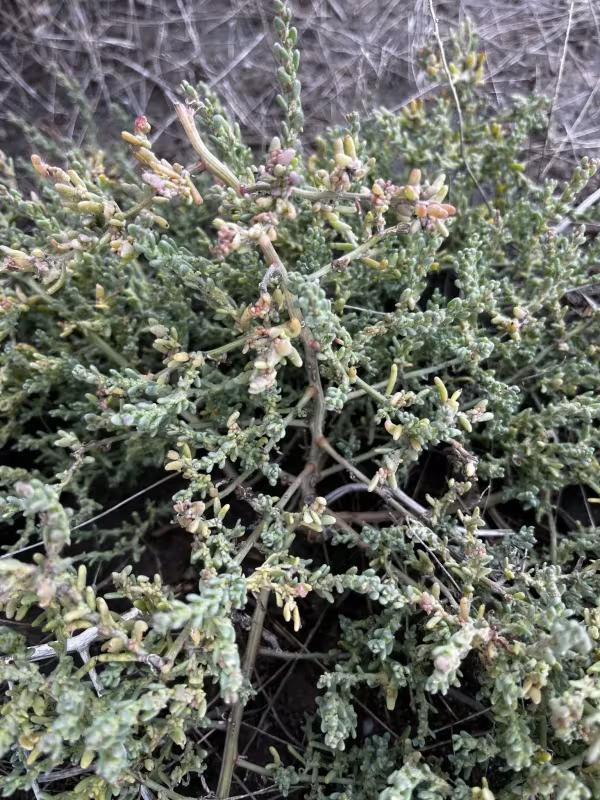
The plant features prostrate or ascending stems and succulent, linear leaves. This anatomical adaptation allows the species to maintain high water potential and physiological function under severe osmotic stress caused by soil salinity.
Geographically, it is distributed across arid and semi-arid regions, commonly found in saline flats, salt marshes, and inland salt-affected agricultural lands. It is a pioneer species often used to cover degraded, high-salt crusts.
The crop requires high solar radiation and is adapted to alkaline soil pH. While it tolerates high concentrations of sodium chloride, it benefits from sufficient soil aeration, which prevents root asphyxiation during the growth season.
Agronomically, it serves as a valuable forage resource in marginal lands. The integration of Suaeda prostrata into saline land management systems provides both soil stability and a source of biomass for livestock grazing or industrial processing.
Main diseases and pests
The plant is generally resilient to many common agricultural pathogens due to its specialized chemical composition and high salt content in tissues. However, it can be susceptible to soil-borne fungi if water management is poor.
Insects that target succulent-leaved species, such as specific beetles and aphids, may pose a risk. Integrated pest management (IPM) techniques should focus on threshold monitoring rather than prophylactic chemical applications.
Root rot is the most significant threat to biomass production. It is typically associated with compacted soils or inadequate drainage patterns in saline plots where moisture accumulates after rainfall.
Weed management during the emergence phase is critical for successful stand establishment. Once the canopy covers the soil surface, the crop effectively outcompetes most invasive weeds within its habitat.
Environmental stress, such as extreme late-season drought combined with high temperatures, can induce premature senescence. Regular, controlled irrigation—if saline water is available—is recommended for optimal vegetative yields.