
Suaeda palaestina
Suaeda palaestina
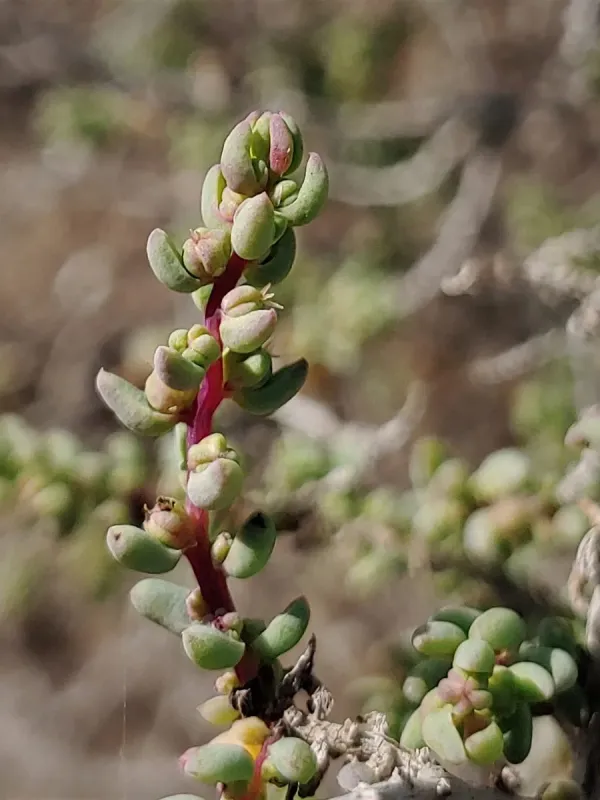
Description
Growing requirements
Suaeda palaestina belongs to the Amaranthaceae family and is recognized as a salt-tolerant halophyte. Naturally found in the arid landscapes of the Middle East, this species has evolved to thrive in soils with high salinity levels that would be toxic to most conventional crops.
The plant exhibits distinctive botanical traits such as fleshy, succulent leaves and stems. These adaptations serve a crucial physiological function, allowing the plant to store significant amounts of water while regulating salt concentration within its tissues.
Requirements for soil conditions are unique, as the plant actively benefits from and relies on the presence of soil salts. In an agricultural context, it is frequently utilized for phytoremediation, aiding in the biological reclamation of saline-degraded farmlands.
Environmental conditions require intense sunlight and high heat tolerance to ensure optimal development. Suaeda palaestina is highly drought-resistant and does not require freshwater irrigation, which allows for sustainable farming models using saline groundwater.
Economic usage of this crop includes the production of forage for livestock in arid regions and the potential extraction of oil or industrial biomass. It represents an innovative solution for utilizing non-arable, hypersaline lands for sustainable food or energy production.
Main diseases and pests
Suaeda palaestina possesses a naturally robust defense system, making it largely resistant to common agricultural diseases and pests prevalent in traditional crops.
The primary threat to the crop is waterlogging. Excessive moisture in the soil can lead to anaerobic conditions around the roots, resulting in fungal rot and diminished plant vigor.
Pest pressure is minimal, as the high salt content in the foliage serves as an effective deterrent against many common herbivores and insect species.
Standard agronomic practices suggest keeping the field layout clear of weeds, although the plant typically outcompetes other vegetation in highly saline environments.
To ensure a healthy harvest, farmers should focus on soil aeration and precise irrigation management rather than chemical disease control measures.