
Suaeda nudiflora
Suaeda nudiflora
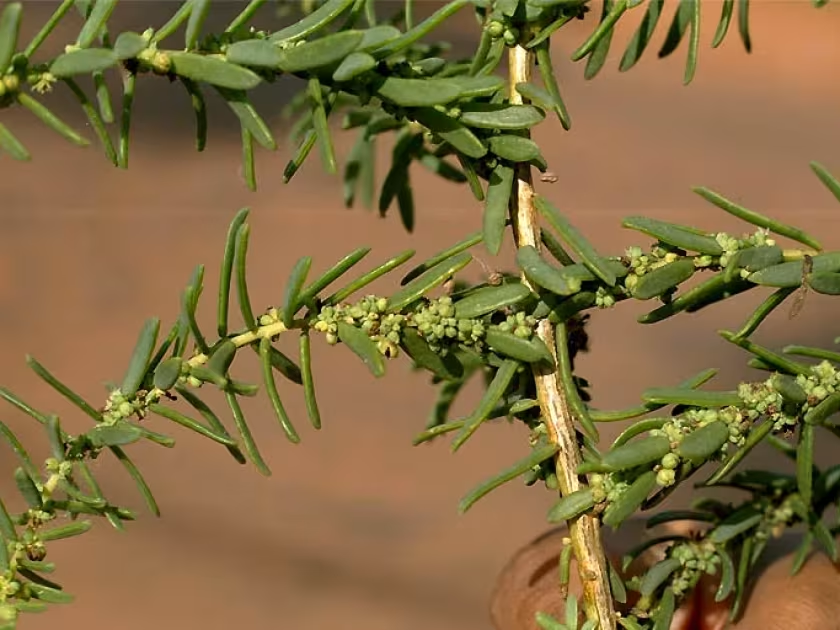
Description
Sowing dates
Suaeda nudiflora is a resilient halophyte that requires specific sowing techniques adapted to its natural salt-affected environment. Successful establishment depends heavily on managing soil salt concentrations during the initial growth phase.
The optimal sowing time is early spring, which allows the plant to take advantage of soil moisture reserves. This moisture helps in temporarily leaching surface salts, which is critical for successful germination.
Seeds should be sown near the soil surface or with very light coverage. Because the seeds are tiny, deep burial typically results in poor germination rates and stunted early development.
Selecting the right site involves analyzing the soil salinity gradient. The plant performs best when it can gradually adapt to the increasing salinity as its root system matures and expands.
Planting density should be adjusted based on the intended end-use, whether it is for large-scale biomass production for phytoremediation or smaller plots for seed multiplication and botanical study.
Growing requirements
Suaeda nudiflora belongs to the Amaranthaceae family and is strictly a halophyte, meaning it requires high levels of salinity to thrive. In non-saline environments, the plant may lose its competitive advantage.
High intensity of direct sunlight is essential for optimal growth. The plant utilizes intense light to fuel photosynthesis, which provides the energy needed to regulate its internal osmotic pressure.
The soil must provide good aeration even though it contains high salt content. Poor drainage can lead to anaerobic conditions around the roots, which will hinder the plant's growth regardless of its salt tolerance.
Temperature requirements generally fall within the temperate to subtropical range. Suaeda nudiflora shows high heat tolerance and is capable of surviving significant periods of atmospheric and soil water stress.
Management practices focus on monitoring salt concentration and ensuring water availability. Fertilizer application is rarely necessary as the plant is naturally adapted to nutrient-poor, saline conditions.
Yield
Biomass yield for Suaeda nudiflora is highly dependent on the salinity levels and water accessibility. Under balanced environmental conditions, the plant can produce significant vegetative material.
Productivity is measured not just by mass but by the plant's ability to sequester minerals. This characteristic is particularly valuable for lands undergoing phytoremediation to restore soil quality.
When used as a fodder supplement, the yield evaluation considers the nutritional density of the leaves and stems. Proper harvesting timing is essential to maximize the concentration of minerals and organic matter.
Seed production is moderate. To ensure a stable future crop, seeds must be harvested immediately after the pods turn brown to prevent natural shattering and seed loss in the field.
Ongoing agricultural research aims to identify superior cultivars that demonstrate rapid growth rates in extreme salinity, which would further increase the economic viability of the crop.
Main diseases and pests
Suaeda nudiflora exhibits a high level of natural resistance to common agricultural diseases. The high osmotic pressure within its cells acts as a strong barrier against many fungal pathogens.
Soil-borne pests may pose a threat to emerging seedlings, but established populations are generally robust. Proper field preparation before sowing is the best defense against early-stage pest infestation.
Risk of bacterial rot increases in areas where there is standing water or poor drainage. This emphasizes the importance of maintaining soil structure and water management protocols during the wet season.
Insect herbivory is generally low because the salt accumulation in the plant tissues acts as a natural deterrent. This reduces the need for chemical insecticides, making the crop environmentally friendly.
Vigilance is still recommended in regions with changing humidity patterns, as rapid fluctuations can occasionally create favorable conditions for niche pests that may damage terminal buds.
Harvesting
Harvesting Suaeda nudiflora is best timed during the peak of the vegetative phase before seed production begins. This timing ensures the highest biomass quality for agricultural or remediation purposes.
Mechanical harvesting is feasible using standard forage equipment, provided the cutting height is adjusted to avoid damaging the crown of the plant, which may allow for secondary regrowth.
For phytoremediation projects, the entire harvested biomass must be removed from the field. This ensures that the salt and minerals sequestered in the plant tissues are physically extracted from the soil.
Post-harvest processing involves drying the biomass, which is crucial because the high moisture content of the tissues can lead to spoilage if the crop is not stored in a well-ventilated area.
The harvest season generally concludes by late summer or early autumn. Following the harvest, the field should be evaluated for its remaining salinity levels to determine the success of the remediation cycle.