
Suaeda linearis
Suaeda linearis
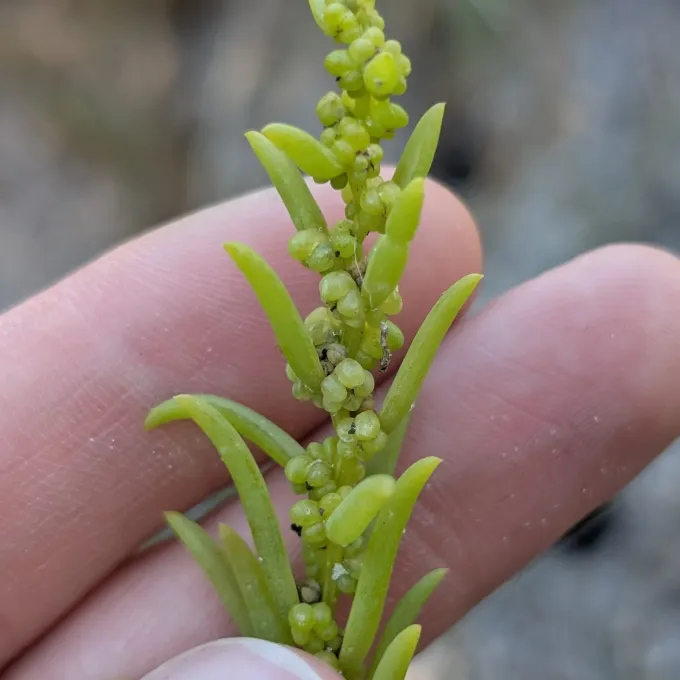
Description
Sowing dates
Suaeda linearis is an annual halophytic plant belonging to the Amaranthaceae family. Its biological nature allows it to thrive in high-salinity environments, making it a unique candidate for cultivation on marginal lands that are unsuitable for traditional crops.
The sowing season typically begins in early spring once soil temperatures reach a threshold suitable for germination. Ensuring the seedbed is finely prepared is crucial for small seeds to establish root contact effectively.
Seeds should be sown at a shallow depth of approximately 1-2 cm. Using precision planters helps achieve optimal plant density, preventing the overcrowding that can limit growth in saline conditions.
Row spacing is generally maintained between 30 and 45 cm to allow for weed management and adequate light penetration. Uniform emergence is the primary goal, which can be achieved through light soil compaction after sowing.
Adequate moisture at the time of sowing is essential for breaking dormancy and ensuring early seedling development. In arid climates, irrigation may be required during the establishment phase to support the root system's growth.
Growing requirements
The defining requirement for Suaeda linearis is its need for saline soils. This plant acts as a natural accumulator of salts, which makes it highly efficient in environments where other plant species would suffer from toxicity.
Full sun exposure is mandatory for healthy development. The plant’s metabolic pathways are optimized for high light intensity, which drives its rapid biomass accumulation during the growing season.
Soil aeration is critical, even in salt-marsh conditions. While the plant can tolerate salinity, it requires a well-draining soil structure to prevent waterlogging, which can cause root rot under unfavorable weather conditions.
Temperature requirements are generally moderate to warm. The plant shows significant heat tolerance, which allows it to maintain its growth rate throughout the hottest months of the year without entering early senescence.
Nutrient management should focus on maintaining a balanced soil environment. While the plant thrives in poor, salty soils, targeted applications of micro-nutrients can significantly improve seed yield and biomass quality.
Yield
The yield potential of Suaeda linearis is largely determined by the degree of soil salinity and the availability of essential water. High biomass production is achievable when the plant is grown in environments where it can effectively manage salt uptake.
Seed yield varies depending on local environmental conditions and the maturity stage at harvest. High-quality seeds can be produced through careful management of the reproductive phase and timely intervention.
Integrating Suaeda linearis into agricultural systems offers the dual benefit of potential forage production and soil reclamation. Improving the soil quality over time allows for increased yields in future cultivation cycles.
Reliable yield performance in arid zones makes this crop a valuable asset for agricultural diversification. It provides stable green matter when other seasonal crops often succumb to heat and salt stress.
Long-term agricultural trials indicate that sustainable yields are achievable with consistent crop management practices. Farmers are encouraged to monitor soil changes to optimize plant spacing and fertilization strategies.
Main diseases and pests
Suaeda linearis possesses high natural resistance to many pathogens that commonly affect standard crops. Its unique physiology, including the compartmentalization of salts in cell vacuoles, creates a hostile environment for most fungal pathogens.
Soil-dwelling insects, particularly wireworms, may pose a risk to young seedlings during the initial development phase. Preventive measures like appropriate tillage and crop rotation help mitigate these threats effectively.
Root rot remains a concern if soil drainage is compromised. Managing irrigation to avoid standing water is the most effective preventative measure against soil-borne diseases in a commercial setting.
Sucking pests like aphids may occasionally appear during prolonged dry spells. Biocontrol agents and regular field scouting are recommended as the first lines of defense to maintain crop health.
Systemic disease outbreaks are rare in Suaeda populations due to the plant’s adaptive mechanisms. Focus should remain on maintaining soil health and preventing mechanical damage that could create entry points for opportunistic pathogens.
Harvesting
Harvesting Suaeda linearis should occur when seeds reach full physiological maturity. The stems should be monitored closely to ensure they are dry enough for efficient mechanical processing without excessive shatter loss.
The use of standard combine harvesters is possible with proper calibration for small-seeded crops. Reducing the header speed and adjusting the air flow minimizes losses during the threshing process.
Post-harvest management involves immediate cleaning and drying of the seeds. Maintaining moisture levels below 14% is essential for safe storage and to prevent the development of mold or mycotoxins.
For forage applications, the harvest should take place before the stems become overly lignified. This ensures the highest possible nutrient density and digestibility for livestock consumption.
Stubble management post-harvest involves incorporating residues back into the soil to improve organic matter content. This circular approach supports the long-term fertility goals of saline land management.