
Suaeda lehmannii
Suaeda lehmannii
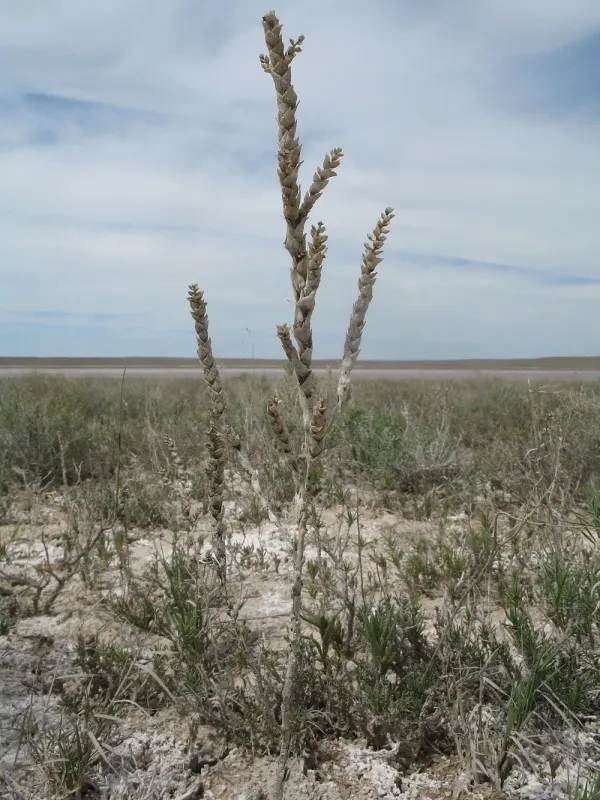
Description
Growing requirements
Suaeda lehmannii, belonging to the Amaranthaceae family, is a notable halophyte species. It is primarily known for its remarkable ability to thrive in highly saline environments where most traditional agricultural crops fail to germinate or grow.
This plant originates from the arid regions of Central Asia, where it is found in salt pans and saline steppes. It has evolved specialized succulent leaves and stems that function as water reservoirs, allowing it to maintain metabolic processes despite extreme osmotic stress.
Regarding soil requirements, this species flourishes in soils with high salt content, specifically favoring high sodium levels. It acts as a pioneer species in reclaiming degraded saline landscapes, helping to stabilize the soil surface and improve the ecological status of these areas.
The climate requirements for Suaeda lehmannii include high solar radiation and resistance to significant diurnal temperature variations. It is drought-tolerant and can survive long periods of water deficit, which makes it a resilient candidate for range management in arid zones.
Agrotechnical practices for this culture are primarily focused on maintaining natural populations or utilizing them for pasture improvement. Given its physiology, it requires minimal inputs, provided that the saline balance of the ecosystem is preserved to prevent invasive species encroachment.
Main diseases and pests
Suaeda lehmannii possesses a robust natural defense mechanism against many agricultural pests and diseases. Its high tissue salinity acts as a chemical barrier, deterring most generalist herbivores and pathogenic fungi that usually plague conventional crops.
Despite its resilience, the plant can be susceptible to specialized insects adapted to succulent halophytes. These insects may cause localized damage to the stems, although such occurrences rarely lead to large-scale mortality in healthy, undisturbed populations.
Fungal diseases are generally rare, but excessive humidity combined with poor drainage can trigger root rot in suboptimal conditions. Providing adequate soil aeration is crucial if the plant is managed in a controlled or cultivated environment.
Overgrazing poses the most significant threat to the biomass of this species. Unregulated grazing pressure leads to reduced photosynthetic capacity and the depletion of root reserves, which can ultimately cause the permanent loss of the vegetation cover in a given area.
Effective management strategies should focus on sustainable utilization, avoiding mechanical compaction of the soil, and monitoring for signs of invasive species that might exploit the plant's niche if the salinity levels in the soil are significantly reduced.