
Japanese seablite
Suaeda japonica
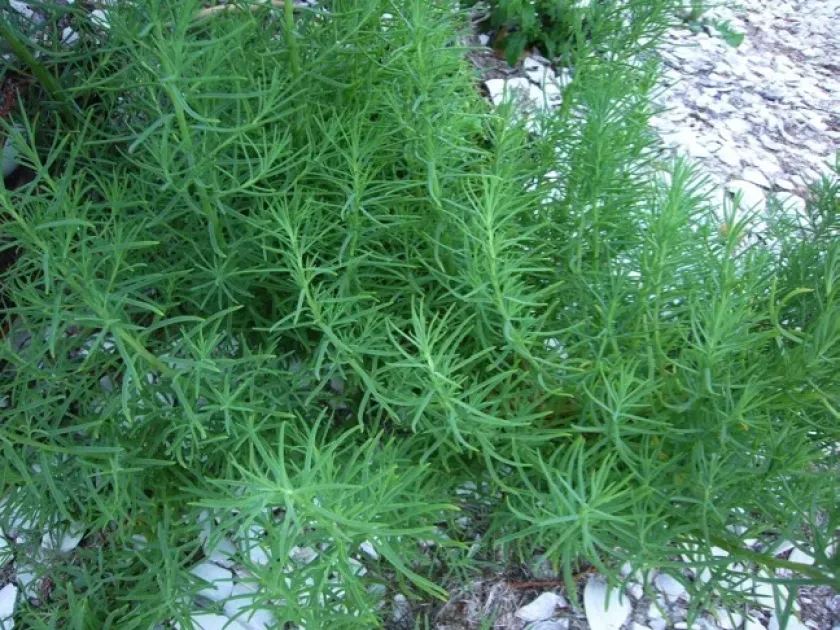
Description
Sowing dates
The Japanese seablite (Suaeda japonica) is an annual herbaceous plant belonging to the Amaranthaceae family, formerly classified within the Chenopodiaceae. Sowing should be carried out in spring when the soil temperature reaches 10–12°C, which ensures uniform germination.
In its natural habitat, seeds germinate after the snow melts and the salt concentration in the topsoil decreases. During cultivation, it is important to note that seeds may require pre-sowing treatment or soaking to enhance germination energy.
The optimal seeding depth is 1 to 2 centimeters, depending on the soil texture. Sowing deeper in heavy clay soils may result in reduced germination rates and sparse plant stands.
The seeding density should be sufficient for the canopy to close quickly, which naturally suppresses weed growth during the early stages of development. A row spacing of 30-40 cm is generally recommended for optimal plant growth.
Irrigation immediately after sowing is a critical factor, as seedlings are sensitive to the drying out of the topsoil. Maintaining stable soil moisture for the first two to three weeks is essential for establishing a healthy and uniform crop.
Growing requirements
As a notable halophyte, the Japanese seablite is capable of thriving in saline soils that are unsuitable for most other agricultural crops. The plant is well-adapted to high concentrations of sodium salts within the soil solution.
This crop has moderate climatic requirements, preferring open areas with full sun exposure. It is capable of withstanding temporary waterlogging, making it an ideal choice for coastal saline regions or tidal flats.
Ample sunlight is required for healthy development, as shading significantly reduces biomass accumulation. High levels of solar radiation promote photosynthesis and the concentration of beneficial metabolites in the tissues.
Soils should possess good moisture-holding capacity, as the plant actively absorbs water to manage salt concentrations through transpiration. The optimal pH range is from neutral to slightly alkaline.
The plant is resilient to temperature fluctuations, although it exhibits the fastest growth rates during the warm season. With adequate moisture, the Japanese seablite maintains high photosynthetic activity even in hot weather conditions.
Yield
The agricultural use of Japanese seablite is primarily focused on the production of green biomass, which can serve as a valuable raw material. The yield depends heavily on the soil salinity level and the overall nutrient management program.
With proper management, the crop produces a significant volume of vegetative mass within a single growing season. Under favorable conditions, the green biomass yield can reach several tons per hectare.
Due to its high biological productivity, this plant is increasingly viewed as an effective phytoremediator for salt-affected soils. Consequently, the economic value includes both biomass production and soil improvement.
Japanese seablite contains a range of essential vitamins and minerals, making it a promising feedstock for the processing industry. Studies confirm that quality indicators remain high even when grown under challenging saline conditions.
The stability of the yield makes this crop a reliable option for farms operating in difficult ecological conditions. Its high adaptability ensures predictable results even in regions prone to soil salinity.
Main diseases and pests
Despite its high ecological plasticity, the Japanese seablite can be susceptible to specific pathogens typical of the Amaranthaceae family. Fungal diseases, which develop under high humidity and dense planting, represent the main threat.
Powdery mildew can infect leaves, manifesting as a white coating that reduces photosynthetic efficiency. To mitigate these risks, it is essential to maintain proper seeding rates and ensure good airflow within the crop stand.
Among pests, insects that feed on plant sap, such as aphids, can cause significant damage. Early identification of infestation sites is crucial for applying appropriate biological or chemical control measures.
Root rot often occurs in areas with poor drainage and standing water. Prevention involves selecting suitable sites and implementing crop rotation strategies to prevent the accumulation of pathogens in the soil.
Constant monitoring of the crop is the best way to detect potential problems early. Using healthy seed material and promptly removing infected plants help maintain productivity and crop health.
Harvesting
Harvesting of Japanese seablite is conducted during the phase of maximum vegetative mass accumulation, typically just before active fruiting begins. Harvesting is usually performed mechanically using forage harvesters.
To ensure high-quality raw material, harvesting should be carried out in dry weather to prevent spoilage during storage. The optimal time is during the morning hours, after the dew has evaporated but before the heat of the day.
After mowing, the green mass must be quickly transported for processing or drying. It can be used as fresh fodder, ensiled for winter feeding, or processed for industrial extraction of compounds.
Seed harvesting requires waiting until the fruit is fully mature. Great care must be taken during this process, as seeds can easily shatter and disperse if the plants are handled roughly.
Post-harvest technology includes cleaning the raw material of impurities, which is critical for its subsequent use. Strategic planning of the harvest stages ensures maximum yield quality and process efficiency.