
Suaeda ifniensis
Suaeda ifniensis
Description
Growing requirements
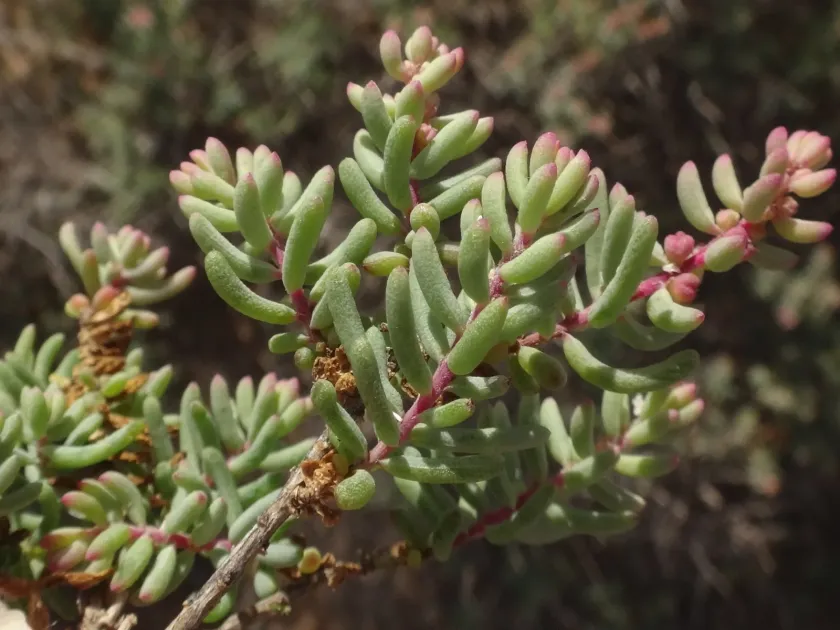
Suaeda ifniensis is a perennial subshrub belonging to the Amaranthaceae family, recognized for its exceptional adaptation to hypersaline environments. As a true halophyte, this plant thrives in conditions that would cause osmotic stress and plant death for typical agricultural crops.
The botanical structure of this species features succulent stems and foliage, which serve as essential storage organs for water and mineral solutes. This specialized physiology allows the plant to maintain turgor and continue photosynthetic processes in arid climates characterized by extreme sodium concentration.
Originating from the arid regions of North Africa, specifically in areas bordering the Atlantic, the species is naturally distributed in habitats with poor soil quality. Its native environment consists of sandy and gravelly substrates where the concentration of salts is consistently high throughout the year.
Cultivation requirements involve full sun exposure and minimal soil nutrition, as the plant is specifically adapted to low-nutrient, salt-rich substrates. Sustainable agricultural practices for Suaeda ifniensis focus on utilizing marginal lands where traditional crop production is economically and biologically unfeasible.
Economically, the plant is primarily utilized as a forage crop for camel and small ruminant grazing in desertified regions. Furthermore, its potential for phytoremediation and soil stabilization makes it a subject of interest for environmental management projects aimed at reclaiming degraded saline soils.