
Stylosanthes macrocephala
Stylosanthes macrocephala M.B. Ferr. & S. Costa
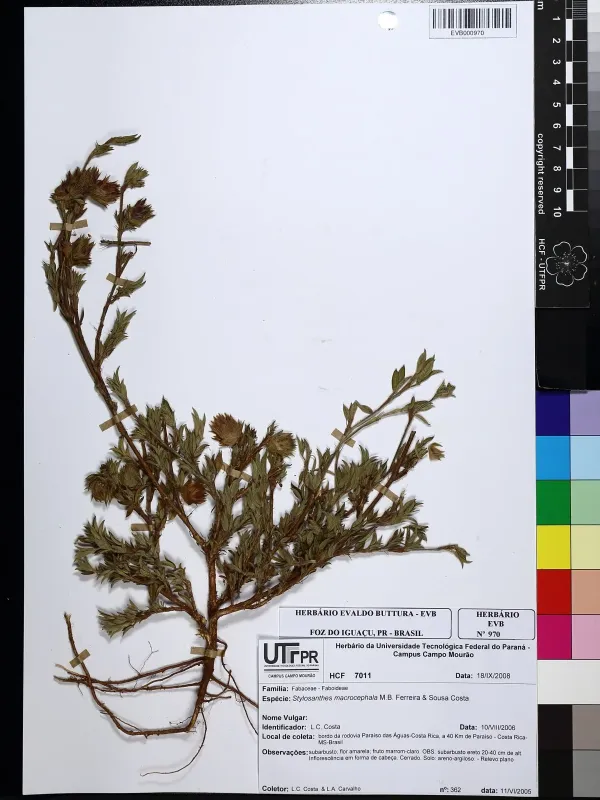
Description
Growing requirements
One of the primary advantages of this species is its exceptional tolerance to poor soil quality. It grows remarkably well in acidic, high-aluminum, and low-phosphorus soils, environments where most conventional forage legumes would fail to establish.
The ideal climate for this crop is characterized by distinct wet and dry seasons. While it exhibits great resilience to drought, it requires a sufficient amount of rainfall during the establishment phase to ensure the root system is well-developed before the dry season begins.
Temperature requirements are strictly tropical; the plant grows best in warm conditions. It is extremely sensitive to frost, which can kill the aerial parts of the plant, meaning it is not suitable for cultivation in temperate climates with cold winters.
Successful cultivation requires careful seed management. Seeds often have a hard, impermeable seed coat, necessitating mechanical or chemical scarification to improve germination rates. Inoculation with the correct rhizobia strain is also critical for optimal nitrogen fixation.
Regarding maintenance, while established plants are hardy, they benefit from phosphorus fertilization during the initial growth period. Controlling competing weeds during the first few months is essential, as the seedlings develop slowly and can easily be outcompeted.
Yield
Yield potential of Stylosanthes macrocephala is highly dependent on environmental conditions and management practices. Under favorable conditions with adequate rainfall, it can produce a substantial amount of biomass that persists well into the early stages of the dry season.
The dry matter yield is generally considered moderate to high for a tropical legume grown on marginal lands. When integrated into pastures with compatible grasses, it can significantly increase the total productivity of the grazing system per hectare.
Managing the harvest or grazing intensity is vital for sustaining yields over several years. Overgrazing reduces the plant's ability to store energy in its roots, which subsequently lowers the biomass yield in the following growing season.
Seed production yields are also significant, allowing for easier expansion of pastures. However, the timing of seed harvest must be precise to minimize losses due to natural dehiscence, which is a common trait in this species as it matures.
Regular monitoring of forage quality is recommended, as the nutritional profile remains high until the plant enters the reproductive stage. Strategic utilization ensures that the highest amount of protein is available to livestock when they need it most.
Main diseases and pests
The most significant threat to the crop is anthracnose, caused by the fungus Colletotrichum gloeosporioides. This disease thrives in humid, warm conditions and can cause severe defoliation, dramatically reducing the quality and quantity of forage available.
Various insect pests, including stem borers and foliage-feeding larvae, pose a constant threat. Integrated pest management strategies are often required to maintain crop vigor and prevent localized outbreaks from spreading across the pasture.
Poor drainage is a major environmental threat to the plant's health. While it is highly drought-tolerant, it does not tolerate waterlogging, which often leads to root rot and sudden plant mortality in depressed or heavy soil areas.
Competition from aggressive native grasses or weeds during the establishment phase remains a primary concern for growers. Without proper field preparation and early weed control, the young stands may be completely shaded out and fail to persist.
Finally, excessive fire frequency in savanna environments can damage the plant's crown. While the species has some fire adaptation, frequent or intense burning cycles will degrade the stand and reduce its long-term viability as a pasture component.