
Stylosanthes guianensis
Stylosanthes guianensis (Aubl.) Sw.
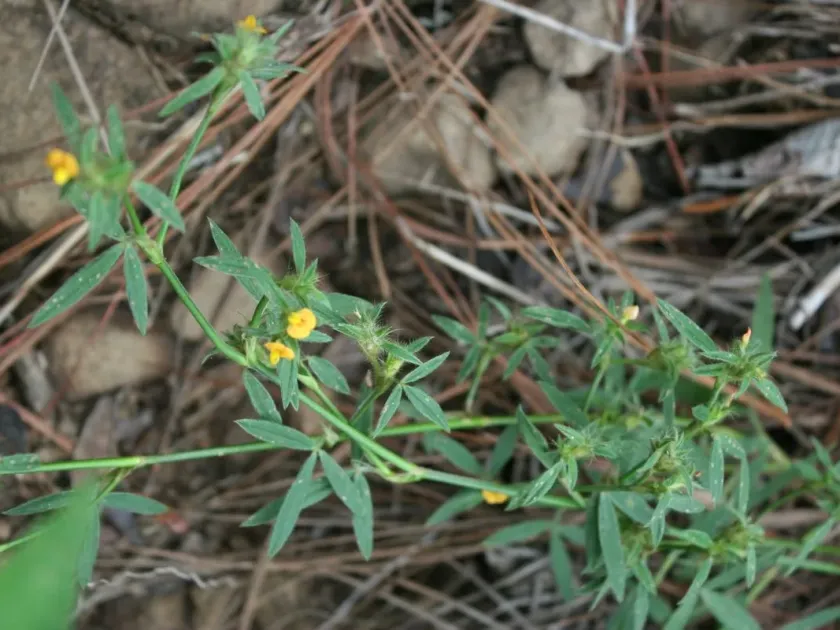
Description
Sowing dates
Stylosanthes guianensis is typically sown at the beginning of the rainy season to ensure optimal germination and establishment. This tropical legume requires consistent moisture during the early stages of development to build a robust root system.
The seeding rate generally ranges from 3 to 5 kilograms per hectare, depending on the method of sowing. Because the seeds have a hard seed coat, scarification is highly recommended to improve overall germination rates significantly.
Sowing depth should be shallow, ideally between 1 to 2 centimeters, as the small seeds lack the energy reserves to emerge from deeper soil layers. Proper soil-to-seed contact, achieved through light rolling, is crucial for field establishment.
In pasture improvement programs, this legume is often overseeded into existing grass stands. This practice improves the crude protein content of the forage without requiring the total destruction of the primary vegetation cover.
Timing is essential when intercropping with aggressive grasses to prevent shading and competition during the initial growth phase. Strategic management of planting times helps the legume establish itself alongside companion species.
Growing requirements
Stylosanthes guianensis is a member of the Fabaceae family, highly valued for its ability to thrive in acidic, nutrient-poor soils. It is frequently used in land reclamation projects to improve soil fertility through nitrogen fixation.
The crop prefers well-drained soils and does not tolerate waterlogging or flood-prone conditions. It is remarkably resilient to drought once established, making it suitable for regions with seasonal rainfall patterns.
The optimal temperature for vigorous growth ranges from 25 to 30 degrees Celsius. While it prefers full sun, some varieties exhibit tolerance to partial shade, facilitating its use in agroforestry systems.
This legume effectively forms symbiotic relationships with Bradyrhizobium bacteria, which perform atmospheric nitrogen fixation. This process significantly reduces the reliance on external nitrogen fertilizers in agricultural systems.
Phosphorus is the primary limiting nutrient for this crop in many tropical soils. Applying phosphate fertilizers often results in a dramatic increase in biomass and enhances the nutritional quality of the forage.
Yield
Productivity levels for Stylosanthes guianensis can reach between 5 and 12 tonnes of dry matter per hectare annually under optimal management. It remains a highly sought-after legume for high-quality animal nutrition.
The nutritional value is defined by high protein content, which can exceed 15 percent depending on the harvest stage and soil fertility. It serves as a superior supplement for grazing livestock in tropical climates.
Seed yield remains one of the primary agronomic challenges due to uneven flowering and seed shattering. Modern breeding efforts are focused on creating cultivars with synchronized maturity to improve harvest efficiency.
The biomass provides high-quality grazing throughout the year, especially during periods when other forage species become dormant or lose nutritional quality. Animals show high palatability for the crop in both fresh and dry forms.
As a deep-rooted legume, it effectively cycles nutrients from deeper soil layers, contributing to the overall health of the soil and providing residual nitrogen for future crops in the rotation.
Main diseases and pests
Anthracnose, caused by the fungus Colletotrichum gloeosporioides, is the most significant disease threat to Stylosanthes guianensis. It can cause devastating crop failure in humid, warm conditions.
Management of the disease relies heavily on the use of resistant varieties. Farmers are encouraged to select cultivars specifically adapted to their regional disease pressure to mitigate potential losses.
Various insect pests, particularly those targeting seeds and seedlings, can significantly impact population density. Integrated pest management strategies are often implemented to control populations without relying solely on chemicals.
Soil compaction can lead to poor root development, making plants more susceptible to secondary infections and root rot. Maintaining good soil structure is a vital preventive measure for crop health.
Maintaining proper field hygiene, including the removal of infected debris and preventing the introduction of pathogens, is essential for sustaining long-term productivity in large-scale fields.
Harvesting
Harvesting for hay should occur at the beginning of the flowering stage, which ensures the best balance between leaf mass and nutritional quality. Delaying harvest leads to stem lignification and reduced feed value.
When used as a pasture, grazing intensity should be carefully managed to avoid overgrazing. Maintaining a residual height of at least 15 centimeters is recommended to allow for rapid regrowth.
Hay production requires careful handling during drying to prevent leaf loss, as the leaves contain the highest concentration of protein. Mechanized balers should be calibrated to handle the forage gently.
Seed harvesting typically requires specialized machinery to capture seeds that would otherwise shatter during the collection process. Drying the seeds properly is necessary to prevent spoilage in storage.
Ensuring proper moisture content in stored hay or silage is critical to prevent mold development. Good storage practices ensure the nutritional integrity of the crop remains high throughout the off-season.