
Intermediate stylo
Stylosanthes guianensis (Aubl.) Sw. var. intermedia (Vogel) Hassl.
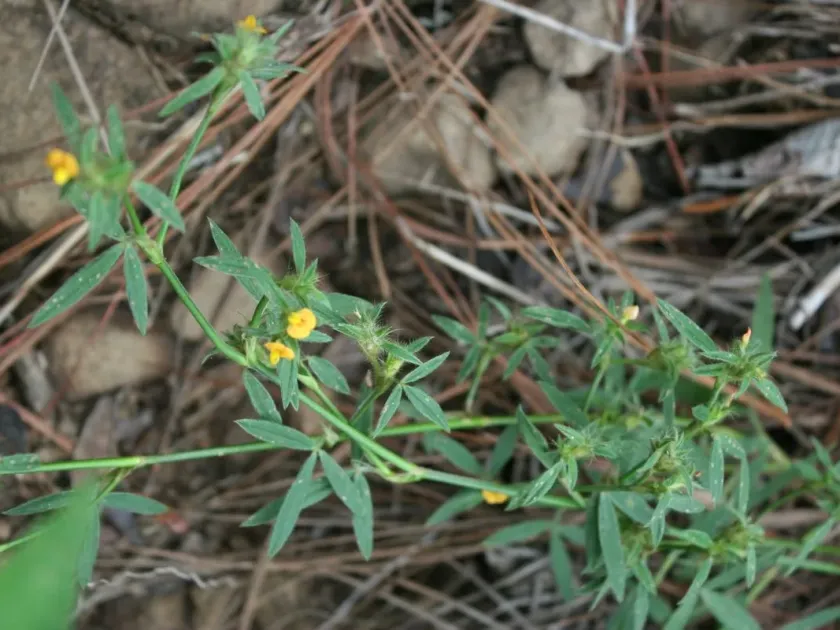
Description
Sowing dates
Intermediate stylo is typically sown at the beginning of the rainy season to provide seeds with the optimal moisture levels required for uniform germination. In its native tropical habitats, this usually corresponds with periods where soil temperatures are in the 20–25 degrees Celsius range.
Seeding rates vary depending on the sowing method: for standard row planting, a rate of 3 to 5 kg of seeds per hectare is sufficient. If intended for inclusion in pasture mixtures, seeding density is often reduced to maintain balance with companion grass species.
Seed scarification is highly recommended prior to planting because of the hard seed coat, which can delay or prevent germination. Furthermore, inoculating seeds with specific strains of Rhizobium bacteria is essential to ensure effective nodulation and nitrogen fixation.
The sowing depth should remain shallow, typically not exceeding 1–2 cm. Planting seeds too deep significantly depletes the plant's nutrient reserves, often resulting in seedling death before they can reach the soil surface.
Post-sowing soil compaction is advised to ensure firm contact between the seed and soil particles. This facilitates the efficient uptake of capillary moisture, which is critical during the fragile stage of seedling establishment.
Growing requirements
As a member of the Fabaceae family, this perennial legume features a strong taproot system. It is uniquely adapted to thrive in acidic, nutrient-poor soils where many other legumes struggle to survive, making it a valuable tool for land reclamation.
This crop prefers well-drained soils, as it is highly sensitive to waterlogging and poor drainage. It is naturally suited for tropical and subtropical climates that experience alternating wet and dry seasons.
Intermediate stylo exhibits remarkable drought tolerance, primarily due to its ability to extract moisture from deep soil layers. It typically requires an annual rainfall of at least 700–800 mm to maintain vigorous growth.
The ideal soil pH range for this variety is between 4.5 and 6.5. Its ability to tolerate soils with high aluminum content makes it an essential component for improving degraded agricultural landscapes in South America and Africa.
The plant is highly photophilic and requires full sun exposure. Significant shading from trees or tall weeds severely restricts growth and reduces the overall yield of the forage stand.
Yield
The annual yield of intermediate stylo generally ranges from 5 to 10 tons of dry matter per hectare, depending on soil quality and management. Yield can be significantly boosted through basic phosphorus fertilization.
The primary use of this crop is livestock grazing, where it shows excellent recovery potential after intensive defoliation. Its high nutritional profile, particularly in leaf protein, makes it an ideal feed for ruminant animals.
Beyond grazing, stylo is frequently cut for hay or silage production, providing a reliable source of high-quality forage during the dry season when green grass availability is minimal.
In crop rotations, it serves as an effective green manure, improving soil fertility. Through its symbiotic relationship with nitrogen-fixing bacteria, it enriches the soil with nitrogen, benefiting subsequent cereal or vegetable crops.
The productive life of a stand typically spans 3–5 years. After this period, it is recommended to replant the field to mitigate the build-up of pathogens and to maintain optimal stand density.
Main diseases and pests
Anthracnose, caused by the fungus Colletotrichum gloeosporioides, is the most significant disease affecting this crop. It can lead to severe losses, especially under conditions of high humidity and moderate temperatures.
The most effective strategy to counter this disease is the utilization of resistant cultivars and breeding lines, which have been specifically developed to withstand fungal infection.
Among pests, leaf-eating caterpillars and weevils cause the most noticeable damage by attacking both the foliage and reproductive structures. Regular monitoring is necessary during the plant's peak growing phase.
Root-knot nematodes can also hinder development, particularly in older stands. Crop rotation and avoiding continuous cultivation on the same plot are essential management practices to reduce nematode populations.
To prevent disease outbreaks, it is crucial to manage stand density effectively. Proper aeration within the canopy helps reduce humidity levels, making the environment less favorable for fungal proliferation.