
Townsville stylo
Stylosanthes humilis Kunth
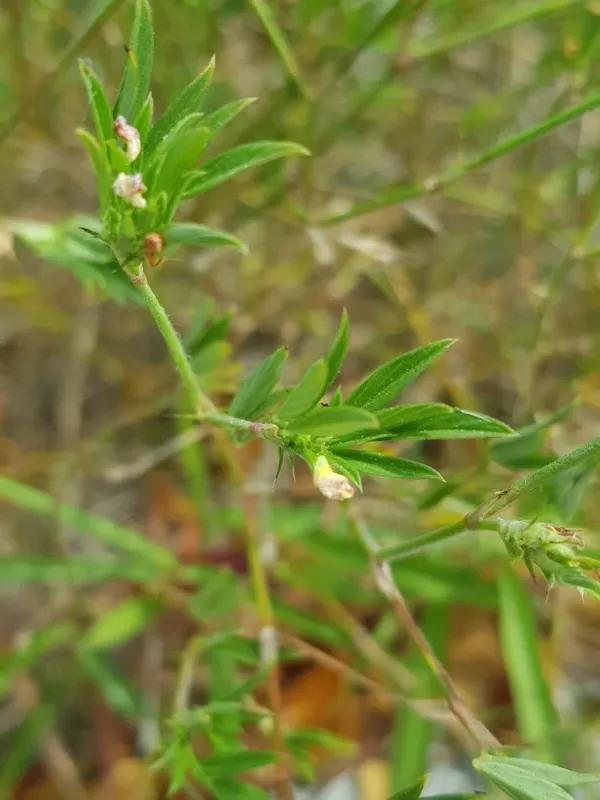
Description
Sowing dates
Townsville stylo is a tropical annual crop, so sowing times are strictly tied to the onset of the rainy season. In regions where it occurs naturally, planting is performed as soon as sustained rainfall begins to ensure seeds receive optimal moisture for germination.
A critical factor is the planting depth, which should not exceed 1–2 cm. Surface broadcasting followed by light rolling is often more effective than deep drilling, as it improves the soil-to-seed contact required for consistent emergence.
When used as a component of pasture mixtures, Townsville stylo is sown together with fast-growing grasses. In such cases, seeding rates are adjusted based on the desired stand density and the competitive nature of the companion species.
Before sowing, scarification of the seeds is highly recommended to break the hard seed coat. This significantly improves germination rates and ensures more uniform crop establishment in field conditions.
The optimal soil temperature for germination of this species ranges from +20°C to +25°C. At lower temperatures, seedling development slows down significantly, which may expose the young plants to weed competition.
Growing requirements
This crop belongs to the Fabaceae family and is valued for its ability to fix atmospheric nitrogen. Originating from South and Central America, it has spread to many tropical and subtropical regions globally as a high-quality forage legume.
Townsville stylo is extremely light-demanding and does not tolerate shading by other plant species. It is a heliophilic plant that thrives best in open areas receiving direct, full sunlight throughout the day.
The plant demonstrates remarkable adaptability to poor, acidic, and sandy soils where other legumes might struggle. However, for maximum growth and biomass production, it requires well-drained soils that prevent waterlogging.
The plant exhibits moderate drought tolerance, which allows it to persist through short dry spells. Nevertheless, consistent rainfall throughout the growing season is necessary to produce a high-yielding green forage crop.
As a typical tropical species, it cannot withstand even light frost. Any exposure to sub-zero temperatures results in the immediate death of the above-ground parts of the plant.
Yield
Agricultural use of Townsville stylo is primarily focused on establishing pastures for cattle. Thanks to the high nutritional value of its leaves, this legume significantly enhances the protein intake of grazing livestock.
Under intensive pasture management, Townsville stylo can provide multiple cuts of green forage per season. Yields are highly responsive to phosphorus fertilization, which is often the limiting factor in poor tropical soils.
Beyond grazing, the crop can be harvested for hay, although care must be taken due to the fragility of the dried leaves. Stylo hay is rich in protein and is readily consumed by cattle.
The plant possesses a strong ability to regenerate through self-seeding. If allowed to set seed at the end of the season, the plant population density increases significantly for the following year without the need for additional sowing.
As part of mixed pastures, Townsville stylo improves overall land productivity by enriching the soil with nitrogen. This makes it a crucial component in sustainable livestock programs across tropical regions.
Main diseases and pests
The primary biological threat to Townsville stylo is anthracnose, caused by fungal pathogens. This disease can decimate large areas of the crop under conditions of high humidity and elevated temperatures.
To mitigate disease risks, agronomists recommend using resistant cultivars and maintaining strict crop rotation. It is also important to avoid overly dense stands, as these create microclimates that favor fungal growth.
Pests such as weevils and various caterpillar species may cause localized damage to young seedlings. Generally, broad-spectrum insecticide application is not economically feasible in pastures, so management focuses on cultural and biological control methods.
Competition from aggressive weeds is a serious issue during the establishment phase. It is necessary to monitor the field closely and suppress weed growth to give the young stylo plants sufficient space to develop.
Nematode infestations affecting the root system can occur in light, sandy soils. Risk management involves selecting appropriate planting sites and maintaining soil health through the incorporation of organic matter.
Harvesting
Harvest timing depends on the intended use: for hay, the crop should be mowed during the peak flowering stage before significant seed shattering occurs. Early harvesting preserves the highest nutrient concentration in the foliage.
When harvesting for seed, it is vital to wait until the majority of the pods have turned brown. The harvesting process should use combine settings optimized for small-seeded legumes to prevent damage or loss during threshing.
After seed harvest, the remaining stubble can be utilized as low-quality fodder, though its nutritional value is significantly lower than that of the vegetative biomass. Frequently, after a seed harvest, the field is left to allow for natural reseeding.
Drying the mowed mass for hay must be conducted at moderate temperatures to avoid excessive leaf loss. Over-dried material becomes brittle, which complicates collection, baling, and transport operations.
Proper harvest organization allows farmers to secure high-quality feed while simultaneously ensuring the persistence and regeneration of the Townsville stylo stand for future seasons.