
Caribbean stylo
Stylosanthes hamata (L.) Taub.
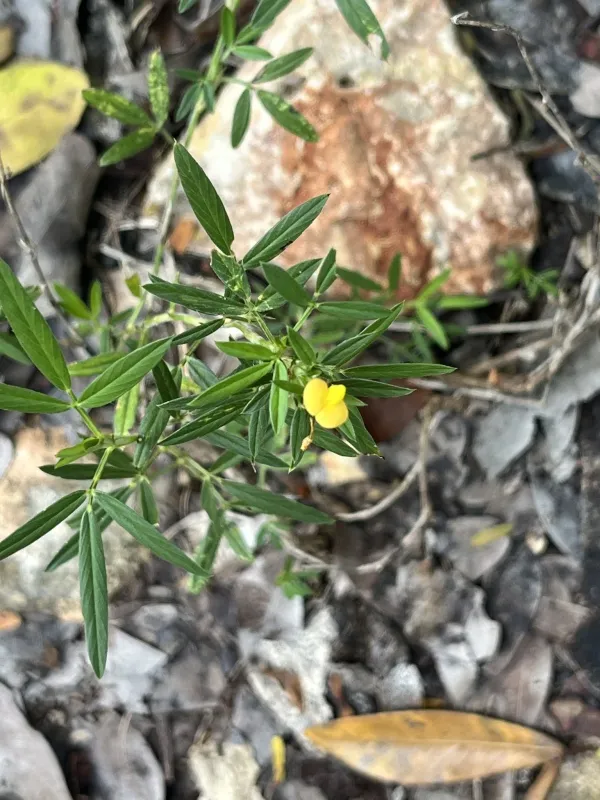
Description
Sowing dates
Caribbean stylo (Stylosanthes hamata) is a perennial leguminous plant widely valued for its role in tropical and subtropical forage systems. Sowing is typically carried out at the beginning of the rainy season to ensure sufficient moisture for seed germination.
Seeds are often treated with scarification to overcome hard seed coat dormancy, significantly increasing germination rates. The seeds should be sown shallowly, ideally not deeper than 2 centimeters, to allow for quick emergence.
When used for pasture improvement, the seeds can be broadcasted or drilled into existing grasslands. In these systems, moderate grazing is sometimes used to open up the canopy and reduce competition from native grasses.
Once established, the plant exhibits a high capacity for self-seeding, which helps maintain plant density in the pasture over several years without the need for periodic re-seeding.
The establishment phase requires careful management to ensure seedlings are not suppressed by aggressive weed growth. Weed control during the first few weeks is crucial for a successful stand.
Growing requirements
This species is highly adaptable to various soil types, particularly favoring well-drained soils. It performs exceptionally well on nutrient-poor and acidic soils where other legumes might struggle to survive.
Caribbean stylo thrives in environments with annual rainfall between 600 and 1500 mm. It is notably drought-tolerant, capable of surviving through dry seasons that would desiccate many other forage species.
Optimal growth temperatures range between 25°C and 30°C. While the plant is heat-tolerant, it is highly sensitive to frost and does not survive freezing temperatures, which restricts its usage to tropical and warm climates.
As a legume, it forms a symbiotic relationship with Rhizobium bacteria, enabling biological nitrogen fixation. This process enriches the soil, significantly boosting the nitrogen levels available to companion grasses in a pasture.
The plant demands full sunlight and does not tolerate deep shade. When grown under tree canopies or in high-density competitive environments, its biomass production is severely compromised.
Main diseases and pests
Anthracnose, caused by the fungus Colletotrichum gloeosporioides, is the most significant disease threat to Caribbean stylo crops. Outbreaks are most severe during periods of high humidity and rainfall.
Several insect pests, such as lepidopteran larvae and beetles, can cause significant foliage damage, reducing the overall nutritional quality of the forage for livestock.
Root-knot nematodes can pose a problem, especially in sandy soils where continuous cultivation of legumes is practiced. Crop rotation and selection of resistant cultivars are primary management strategies.
Overgrazing is a major management threat that can lead to stand depletion. Maintaining a proper stocking rate allows the plant to replenish its root reserves and persist over the long term.
To mitigate these threats, agronomists recommend selecting cultivars specifically bred for disease resistance and maintaining appropriate pasture rotation cycles to reduce the buildup of soil-borne pathogens.