
Nassella tussock
Stipa trichotoma Nees
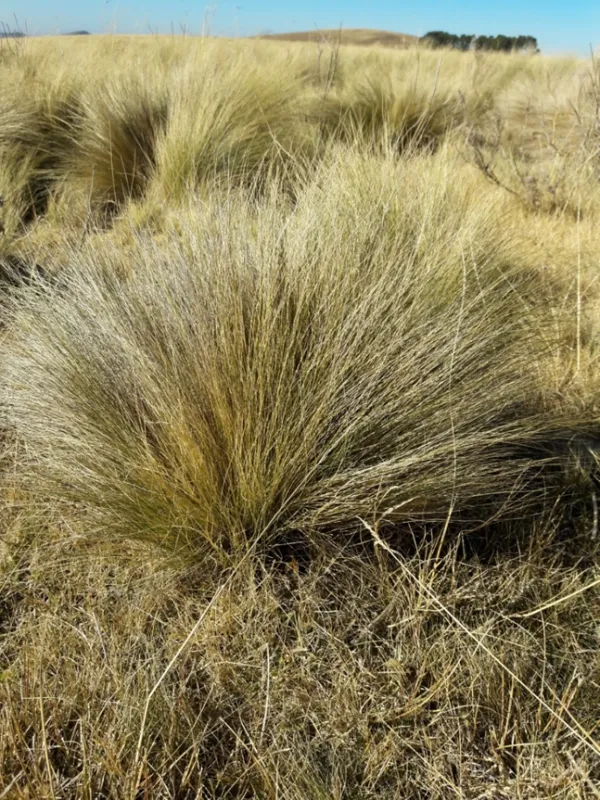
Description
Sowing dates
Nassella tussock is a perennial grass belonging to the Poaceae family, widely recognized as a major invasive species rather than a cultivated crop.
The plant reproduces primarily through seed production, with a single mature tussock capable of dispersing thousands of seeds annually via wind and water.
These seeds have a long dormancy period, allowing them to remain viable in the soil seed bank for several years, which complicates long-term management.
Germination typically occurs throughout the year, but is most intense during periods of high soil moisture, especially in the spring and autumn months.
Farmers must monitor their fields constantly, as the rapid establishment of seedlings can quickly turn productive pastures into dense, unusable monocultures.
Growing requirements
This species is highly adaptable and thrives in various environmental conditions, particularly on poor, dry, and well-drained soils.
It prefers sunny, open environments where competition from taller or more aggressive native plants is suppressed by overgrazing or land disturbance.
Nassella tussock is notably drought-tolerant, allowing it to survive in regions where other forage grasses fail due to water stress.
The plant exhibits high tolerance to soil acidity and low nutrient content, making it a pioneer species on degraded or poorly managed agricultural land.
Its robust root system allows it to persist in rocky or shallow terrains where conventional farming equipment cannot easily operate.
Main diseases and pests
The main threat is the plant's ability to dominate grasslands and pastures, rendering the land practically worthless for livestock production.
Due to the high silica content in its leaves, it is unpalatable to most livestock, leading to severe economic losses in the pastoral sector.
Chemical control is the most common management strategy, utilizing selective herbicides to target the grass without damaging desirable clover or native forage.
Mechanical removal, such as grubbing or cultivation, is effective only in the early stages of infestation before large seed banks are established.
The plant is notorious for its ability to invade undisturbed native grasslands, making it a high-priority biosecurity concern in many parts of the world.