
Needle-and-thread grass
Stipa comata Trin. & Rupr.
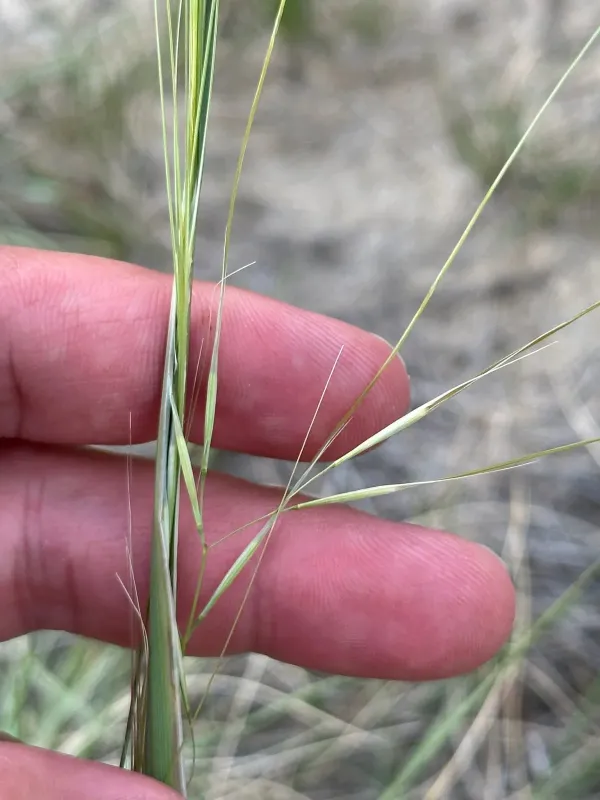
Description
Growing requirements
Needle-and-thread grass (Stipa comata) is a long-lived perennial bunchgrass in the Poaceae family. Native to the Great Plains and similar dry regions, it is renowned for its exceptional ability to survive in arid environments where other forage grasses fail.
The species is highly adapted to well-drained, sandy, or gravelly soils. It thrives in regions with low precipitation and hot summers, making it a critical resource for soil conservation and the stabilization of sandy terrains susceptible to wind erosion.
Morphologically, the plant is characterized by its distinct, long, twisted awns that resemble needles and threads. These awns are hygroscopic, twisting and untwisting with moisture changes to drill seeds into the soil, which enhances the success rate of natural regeneration in harsh habitats.
Agricultural management requires minimal input. It does not demand high-intensity fertilization and is highly competitive once established. In range management, it is valued for its early spring grazing potential, providing high-quality protein during the period when other forage is unavailable.
It is widely used in rangeland restoration projects. Because it produces high-quality forage early in the season, it is a preferred component in seed mixtures for reclaiming depleted grazing lands in semi-arid and steppe ecosystems.
Main diseases and pests
Fungal pathogens, particularly rust species, can impact the health of the plant during periods of high humidity. While the plant is drought-adapted, excessive moisture promotes conditions that favor the development of crown and leaf diseases.
Insect pests such as grasshoppers represent the most significant threat to biomass yield. In outbreaks, these insects can consume a large percentage of the leaf area, drastically reducing the stocking capacity of the pasture for that season.
Improper grazing management is a primary cause of decline. Overgrazing during the late spring and summer months exhausts the root reserves of the plant, leading to decreased vigor and susceptibility to environmental stressors.
Wireworms can be detrimental to stand establishment by feeding on the roots and underground stems of young seedlings. In agricultural reseeding efforts, soil analysis for larvae counts is recommended before sowing the seeds.
The encroachment of non-native invasive weeds poses a constant challenge. These invasive species often germinate faster and outcompete young needle-and-thread plants, requiring mechanical or selective control measures during the initial year of establishment.