
Sterculia urens
Sterculia urens
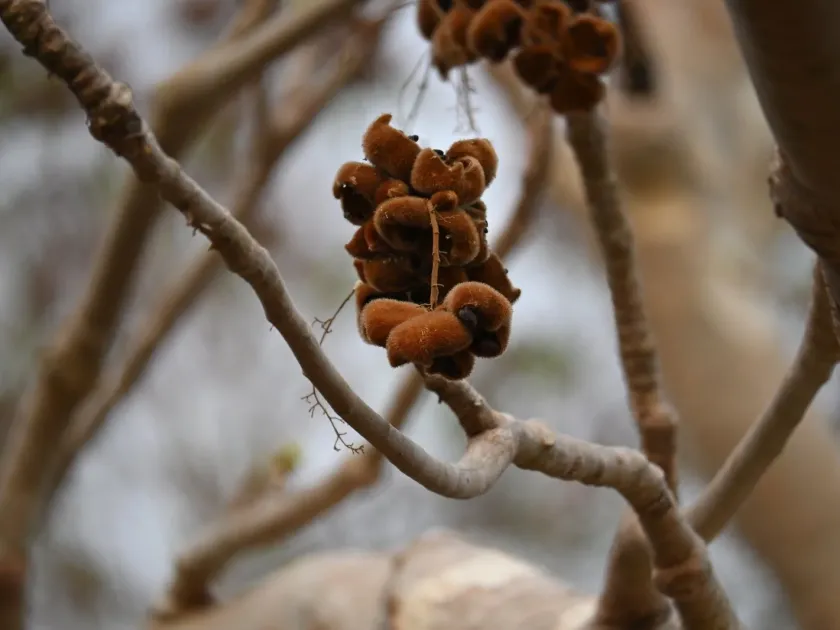
Description
Growing requirements
Sterculia urens, commonly known as the Sterculia gum tree, is a deciduous tree belonging to the Malvaceae family. It is native to the dry, rocky hills of India and is characterized by its smooth, pale, peeling bark.
The tree thrives in tropical climates with significant dry seasons. It is highly drought-tolerant, making it an ideal candidate for reforestation in degraded or arid lands where water availability is limited.
Regarding soil requirements, Sterculia urens prefers well-drained, stony, or sandy substrates. It is extremely sensitive to waterlogging, which can quickly lead to root rot and tree mortality.
Propagation is typically achieved through seeds, which should be planted in a loose, aerated medium. Optimal germination occurs at temperatures between 25°C and 30°C, provided there is consistent humidity.
Since the tree is not frost-tolerant, cultivation is restricted to tropical and subtropical zones. It requires full sunlight to develop a robust canopy and maintain the health necessary for gum production.
Yield
The primary economic output of Sterculia urens is Karaya gum, a natural exudate collected from the bark. This gum is a high-value polysaccharide used as a thickening and stabilizing agent globally.
The yield per tree depends on the age and vigor of the individual plant. Mature trees, when tapped responsibly, provide consistent amounts of resin that can be harvested annually without depleting the tree's health.
Quality is paramount in the market, with higher grades characterized by lighter, cleaner, and more transparent gum chunks. Industrial standards require strict post-harvest cleaning and sorting.
In addition to its gum, the tree produces useful bast fibers from its inner bark. While not the primary purpose, these fibers contribute to the tree's utility as a multipurpose agricultural resource.
Profitability is driven by low-input requirements. Because the species is adapted to harsh conditions, it requires no artificial irrigation or synthetic fertilizers, making it a sustainable choice for land management.
Harvesting
Harvesting involves the technique of "tapping," where small incisions are made in the bark of the tree. The viscous exudate flows out and hardens into lumps, which are then gathered manually by workers.
Timing is critical for harvest. Collection must be strictly performed during the dry season; humidity or rainfall during the collection phase significantly degrades the quality and color of the gum.
Once gathered, the crude gum undergoes manual sorting to remove bits of bark, dirt, and other forest debris. Professional grading ensures that the product meets international food and pharmaceutical standards.
Sustainable tapping practices are essential to prevent damage to the tree's vascular system. Excessive or too frequent wounding of the bark can invite pests and lead to pathogenic infections.
Proper harvesting equipment should be sanitized to ensure that no diseases are transmitted between trees. Following established guidelines allows for a productive cycle that preserves the tree for many years.