
Sterculia apetala
Sterculia apetala
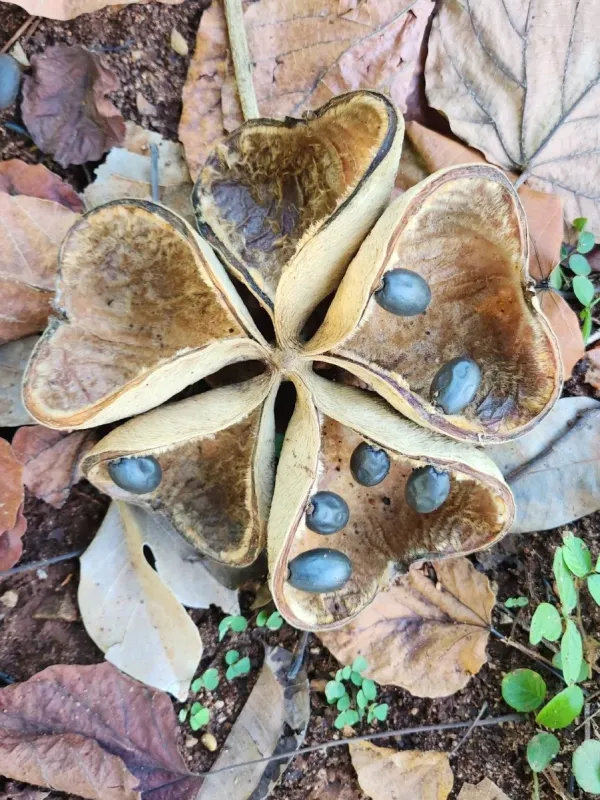
Description
Sowing dates
Propagation of Sterculia apetala in nurseries is typically performed through seeds. Planting should occur immediately after harvest, as the seeds have a relatively short viability period for germination.
Optimal germination requires steady temperatures between 25 and 30 degrees Celsius. It is crucial to maintain high soil moisture levels without causing waterlogging, which can easily induce seed rot.
Seedlings need protection from intense direct sunlight during the first few months of their growth. Transplanting the young trees to their permanent location is best performed at the beginning of the rainy season to ensure root establishment.
Vegetative propagation via cuttings is possible but requires the application of root-stimulating hormones. The success rate of this method depends heavily on maintaining high atmospheric humidity around the cuttings.
The culture exhibits rapid growth during early stages, which makes it an excellent candidate for establishing protective windbreaks or reforesting degraded tropical landscapes.
Growing requirements
Sterculia apetala belongs to the Malvaceae family and is a large deciduous tree. Native to the tropical forests of Central and South America, it thrives in regions with a distinct alternation of wet and dry seasons.
The species requires high solar radiation and prefers open, well-lit environments. It is extremely sensitive to cold temperatures and cannot tolerate frost, which restricts its cultivation to tropical climate zones.
Soil requirements are relatively moderate, but the best growth rates are achieved in deep, well-drained loams or sandy soils with a neutral pH level.
Agricultural practices include regular clearing of the tree's base and mulching to retain soil moisture. Mature trees demonstrate moderate resistance to drought thanks to a deep taproot system.
When planning plantations, it is essential to account for the tree's mature size, as the wide-spreading canopy requires significant space to develop properly.
Yield
The economic use of the culture is primarily focused on timber production and ornamental landscaping. The wood is lightweight and soft, making it suitable for craftwork, light furniture, and packaging materials.
The seeds of the plant contain edible oils and are consumed after thermal processing, serving as a traditional food source in many Latin American communities.
The tree's flowers possess significant nectar value, attracting a wide variety of pollinators, which enhances the overall biodiversity of agroforestry systems.
In landscape architecture, the species is valued for its large, striking flowers and shade-providing canopy, making it a popular choice for parks and urban greening projects.
Wood biomass from this species is also explored as a potential sustainable feedstock for the local pulp and paper industry.
Main diseases and pests
The primary threat to young plants is fungal root rot caused by poor drainage and excessive watering. Prevention involves strict adherence to irrigation schedules and ensuring soil aeration.
Foliage can be susceptible to various insect pests, such as aphids and scale insects, which weaken the tree. Early detection and treatment with systemic insecticides are effective measures against infestations.
Tree trunks may be attacked by wood-boring beetles, requiring periodic inspections of the bark. Removal of infected wood is necessary to stop the spread of these pests throughout the plantation.
In high-density plantings, there is an increased risk of powdery mildew. Proper pruning to ensure airflow through the canopy is a critical cultural practice to mitigate this disease.
- Root rot due to waterlogging
- Aphid and scale insect infestations
- Wood-boring beetle damage
- Powdery mildew in high-humidity conditions