
African Sterculia
Sterculia africana
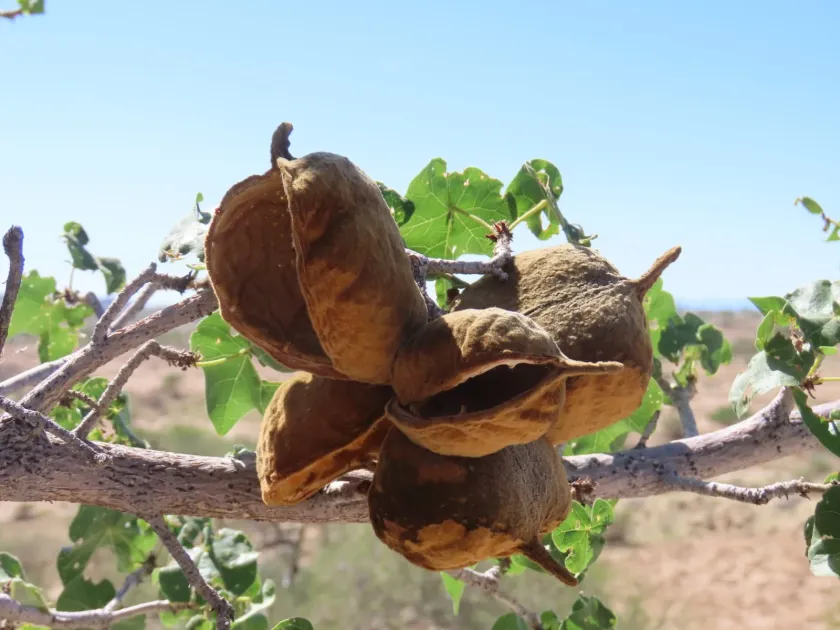
Description
Growing requirements
African Sterculia (Sterculia africana) is a deciduous tree belonging to the Malvaceae family. It is native to the dry tropical regions of Africa, characterized by its remarkable ability to withstand harsh, arid environments.
The natural range of the species extends across several African countries, where it thrives in savanna and woodland ecosystems. It is well-adapted to seasonal rainfall patterns, where a long dry season is followed by brief but intense rains.
This species performs best in well-drained soils, showing a strong preference for sandy or rocky substrates that prevent waterlogging. Its deep root system allows it to access water reserves in deeper soil layers during prolonged droughts.
African Sterculia is a heliophilous species, meaning it requires full exposure to sunlight for optimal development. It does not tolerate frost and thrives in areas with consistently high temperatures throughout the year.
Cultivation practices involve direct sowing or planting seedlings with adequate spacing. Due to its drought resistance, it is increasingly viewed as a valuable species for afforestation projects in desertifying arid lands.
Yield
The primary commercial value of African Sterculia lies in the production of gum, which is harvested from the bark of the trunk. This exudate is used in various industrial, food, and pharmaceutical applications.
Sustainable harvesting methods, including controlled tapping, ensure the long-term productivity of the trees without compromising their health. The yield of the gum is influenced by tree age, site conditions, and climatic variations.
The wood of this species is relatively light and soft, which makes it suitable for local artisanal crafts, lightweight packaging, and as a source of firewood, significantly contributing to local community needs.
The seeds of African Sterculia are noted for their oil content. Exploring the potential for oil extraction represents an opportunity for diversifying the economic output from these agroforestry systems.
Yield management requires careful monitoring of tree health and climatic data. Integrating this tree into agroforestry systems enhances land productivity while maintaining the ecological balance of the savanna landscape.
Main diseases and pests
The main biological threats include wood-boring insects that damage the trunk, which not only affects the growth of the tree but also significantly degrades the quality and yield of the harvested gum.
Fungal diseases are a concern, particularly in nursery settings or in areas with poor drainage. Pathogens can enter through wounds in the bark caused by poor tapping techniques or animal damage.
Herbivory presents a major risk for young plants. Unrestricted grazing by livestock in the savanna frequently leads to the destruction of saplings, necessitating the use of protective fencing during the establishment phase.
Parasitic infestations, such as mistletoe, can weaken individual trees by competing for resources. Regular monitoring and physical removal of these parasites are recommended to ensure the longevity of the stand.
Climate change and shifts in local precipitation patterns may lead to the emergence of new stressors, requiring adaptive management strategies to protect the vitality of African Sterculia populations.