
Sterculia foetida
Sterculia foetida
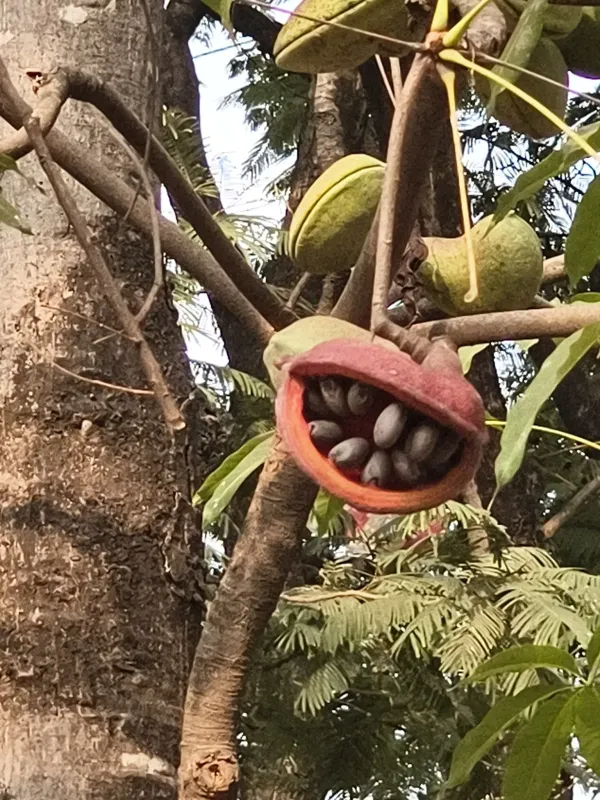
Description
Growing requirements
Sterculia foetida, commonly known as the Java olive or Indian almond, is a prominent member of the Malvaceae family. It is a large tropical tree that can grow up to 35 meters, recognized by its distinct, pungent-smelling flowers.
The tree is native to the tropical regions of Africa, Asia, and Australia. It is highly adapted to diverse environments, typically thriving in dry, open forests and well-drained soil types, including rocky or gravelly terrains.
The species requires a tropical climate with a distinct dry season to flourish. While it exhibits exceptional drought tolerance once established, it cannot withstand waterlogging, which often leads to root rot and eventual tree decline.
Soil management for this crop involves ensuring high porosity and excellent drainage. It performs well in neutral or slightly acidic soils and does not require heavy fertilization, making it a sustainable choice for certain tropical regions.
Planting density should be carefully calculated to ensure adequate sunlight penetration into the canopy. The tree is photophilous and requires significant exposure to direct light to maintain vigorous growth and fruit development.
Yield
The economic focus of Sterculia foetida is its oily seeds, which are consumed roasted or processed for industrial oil. The yield potential increases significantly as the tree matures, typically beginning to bear fruit within 5 to 7 years.
A single mature tree can provide a bountiful harvest of follicles, each containing numerous seeds. Efficient management of the trees and ensuring a lack of competition for nutrients can substantially increase the final seed yield per hectare.
Main diseases and pests
The most common issues affecting the health of these trees include infestations by defoliating insects and localized fungal infections in the bark. Proper maintenance, including pruning dead branches, helps in preventing the buildup of pests.
Harvesting
Harvesting takes place when the seed pods (follicles) turn bright red or brown and begin to split open. Workers collect the pods manually, often utilizing long poles or climbing the trees to gather the matured fruit before it hits the ground.
Post-harvest handling is critical to ensure seed quality. The seeds must be promptly removed from the follicles and dried in a well-ventilated area to reduce moisture content and prevent post-harvest spoilage or mold growth.