
Sterculia balanghas
Sterculia balanghas
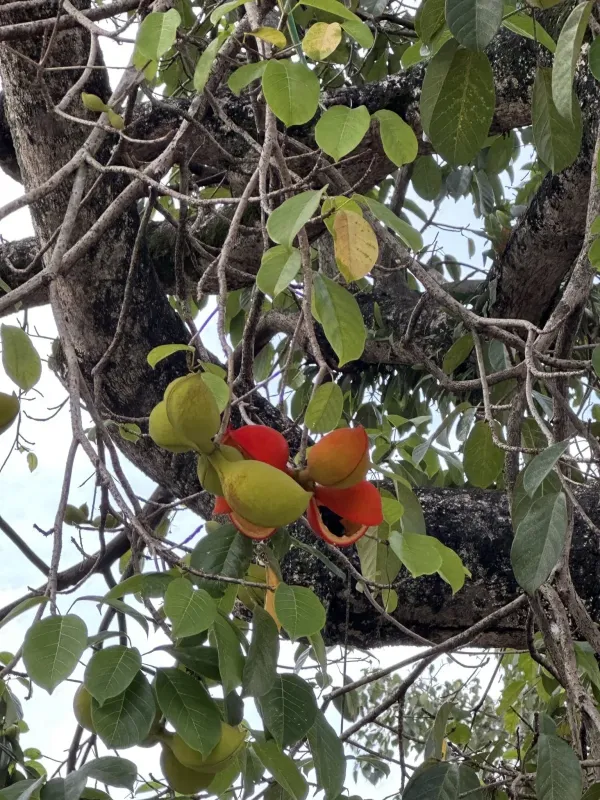
Description
Growing requirements
Sterculia balanghas belongs to the Malvaceae family. It is an evergreen tropical tree that, in its natural habitat, attains significant size and develops a dense, spreading crown.
The plant originates from regions of South and Southeast Asia. It prefers humid tropical forests and well-drained, fertile soils rich in organic matter. Optimal conditions for development include consistently high temperatures and high ambient humidity.
For successful growth, the culture requires protection from strong winds and direct sunlight during the seedling stage. The tree adapts to various soil types but develops most productively on loams with a neutral or slightly acidic reaction.
On an industrial scale, propagation is primarily carried out by seed. Seeds possess high germination rates provided they are fresh and the germination temperature is maintained at no less than 25 degrees Celsius.
The culture requires systematic monitoring of soil moisture, as it does not tolerate prolonged waterlogging of the root system despite its affinity for a tropical climate. Maintenance includes pruning the crown to improve aeration and prevent stagnation.
Yield
Economic use of Sterculia balanghas focuses on obtaining strong plant fiber extracted from the tree bark. This fiber is traditionally used for manufacturing ropes, cables, and coarse fabrics characterized by high resistance to rot.
The timber of the plant finds limited use in local construction and the production of lightweight goods, as it is noted for its moderate strength and ease of processing. Additionally, in some regions, parts of the plant are used in traditional medicine.
The seeds of the tree contain oils and can be consumed after thermal processing, which expands the potential of the crop as a secondary food source in forestry management.
The productivity of plantations directly depends on planting density and the regularity of care. When agricultural rules are followed, the tree rapidly accumulates biomass, making it promising for the restoration of forest ecosystems.
The economic efficiency of cultivating this species is based on its ability to produce a fiber harvest in conditions where other technical crops might be insufficiently resistant to local pests or climatic fluctuations.
Main diseases and pests
Major threats to Sterculia plantations are linked to the spread of fungal infections that affect the trunk and branches during periods of excessive humidity. Prevention includes choosing sites with good natural drainage.
Typical pests include tropical xylophagous insect species that penetrate the bark and wood. Regular inspections and sanitary pruning of damaged areas are key control methods.
Young seedlings can be damaged by the larvae of various beetles, so the use of insecticides in nurseries is required during early development stages. Chemical protection should be combined with biological control methods.
Viral diseases occur less frequently but can be spread by insect vectors. Monitoring pest population numbers is a mandatory condition for preventing epiphytotics.
Violation of agricultural techniques, particularly over-dense planting, significantly increases the risk of disease infection. Agronomists recommend maintaining optimal distance between trees to ensure proper air circulation.