
Sterculia setigera
Sterculia setigera
Description
Growing requirements
Sterculia setigera, commonly known as a member of the Malvaceae family, is a deciduous tree native to the savanna regions of tropical Africa. It is a resilient species well-adapted to semi-arid environments and highly capable of withstanding prolonged dry seasons.
Regarding soil requirements, the tree thrives in well-drained sandy or rocky soils with low fertility levels. It is particularly valued in reforestation and land reclamation projects because it can colonize areas where other crops might fail due to nutrient deficiency or drought.
The climate requirements include a warm, tropical environment with distinct wet and dry seasons. Proper agricultural management involves selecting sites with excellent water drainage, as the species is highly susceptible to root decay if subjected to prolonged waterlogging.
The primary economic value of Sterculia setigera lies in the production of gum karaya. This natural polysaccharide is harvested from the bark through incisions and is highly sought after as a thickening agent, stabilizer, and emulsifier in the food and pharmaceutical industries.
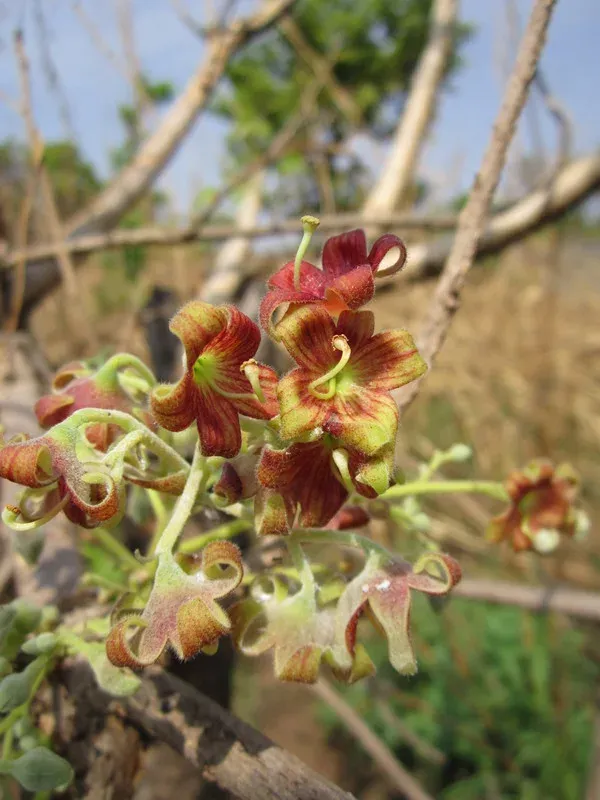
Botanically, the tree reaches heights of 10 to 15 meters and possesses a distinctive appearance with broad leaves and panicle-type inflorescences. Its growth cycle is synchronized with seasonal rainfall, and it relies on insect pollination to ensure the production of its characteristic follicles.
Main diseases and pests
The most significant pathological threats to Sterculia setigera include fungal infections affecting the roots and vascular system. These diseases are usually triggered by poor drainage conditions, which lead to soil saturation and subsequent root necrosis, hindering the tree's development.
Pest pressures primarily involve wood-boring insects that compromise the integrity of the bark and cambium. These pests not only weaken the tree structure but also negatively impact the secretion process of the gum, significantly reducing the commercial yield per hectare.