
Sterculia rugosa
Sterculia rugosa
Description
Sowing dates
Sterculia rugosa is a perennial tropical tree belonging to the Malvaceae family. Propagation is primarily achieved through seeds, which should be harvested from mature, healthy pods to ensure high germination rates and vigor.
The sowing process typically begins at the onset of the rainy season to capitalize on natural humidity. Seeds are planted in well-draining, nutrient-rich nursery beds and kept under partial shade to protect them from excessive heat.
Germination is highly dependent on consistent soil temperature, ideally between 25 and 30 degrees Celsius. Maintaining uniform moisture without waterlogging is critical to preventing seed rot during the initial stages of development.
Once seedlings reach a height of approximately 40 centimeters, they are ready for transplanting into the field. Proper spacing is essential, as the species requires significant room to spread its canopy as it matures.
Successful establishment of the plantation relies on the initial care provided during the first two years, including regular mulching and weeding to reduce competition for nutrients from local grasses and shrubs.
Growing requirements
This crop thrives in tropical environments characterized by high humidity and year-round warmth. It requires deep, fertile soils, preferably loam or sandy loam, with excellent drainage to support its root system.
Sterculia rugosa prefers a pH range of 5.5 to 6.5. Regular soil testing is recommended to ensure that essential macro and micronutrients are available, as tropical soils often undergo leaching due to heavy rainfall.
Regarding climatic needs, the tree demands full sun exposure once it has reached the juvenile stage. It lacks tolerance for frost or prolonged cold snaps, making it strictly suitable for tropical latitudes.
Water management is vital; while the tree is adapted to rainy regions, irrigation systems are necessary to maintain growth during brief dry seasons, ensuring the tree does not enter premature dormancy.
Fertilization regimes should focus on a balanced NPK ratio during the growing phase, supplemented by organic matter to improve soil structure and long-term fertility levels in plantation sites.
Main diseases and pests
Common diseases affecting Sterculia rugosa include various foliar fungi that manifest as spots or blight during seasons with excessive moisture. Preventive fungicide applications and proper canopy management can mitigate these risks.
Insect pests, particularly borers and sap-sucking insects, are the primary biological threats. Regular monitoring of the bark and underside of leaves is necessary to detect infestations before they cause irreversible damage.
Soil-borne pathogens, such as Phytophthora species, can lead to root rot. To minimize this, farmers must ensure that planting sites do not become waterlogged and that nursery stock is certified disease-free.
Integrated Pest Management (IPM) is the suggested approach, combining biological controls with selective chemical interventions. This maintains the ecosystem balance within the plantation and reduces reliance on heavy pesticides.
In cases of severe viral infections, which may appear as leaf mottling or stunted growth, the standard protocol is the prompt removal and destruction of the affected plant to prevent the spread of the pathogen to neighboring healthy trees.
Harvesting
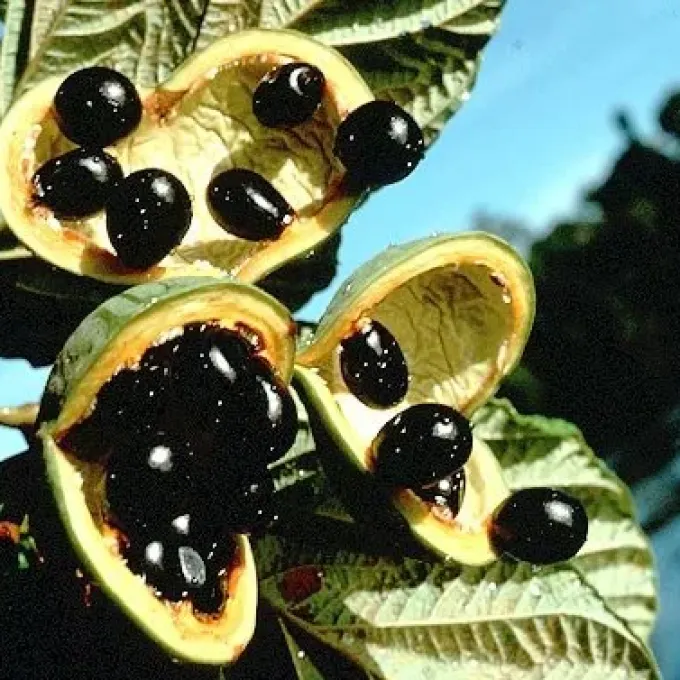
The harvesting of Sterculia rugosa involves collecting the fruits once they change color and begin to dehisce. Timing is critical to prevent the loss of seeds, which are the primary economic component of this crop.
Manual harvesting is the most common method, as it allows workers to select only the fully mature pods, ensuring a high-quality final product. Mechanical aids may be used if the tree canopy is properly pruned for accessibility.
Post-harvest processing involves drying the seeds in controlled environments to lower moisture content to safe storage levels. This prevents fungal growth and maintains the integrity of the essential oils found within the seeds.
Beyond seeds, the wood of the tree is occasionally harvested during maintenance thinning. It serves as a source of lightweight timber suitable for artisanal crafts, packaging, and specific industrial paper products.
Storage must be handled in cool, dry, and rodent-proof facilities. Proper documentation of the harvest date and quality metrics is recommended for large-scale operations to ensure traceability in the supply chain.