
Sterculia rhinopetala
Sterculia rhinopetala
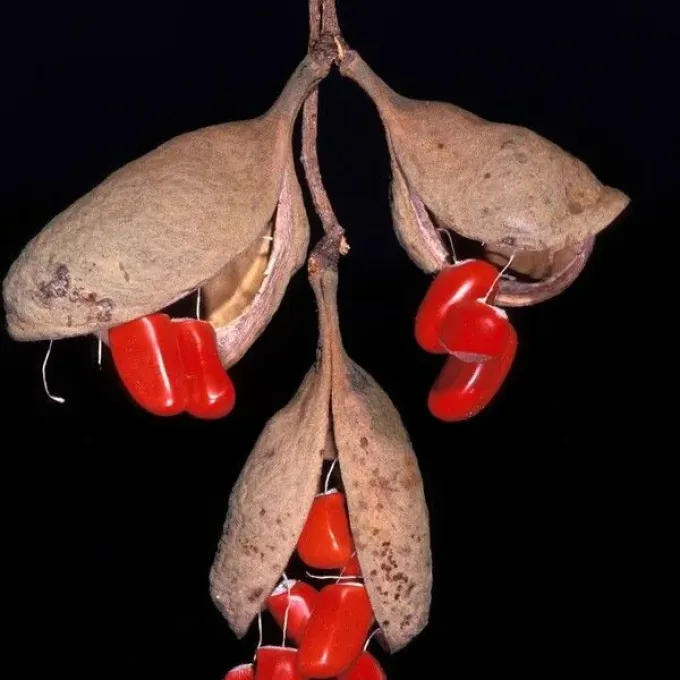
Description
Sowing dates
The propagation of Sterculia rhinopetala primarily occurs in specialized nurseries, where controlled temperature and humidity levels are strictly maintained to maximize seed germination rates. The most appropriate time for sowing is the onset of the rainy season, which provides the necessary moisture for the rapid establishment of young seedlings.
Seeds often undergo a scarification process to break their tough seed coat, allowing water to penetrate more effectively and accelerating the germination process. Sowing is conducted in a nutrient-rich, well-draining substrate to prevent potential root rot during the sensitive early developmental stages.
Seedlings are transplanted to their permanent plantation sites once they reach a height of 30 to 50 centimeters. This process requires extreme care to ensure the root ball remains intact, as the root system is highly susceptible to desiccation and physical damage during handling.
A planting density of at least 5 meters between trees is generally recommended to allow sufficient space for crown development as the tree matures. Regular maintenance of the area around the trunk is vital during the first years to prevent competition from invasive weeds.
The biology of the species involves a relatively slow growth rate in its juvenile years, necessitating sustained weed control and supplementary watering during periods of insufficient rainfall to ensure survival.
Growing requirements
Sterculia rhinopetala belongs to the Malvaceae family and is a prominent tropical tree native to the rainforest regions of West Africa. The species thrives in deep, fertile soils rich in organic matter and requires excellent drainage to support its robust growth cycle.
The tree is strictly a tropical species, requiring consistently high ambient temperatures, typically ranging from 22 to 30 degrees Celsius. It exhibits no tolerance for frost or extreme temperature fluctuations, which significantly limits its commercial cultivation to specific tropical zones.
High relative humidity is a prerequisite for the health of this species, making it well-suited to the humid tropical climate where it naturally occurs. While it prefers full sunlight as it reaches maturity, young saplings can tolerate partial shade provided by larger forest canopy trees.
Soil pH should ideally remain in the slightly acidic to neutral range to facilitate the efficient uptake of essential nutrients. Areas prone to waterlogging must be avoided, as stagnant water is detrimental to the tree's health and can lead to rapid fungal decay of the root system.
Management of the plantation includes monitoring soil nutrient levels and providing necessary fertilization to ensure the tree maintains its growth vigor throughout the vegetative stage.
Yield
The primary economic output of Sterculia rhinopetala is its high-quality timber, which is highly valued for furniture manufacturing, interior woodwork, and decorative panels. The wood is appreciated for its favorable working properties and aesthetic finish.
The production cycle for this species is long-term, requiring several decades of careful growth management before trees reach their technical maturity. Optimized plantation practices allow foresters to increase the yield of high-grade timber per hectare significantly.
The wood is characterized by moderate density and good dimensional stability, making it a reliable material for various wood-based applications. Proper pruning and silvicultural techniques are essential to minimize natural defects like knots and stem curvature, thus increasing the value of the harvest.
Beyond its timber production, the cultivation of Sterculia rhinopetala provides vital ecological services, such as soil stabilization and the preservation of local biodiversity within the forest landscape.
Economic returns are directly linked to the quality of the timber, which is maintained through systematic forest management and sustainable harvest practices that balance economic productivity with environmental protection.
Main diseases and pests
Sterculia rhinopetala is susceptible to various fungal pathogens that can affect the root system, especially in environments with poor air circulation and excessive moisture. Early detection and proactive environmental management are key to mitigating these risks.
Wood-boring insects represent a significant threat to the tree, as they can tunnel into the trunk and branches, severely compromising the structural integrity and the commercial quality of the timber. Regular monitoring is necessary to control infestations before they cause widespread damage.
Young saplings often face pressure from leaf-eating caterpillars and aphids, which require careful observation and the application of environmentally safe controls to maintain plant health. Maintaining plantation hygiene is critical to prevent the spread of pests and diseases.
Removing dead or infected branches and thinning stands are common silvicultural practices used to manage plant health and encourage air movement, which naturally suppresses many fungal diseases.
- Systematic trunk and foliage inspections.
- Use of certified, disease-free nursery stock.
- Appropriate spacing to improve ventilation.
- Implementation of biological pest control agents.
- Removal and destruction of infected plant debris.