
Peanut tree
Sterculia quadrifida
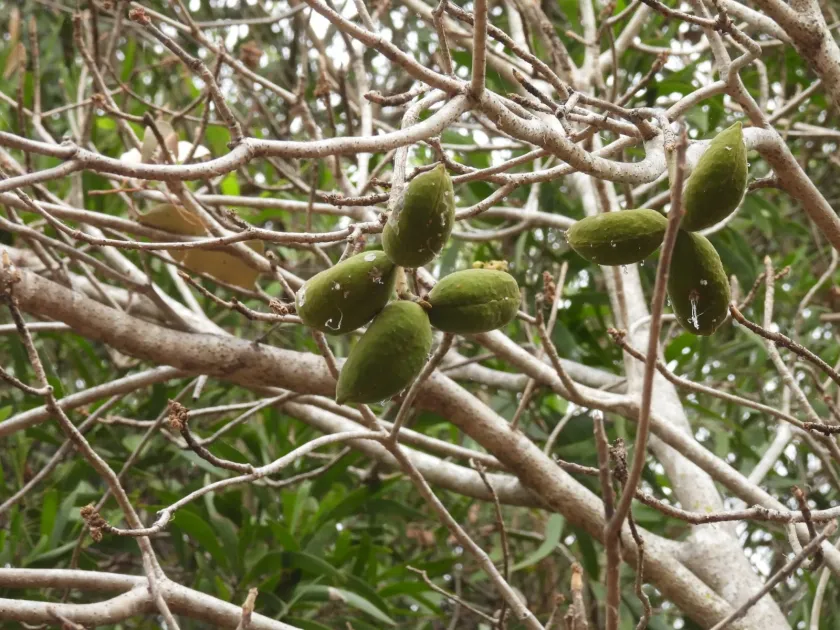
Description
Growing requirements
The peanut tree (Sterculia quadrifida) is a member of the Malvaceae family. It is a medium-sized evergreen tree native to the tropical rainforests and coastal regions of Northern Australia, New Guinea, and parts of Indonesia.
The species thrives in tropical climates characterized by high humidity and consistent temperatures. It is highly sensitive to frost and cold winds, making it suitable only for regions that do not experience significant winter drops in temperature.
Regarding soil requirements, the plant prefers deep, well-drained, and nutrient-rich soils. It is critical to ensure that the site has excellent drainage, as the roots are susceptible to rot if they remain in waterlogged soil for extended periods.
Full sun to partial shade is ideal for this tree. While it is naturally a canopy or edge-of-forest tree, consistent sunlight is necessary to encourage flowering and subsequent fruit set in cultivation settings.
Agricultural management should focus on consistent moisture levels during the growing season. Mulching around the base of the tree can help maintain soil moisture and protect the root system from excessive heating.
Harvesting
The harvest period occurs when the fruit follicles reach maturity and turn a vibrant red. The pods naturally split open to reveal edible, dark-colored seeds, which are the main focus for agricultural utilization.
These seeds have a pleasant, nutty flavor often compared to peanuts, which gives the tree its common name. They are traditionally roasted to improve their texture and digestibility, serving as a valuable local food source.
Yields are determined by the tree's maturity and environmental conditions. Healthy trees can provide a significant number of pods annually, requiring manual harvesting to ensure the seeds are gathered at peak maturity.
Post-harvest handling involves removing the seeds from the red follicles and ensuring they are stored in a cool, dry, and well-ventilated area to prevent fungal contamination or seed degradation.
Beyond its food value, Sterculia quadrifida is often utilized in reforestation projects in its native range, helping to maintain ecological balance while providing sustainable non-timber forest products.