
Sterculia lanceifolia
Sterculia lanceifolia
Description
Sowing dates
Sowing seeds of Sterculia lanceifolia requires strict adherence to temperature regimes typical for tropical latitudes. The optimal time for cultivation begins in the spring when daylight hours increase.
For germination, use a loose, well-draining substrate rich in organic matter. It is vital to maintain consistent soil moisture without risk of waterlogging, as seeds are highly sensitive to decay during early development.
The sowing depth should not exceed 2–3 centimeters. After planting, containers should be covered with plastic or glass to create a greenhouse effect, which significantly speeds up germination.
The ideal temperature for germination ranges between +24 °C and +28 °C. If these parameters are maintained, the first shoots usually appear within a few weeks of planting.
Once the first pair of true leaves emerges, seedlings should be transplanted and gradually acclimated to ambient conditions through regular ventilation of the growing area.
Growing requirements
Sterculia lanceifolia belongs to the Malvaceae family and originates from the tropical forests of Southeast Asia. The plant prefers well-lit areas, although young specimens require protection from direct, intense sunlight.
A stable, warm climate is necessary, with temperatures staying above +18 °C year-round. Sudden temperature fluctuations and cold drafts are detrimental to the plant's overall health and vigor.
The soil should be fertile, porous, and have a slightly acidic to neutral pH. Providing high-quality drainage is essential, as stagnant water in the root zone often leads to root rot.
High relative humidity is a critical factor for the successful growth of this culture. In dry indoor environments, regular misting of the crown with soft water is highly recommended.
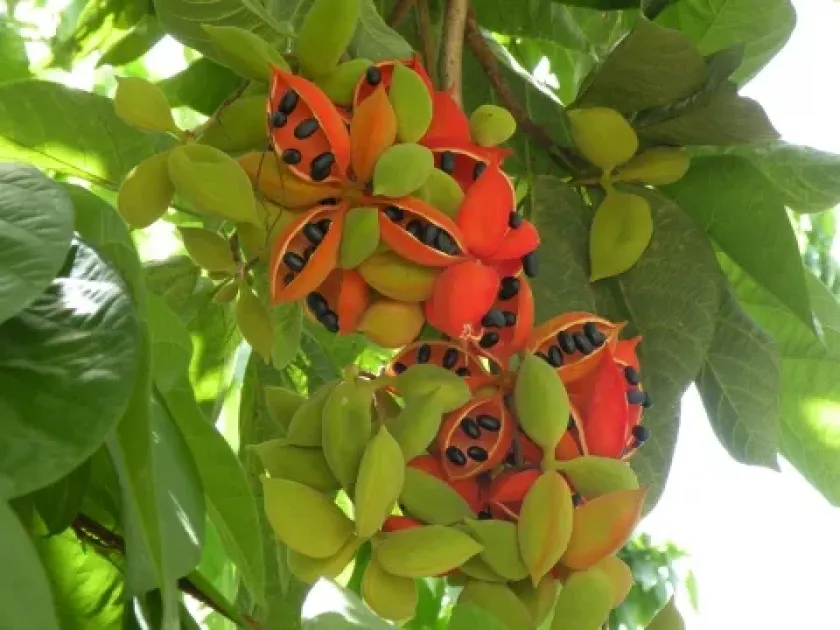
Botanically, this species is characterized by its leathery, lanceolate leaves and unique fruit follicles that split open upon maturity to reveal the seeds inside.
Yield
While commercial-scale cultivation of Sterculia lanceifolia is limited, it holds potential as a source of technical oils and fibers. The oils derived from the seeds possess emollient properties.
In regions where the plant grows natively, the wood is occasionally used for small crafts due to its lightweight nature. However, it is not suitable for heavy-duty structural applications due to low durability.
Yield depends heavily on the level of care and light intensity provided in controlled environments. Fruiting typically commences several years after the tree reaches maturity.
The plant has potential for development as an ornamental or essential oil crop within specialized tropical agricultural facilities.
Continued agricultural research into its fiber properties may reveal further economic value for sustainable industrial use.
Main diseases and pests
The primary threats to Sterculia lanceifolia include fungal infections of the root system, which are often caused by overwatering and poor air circulation within the growing area.
Common pests include sap-sucking insects such as spider mites and scale insects, which thrive in conditions with low atmospheric humidity.
Pest management involves regular inspection of the underside of leaves and the application of biological agents or mild insecticides when necessary.
In case of fungal root decay, immediate repotting with fresh substrate and the application of systemic fungicides are required to save the plant.
Prevention involves keeping the growing environment clean, removing fallen leaves promptly, and maintaining rigorous water management throughout the winter dormancy period.