
Spurge laurel
Daphne laureola L.
Description
Growing requirements
Spurge laurel (Daphne laureola) is a hardy evergreen shrub belonging to the Thymelaeaceae family. Native to regions in Europe and the Mediterranean, it naturally thrives in the understory of broad-leaved forests, where it benefits from protection and moderate moisture.
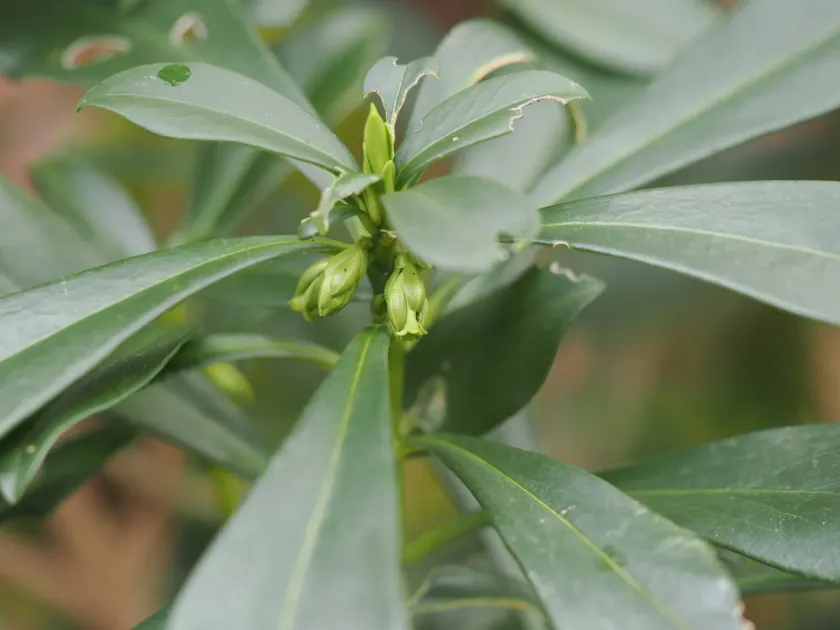
The botanical structure of this plant is defined by its thick, leathery, dark green leaves that grow in a rosette pattern. Reaching a height of about one meter, the plant maintains its glossy appearance throughout the seasons, serving as an excellent structural element in shaded garden designs.
This species requires specific environmental conditions to reach maturity. It flourishes in dappled shade or full shade, making it perfect for areas of the garden where other plants might struggle. It is not drought-tolerant and performs best in regions with consistent, mild temperatures.
Soil composition is crucial for the health of Daphne laureola. It prefers deep, fertile, and well-drained soils that are slightly acidic to neutral. High organic matter content helps retain necessary moisture, but stagnant water must be avoided to prevent root damage.
From a horticultural standpoint, it is cultivated primarily as an ornamental plant for woodland gardens. While it offers year-round aesthetic value, it is essential to handle the plant with care, as all parts contain toxic compounds that can cause skin irritation or health issues if ingested.
Main diseases and pests
The primary threats to this shrub include fungal pathogens such as leaf spot and root rot, often triggered by excessive soil moisture and poor air circulation. Ensuring adequate drainage and avoiding overhead watering are key management strategies for prevention.
Common pests like aphids and scale insects may occasionally infest the foliage, particularly during active growth phases in spring. Integrated pest management practices, including the use of horticultural oils or systemic insecticides, are recommended to maintain plant vitality.