
Daphne circassica
Daphne circassica Woronow ex Pobed.
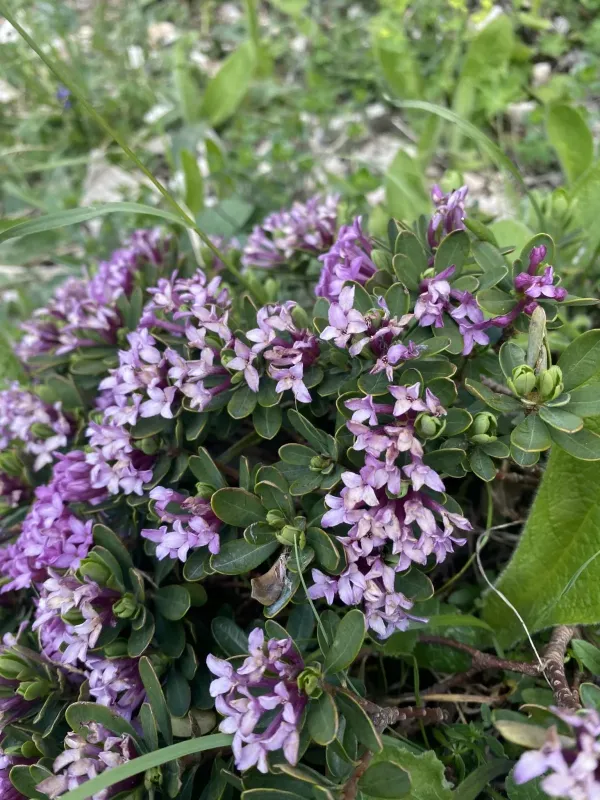
Description
Growing requirements
Daphne circassica belongs to the Thymelaeaceae family. It is a rare endemic shrub primarily native to the mountainous regions of the Western Caucasus, where it grows in subalpine habitats on limestone-derived soils.
The plant requires well-drained, rocky substrates with a neutral to slightly alkaline pH. In its natural environment, it thrives on open, sunny slopes, although it can tolerate limited shade provided by sparse high-altitude vegetation.
Environmental requirements include a cold temperate climate with significant winter dormancy. It is highly cold-hardy, adapted to the harsh conditions of high altitudes, but it is extremely sensitive to waterlogged soil, which causes root rot.
Cultivation practices for this species are difficult and largely limited to alpine rock gardens. Maintaining the plant in human-made conditions involves providing excellent soil drainage and protecting it from invasive weeds that might compete for nutrients.
Agricultural use of this plant is non-existent due to its high toxicity. It is categorized strictly as an ornamental or scientific interest species, often found in specialized botanical collections aimed at preserving rare regional genetic diversity.
Main diseases and pests
The main threats to the species involve habitat destruction and climate shifts affecting its narrow ecological niche. In cultivation, the plant is susceptible to various fungal pathogens, particularly if the soil remains damp for extended periods.
Pests that occasionally affect the shrub include aphids that target new growth. Maintenance must also account for the plant's toxic compounds, which generally deter mammalian herbivores but do not prevent insect damage or certain soil-borne infections.