
Daphne tangutica
Daphne tangutica Maxim.
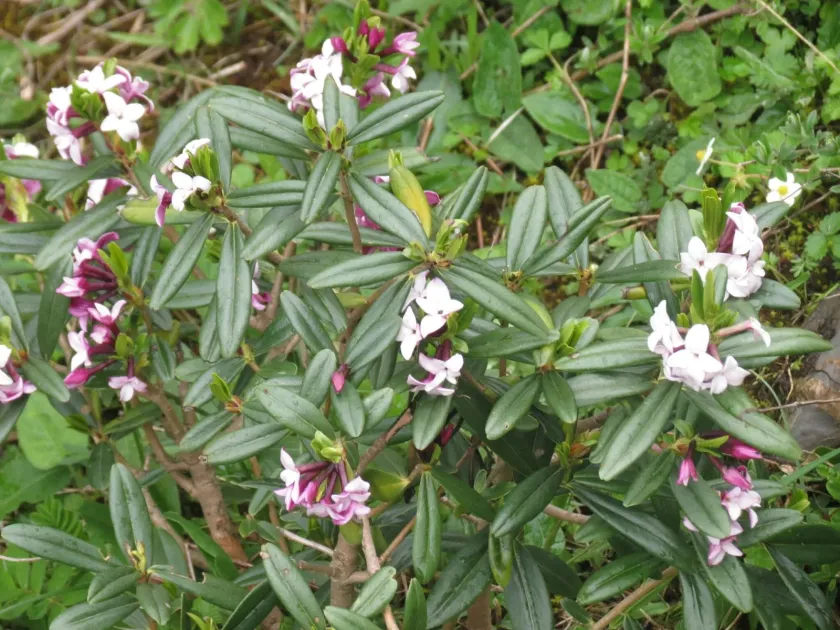
Description
Sowing dates
Propagation of Daphne tangutica is typically achieved through seeds or semi-hardwood cuttings. Seeds should ideally be sown in late autumn in open ground or cold frames to ensure they undergo the necessary period of cold stratification.
When starting from seeds, it is crucial to use a well-drained, porous substrate. Germination may be irregular and take several months, so patience is required when managing seed beds.
Cuttings are best taken in mid-summer from healthy, semi-mature shoots. Rooting is most successful when using a light peat and sand mixture within a protected environment such as a greenhouse or under a plastic cover.
Vegetative propagation usually produces roots within 6 to 8 weeks. Once rooted, young plants should be gradually acclimatized to outdoor conditions before transplanting into their permanent site.
Safety is paramount; all parts of the Daphne tangutica plant are toxic. Always wear gloves when handling stems or seeds to prevent skin irritation from the plant's sap.
Growing requirements
Daphne tangutica is an evergreen shrub belonging to the Thymelaeaceae family, native to the high-altitude mountainous regions of China. It is highly valued for its hardiness and adaptation to rocky, alpine environments.
This shrub prefers partially shaded locations or spots with dappled sunlight. It requires well-drained soil that is slightly acidic to neutral, rich in organic matter, and consistently moist but never waterlogged.
Proper drainage is the single most important factor in cultivating this species. Stagnant water around the roots quickly leads to root rot and eventual death of the shrub, making raised beds or mounds a good option.
In hot climates, mulching the root zone is essential to maintain cool soil temperatures and retain moisture during summer droughts. Regular watering should be provided without over-saturating the soil.
As a slow-growing species, Daphne tangutica does not require heavy fertilization. An annual application of a balanced, slow-release fertilizer in early spring is usually sufficient to support healthy foliage and flower development.
Yield
The primary use of Daphne tangutica is ornamental. It is highly regarded in horticulture for its clusters of fragrant, rose-purple flowers that appear in spring and its subsequent bright red, berry-like fruits.
In landscape design, this shrub is perfect for rock gardens, low hedges, or as an accent plant in mixed perennial borders. It is not grown for food production, nor has it any recognized industrial agricultural use.
Because the berries are toxic to humans and animals, they must not be harvested for consumption. The plant’s value remains entirely within the realm of aesthetic landscape enhancement.
Periodic maintenance, including the removal of dead wood and lightly trimming after flowering, helps keep the shrub compact and encourages the formation of new growth for the following season.
The intensity of the plant's growth and flowering performance is largely dependent on the quality of its location and protection from harsh winter winds, which can damage the evergreen leaves.
Main diseases and pests
The main threats to Daphne tangutica are fungal infections, such as root rot or leaf spot, which are frequently triggered by poor drainage or excessive humidity. Proactive soil management is the best defense.
Aphids can occasionally colonize new shoots, particularly in the spring. Systemic insecticides or neem oil applications are effective if the infestation is caught early during routine garden inspections.
Transplanting is a major stress factor for this species due to its sensitive, brittle root system. Minimizing root disturbance through the use of container-grown plants is strongly recommended.
Prevention of viral diseases involves maintaining excellent hygiene in the garden, including the removal of debris and ensuring adequate spacing between plants to allow for proper air circulation.
Monitoring for leaf chlorosis is important, as it may signal issues with soil pH or trace element deficiencies, which if untreated, will lead to significant weakening of the shrub over time.