
Daphne bholua
Daphne bholua Buch.-Ham. ex D. Don
Description
Growing requirements
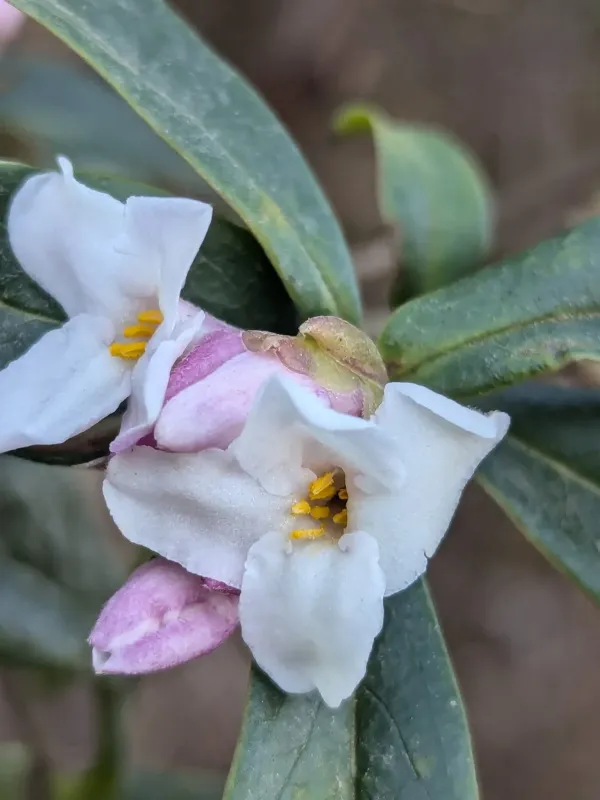
Daphne bholua is an exquisite evergreen or semi-evergreen shrub belonging to the Thymelaeaceae family. Originating from the misty Himalayan mountains, it is widely celebrated for its intense and captivating floral fragrance.
The plant thrives in cool, moist environments and requires a sheltered location away from harsh, drying winds. Partial shade is ideal, as direct midday sunlight can scorch the foliage during the peak of summer.
Cultivation success heavily depends on soil structure; it requires well-draining, humus-rich soil that mimics the forest floor. Heavy, waterlogged soils are detrimental and often result in rapid root decline.
In terms of soil chemistry, it prefers neutral to slightly acidic conditions. Gardeners in colder climates should consider protecting the plant during frost-prone months to ensure it survives the winter season.
Horticulturally, it is utilized as an ornamental feature in gardens, particularly valued for its winter or early spring flowering. Its ability to provide fragrance when most of the garden is dormant is its primary advantage.
Main diseases and pests
The primary concern for Daphne bholua is phytophthora root rot, which typically stems from poor soil drainage or excessive irrigation. Once symptoms appear in the root zone, the plant is difficult to recover.
Viral infections can cause mottled leaves and stunted growth patterns. These viruses are often transmitted by sap-sucking insects, necessitating rigorous control of pest populations to maintain overall plant health.
Aphids pose a significant threat during the spring flush of new growth. They cluster on tender buds and leaves, causing distortion and potentially introducing viral pathogens into the plant's vascular system.
Scale insects can attach themselves to stems and the undersides of leaves. Their presence can lead to a general loss of vigor and the development of sooty mold, which grows on the honeydew they excrete.
Slugs and snails are notorious for feeding on the low-growing foliage and tender new shoots. Regular monitoring and the application of suitable barriers are recommended to protect the plant during the early stages of the growing season.