
Rock daphne
Daphne petraea Leyb.
Description
Sowing dates
Propagation of Daphne petraea is a challenging task that requires expertise due to the plant's slow growth habit and specific germination requirements.
Seed propagation is best achieved by sowing fresh seeds in autumn, allowing for natural stratification through the winter months in a cold frame or open garden.
Cuttings taken during the early summer season can be rooted, though the process demands high humidity and the application of rooting hormones for success.
When transplanting, extreme care must be taken to maintain the root ball structure as the plant is notoriously intolerant of root disturbance.
Choosing the right site for planting involves selecting well-drained, porous areas that mimic the plant's natural cliff-side habitat to ensure long-term survival.
Growing requirements
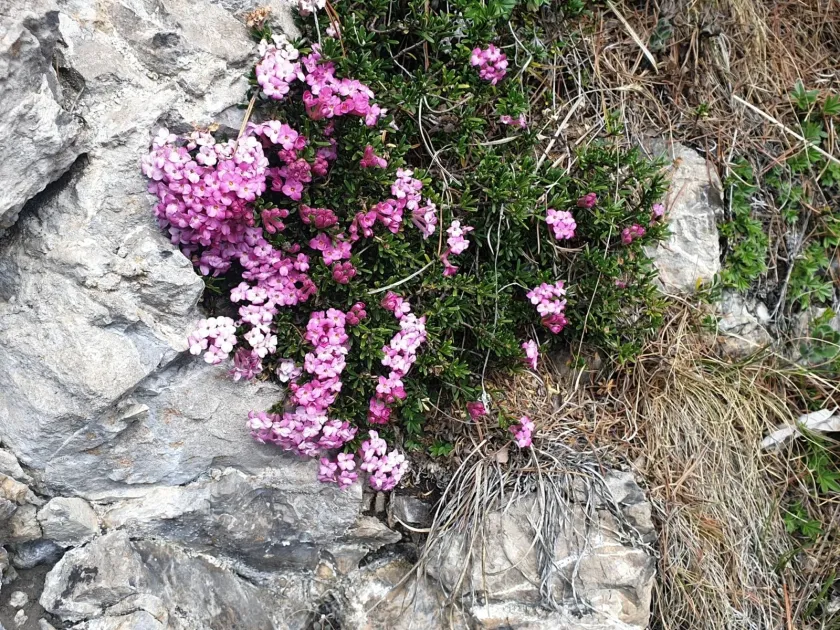
Daphne petraea is a member of the Thymelaeaceae family, uniquely adapted to survive in harsh, limestone-rich crevices in the mountains of Northern Italy.
The substrate must be highly alkaline, stony, and possess exceptional drainage capabilities to prevent the accumulation of moisture around the base.
This species thrives in sunny to partially shaded locations, requiring significant air circulation to maintain its health and compact, dense form.
In terms of climatic adaptation, rock daphne is hardy against cold temperatures provided that the substrate remains relatively dry throughout the winter period.
Watering should be carefully managed, avoiding any overhead irrigation that could lead to fungal issues within the dense foliage of the shrub.
Yield
The primary utility of rock daphne is ornamental, specifically for specialized alpine gardens, trough gardens, and rockery displays where space is limited.
Its biological characteristic of extreme longevity makes it a highly valued specimen for collectors who prioritize rare and slow-growing alpine species.
While not a high-yield crop in the traditional agricultural sense, its value is found in the high aesthetic demand for high-quality nursery stock.
The plant rewards the gardener with clusters of fragrant, bright pink flowers, which are considered the peak performance of this ornamental cultivar.
Sustainable propagation methods are essential for preserving this rare species while satisfying the needs of specialist horticultural markets globally.
Main diseases and pests
Fungal pathogens represent the most significant threat to the health of the plant, often triggered by stagnant moisture or poor ventilation in the growing area.
Common garden pests such as aphids and spider mites can infest the foliage, particularly during warmer, drier spells of the growing season.
Improper soil pH levels, specifically acidic soil conditions, can inhibit nutrient uptake and lead to severe chlorosis, weakening the overall plant structure.
Operators must exercise caution during maintenance, as all parts of the Daphne genus contain potent toxins that are harmful if ingested or handled carelessly.
Preventive measures include regular inspection for early signs of disease and ensuring that the soil drainage systems remain functional throughout the year.