
Daphne sericea
Daphne sericea Vahl
Description
Growing requirements
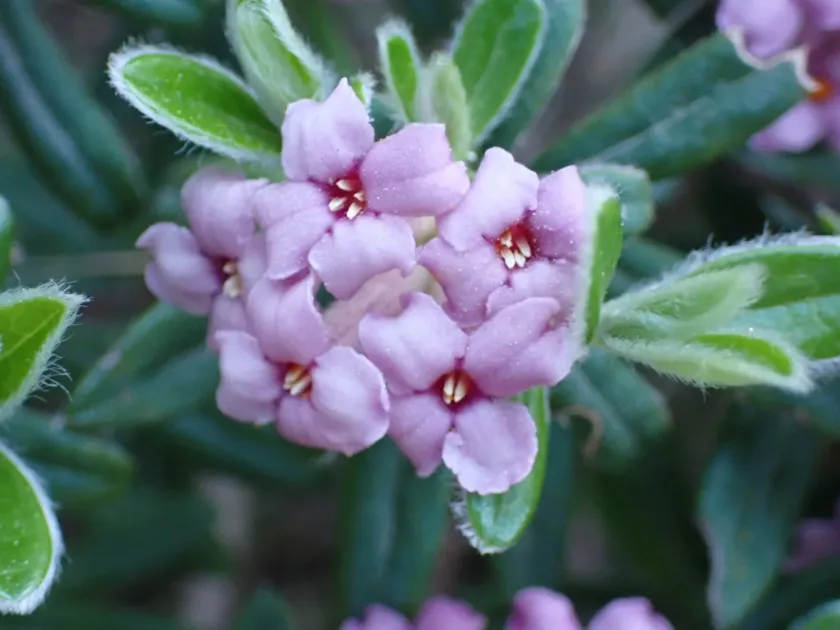
Daphne sericea is an exquisite evergreen shrub belonging to the Thymelaeaceae family. It is native to the Mediterranean region, typically inhabiting rocky slopes and limestone-rich soils in coastal areas of Greece, Turkey, and nearby islands.
The successful cultivation of this species requires well-drained, porous soil with a neutral to alkaline pH. Heavy clay soils are unsuitable and will likely lead to root rot; therefore, creating a raised bed or adding grit to the soil mix is recommended.
In terms of climate, Daphne sericea prefers mild conditions. It is not fully hardy in severe frost zones, so providing a sheltered location protected from harsh winter winds is essential for ensuring the plant survives the dormant season.
Light exposure is a critical factor for growth. While it thrives in full sun, it benefits from light shade during the hottest hours of the day in warmer climates to prevent the foliage from scorching and to retain soil moisture.
Agronomically, this plant is appreciated for its slow, compact growth habit. It requires minimal pruning, which usually involves removing dead or diseased wood after the flowering period to maintain the plant's natural structure.
Main diseases and pests
The primary threat to Daphne sericea is fungal infection due to poor drainage. Phytophthora and other root pathogens can quickly become a problem if the soil remains waterlogged for extended periods.
Pests such as aphids and spider mites can occasionally affect the plant, particularly during dry springs. Integrated pest management, including regular inspection and targeted applications of mild pesticides, is usually sufficient to maintain plant vigor.