
Purple-silky sorghum
Sorghum purpureosericeum
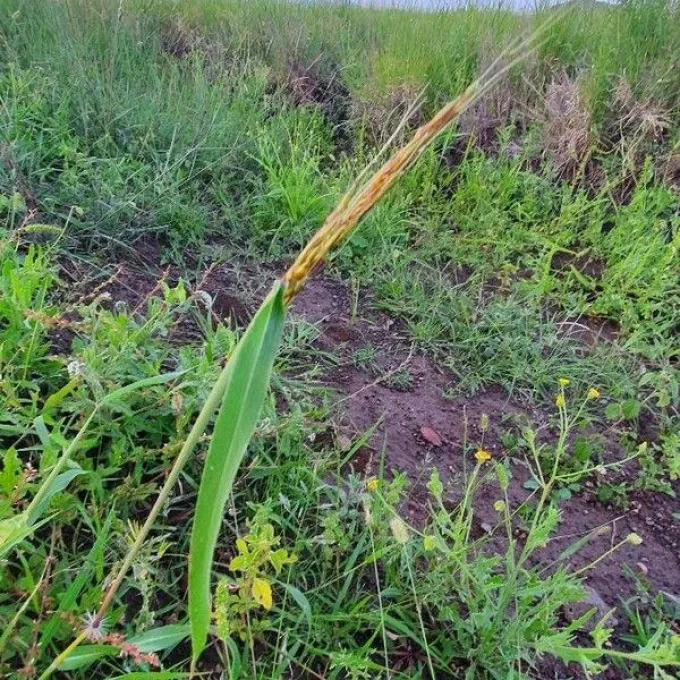
Description
Growing requirements
Purple-silky sorghum (Sorghum purpureosericeum) is a perennial grass belonging to the Poaceae family. It serves as a vital forage crop, primarily valued in tropical and subtropical regions for its ability to provide substantial biomass for livestock feed.
The plant is highly adapted to extreme heat and drought conditions, making it an essential resource in areas where other cereal crops fail to thrive. It requires intense solar radiation and high temperatures to reach its maximum productivity during the growing season.
Regarding soil, it is quite versatile, successfully growing in various types ranging from light sandy soils to heavy clay soils of tropical grasslands. Its robust root system helps the plant effectively extract nutrients and moisture from deeper soil layers.
Botanically, this species is known for its distinctive inflorescence and vigorous tillering capability. The morphology of the plant allows it to recover quickly after harvesting or grazing, provided that the soil moisture levels are adequate for regrowth.
Cultivation requires careful planning of planting dates to align with the start of the rainy season. Given its tropical nature, any frost exposure will result in immediate cell damage and cessation of growth, necessitating early harvesting in regions with cooler shifts.
Main diseases and pests
Smut diseases are the most common pathological threats to this species, affecting the flowering parts and significantly reducing biomass yield. Early detection and the application of fungicides are critical for preventing widespread infection across the field.
Stem borers pose a constant threat to the structural integrity of the plant. These insects tunnel into the stalks, compromising the plant's ability to transport nutrients and water, which eventually leads to the wilting of the panicles and stalks.
Leaf-feeding insects, including certain species of aphids and beetles, can cause significant cosmetic and physiological damage. Heavy infestations drain plant energy reserves, which are essential for long-term survival and regrowth cycles.
Integrated Pest Management (IPM) practices are highly recommended for large-scale production. This includes maintaining optimal plant density and ensuring proper soil fertility, as stressed plants are significantly more susceptible to both pests and diseases.
Crop rotation remains the most effective strategy to break the life cycle of soil-borne pathogens. By switching to non-grass species in the following season, producers can effectively reduce the population of harmful organisms in the soil profile.