
Broomcorn millet
Sorghum miliaceum
Description
Sowing dates
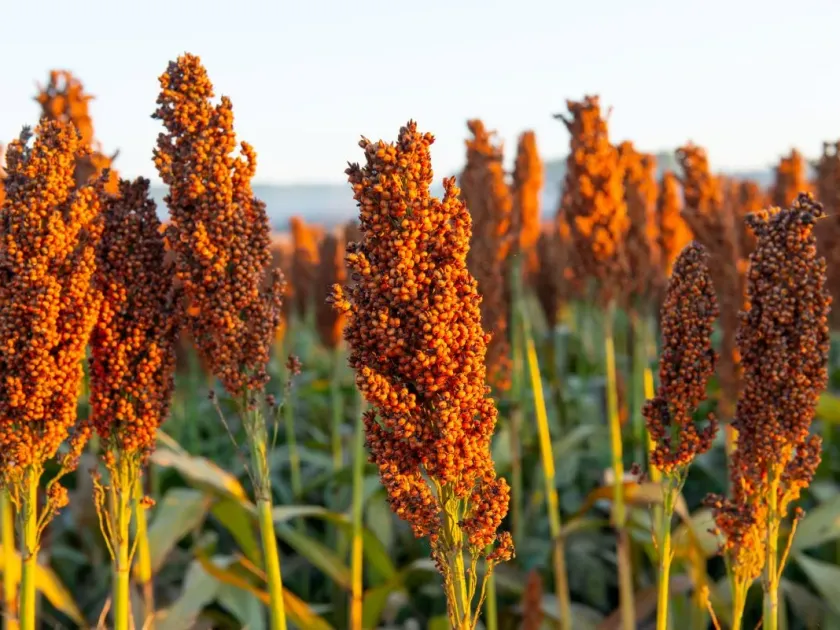
Broomcorn millet (Sorghum miliaceum) is a versatile annual cereal crop belonging to the Poaceae family. It is recognized for its unique ability to thrive in various soil conditions and its high efficiency in water utilization compared to other cereals.
Sowing should be performed when the soil temperature at the seeding depth consistently reaches 12 to 15 degrees Celsius. Planting too early in cold soil can lead to poor germination and susceptibility to soil-borne pathogens.
The standard seeding rate depends on the intended final use of the crop, whether for grain production or biomass. Rows are typically spaced to allow for proper light penetration and mechanical weed control.
Seedbed preparation is vital for successful establishment. The soil must be fine-textured, firm, and free of early-season weed competition, as the initial growth stage of the millet is relatively slow.
Precision planting at a depth of 3 to 5 cm ensures sufficient contact with subsoil moisture, promoting uniform emergence and strong root development from the very beginning of the season.
Growing requirements
Broomcorn millet is highly valued for its drought resistance, making it an excellent candidate for semi-arid regions where rainfall is unpredictable. Its physiology allows it to withstand severe water stress.
The crop is adaptable to a wide range of soil types, including sandy, loamy, and clay soils. It also demonstrates a higher tolerance to soil salinity compared to many other common cereal crops.
High temperatures are generally well tolerated, provided there is minimal water available. The plant requires a specific heat unit accumulation to complete its life cycle from emergence to maturity.
Nutrient management should be based on soil testing. Nitrogen application is crucial for vegetative development, while phosphorus and potassium help improve crop standability and general stress resilience.
Sunlight exposure is a significant factor for success. As a short-day plant, its development is closely linked to photoperiodic responses, which must be considered when selecting varieties for specific latitudes.
Yield
Potential yields for grain production typically range from 3 to 5 metric tons per hectare under optimized management conditions. High-yielding varieties are available to further increase this output.
When grown for forage or green biomass, the productivity of Broomcorn millet is impressive. Producers can achieve 30 to 50 tons of fresh green mass per hectare, depending on moisture availability.
Yield stability is improved through the implementation of Integrated Crop Management (ICM) practices, which include balanced fertilization and timely weed control to ensure maximum nutrient uptake.
Harvesting timing significantly affects final grain yield. Waiting for the optimal moisture content prevents field losses and ensures that the quality meets market standards for storage and usage.
Continuous monitoring of the crop's development stage helps agronomists estimate yields more accurately and adjust management strategies for better profitability and efficiency.
Main diseases and pests
Smut diseases are the most prevalent issues affecting panicle quality in Broomcorn millet. Standard seed treatment before sowing is highly effective in managing these fungal threats.
Insect pests, particularly aphids and the sorghum midge, can cause significant damage to foliage and developing grains. Regular scouting during the growing season is essential for timely intervention.
Weed competition can lead to substantial yield reductions if left unmanaged. Integrated weed management, including herbicides and cultivation, should be prioritized in the early growth phases.
Crop rotation is a fundamental practice to break the disease cycle. Avoiding the cultivation of Broomcorn millet after other susceptible graminaceous species reduces the pressure from soil-borne pathogens.
Environmental stress can sometimes exacerbate disease susceptibility, emphasizing the need for robust overall crop health through proper moisture and nutrient management throughout the growth cycle.
Harvesting
Grain harvest is typically performed using combines once the moisture content drops to 15-16%. Proper machine settings are crucial to prevent seed cracking and minimize harvest losses.
For forage purposes, the crop should be harvested at the beginning of the heading phase to ensure the highest nutritional value, including protein content and digestible energy.
Silage production requires quick harvesting and proper packing in bunkers or silos to create the anaerobic environment necessary for optimal fermentation and long-term storage.
Post-harvest management involves cleaning and drying the grain to prevent mold development in storage. Consistent ventilation of grain storage facilities is recommended to maintain quality.
Logistics play a major role in harvest efficiency. Coordinating labor and machinery allows for the timely gathering of the crop, reducing the duration of exposure to unpredictable weather conditions.