
Sorghum hybrids
Sorghum hybrids
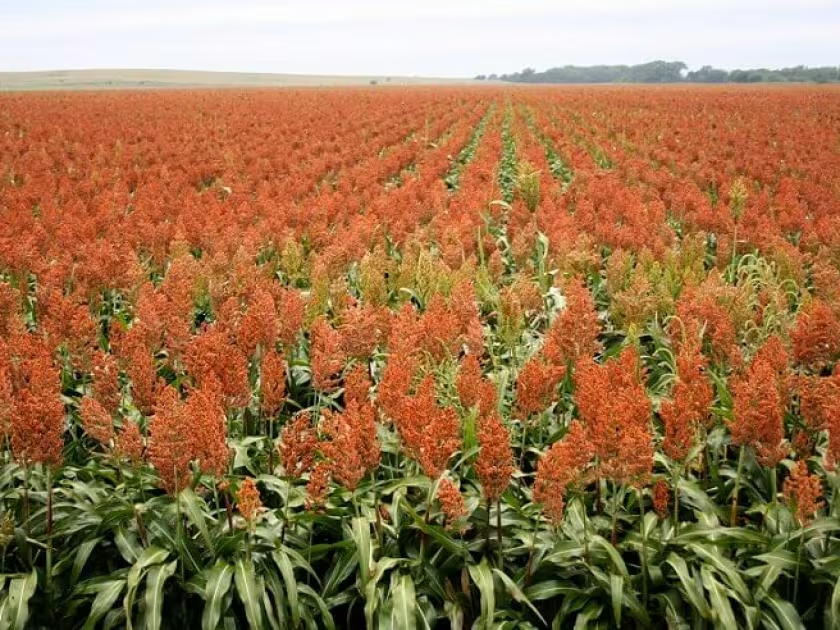
Description
Sowing dates
Sowing sorghum hybrids requires soil temperatures to reach +12...+14 °C at a 10 cm depth. Planting in colder soil causes uneven emergence and increases susceptibility to soil-borne root diseases.
The optimal planting window generally spans from late April to late May. Delaying the process can significantly reduce yield potential due to moisture stress during critical growth stages.
Planting depth typically ranges between 3–5 cm, depending on soil moisture content and texture. In drier topsoil, depths of 6–8 cm may be necessary to reach sufficient moisture for germination.
Seeding rates depend on the specific hybrid type and end-use, usually ranging from 150,000 to 350,000 seeds per hectare to ensure optimal plant density for a strong canopy.
Wide-row spacing, such as 45 or 70 cm, is recommended to facilitate mechanical weed control and improve airflow within the developing crop stand.
Growing requirements
Sorghum, a member of the Poaceae family, is renowned for its exceptional drought tolerance. Its extensive root system allows it to access water deep within the soil profile.
The crop is highly heat-demanding, with active growth starting above +15 °C. Seedlings are very sensitive to frost, as even minor freezing temperatures can severely damage young plants.
Sorghum hybrids adapt well to various soil conditions, including saline and alkaline types. However, they perform best on fertile, well-drained loamy soils with high organic matter.
To maximize yields, a balanced approach to fertilization is essential, particularly regarding nitrogen, which drives initial vegetative development and overall crop health.
Sorghum displays remarkable regrowth and tillering capabilities, enabling the plant to adapt to fluctuating environmental conditions throughout the growing season.
Yield
Grain sorghum hybrids, managed with intensive cultivation techniques, can achieve yields ranging from 7 to 12 tons per hectare under irrigated conditions.
In rain-fed environments, yields typically range from 3 to 6 tons per hectare, making it a reliable and profitable alternative to corn in semi-arid regions.
Forage or silage hybrids produce massive biomass, often reaching 50–90 tons per hectare. These are highly prized for their high sugar content and excellent feed quality.
Key yield limiting factors include moisture availability during flowering and competition with weeds in the early stages of the plant's life cycle.
Modern breeding programs focus on developing hybrids with improved lodging resistance and synchronous panicle maturation, which facilitates efficient mechanical harvesting.
Main diseases and pests
The most common and destructive diseases in sorghum include various types of smut and leaf blight, which can significantly hinder photosynthetic performance and grain development.
Pests such as the sorghum aphid and soil-dwelling wireworms pose significant risks. Aphids sap vital nutrients, while wireworms target seeds and young roots.
Seed treatment with high-quality systemic fungicides and insecticides is the primary line of defense against early-season pathogens and soil insects.
Integrated pest management, including regular crop scouting and timely application of insecticides based on economic thresholds, is vital for maintaining productivity.
Proper crop rotation is a fundamental cultural practice that prevents the buildup of soil-borne pathogens and keeps the population of specific insect pests in check.
Harvesting
Grain harvest begins when moisture levels drop to 20–25%. Post-harvest drying is essential to prevent mold growth and maintain the quality of the stored grain.
Combine settings, particularly drum speed and concave clearance, must be carefully adjusted to prevent grain cracking while ensuring clean separation from the panicles.
Silage hybrids should be harvested at the soft-dough stage to capture the maximum energy and nutrient content before the plant begins to decline in quality.
Timely harvest is critical to prevent yield losses from bird damage, shattering, or lodging that can occur if the crop is left in the field for too long.
Post-harvest handling involves thorough cleaning of the grain to remove debris, which improves long-term storage safety and prevents spontaneous heating in bins.