
Sorghum propinquum
Sorghum propinquum
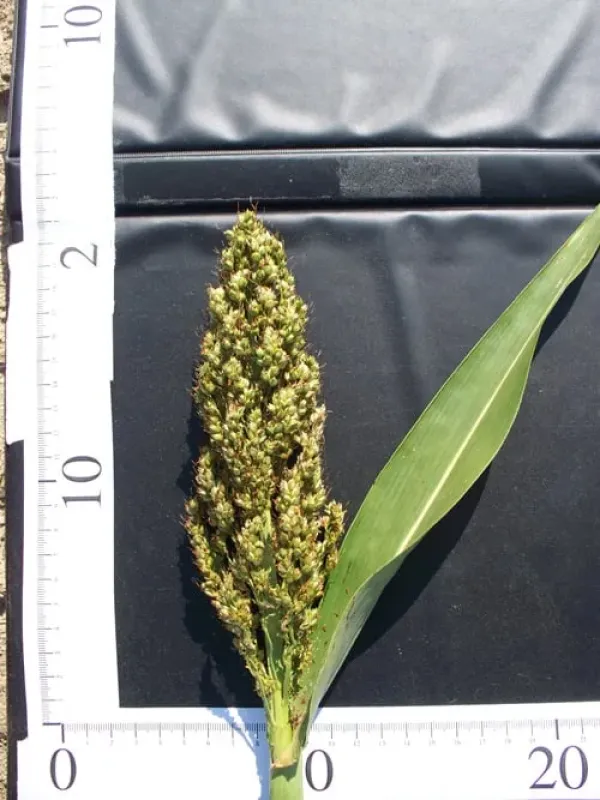
Description
Sowing dates
Sorghum propinquum is a rhizomatous perennial grass, typically found in tropical regions. Sowing is usually carried out in warm, frost-free conditions, ensuring that soil temperatures remain consistently above 20 degrees Celsius to facilitate rapid germination and root development.
The seeds are relatively small, so they should be planted at a shallow depth of 2 to 3 centimeters in well-prepared, friable soil. Proper seed-to-soil contact is crucial to achieve uniform emergence of seedlings across the experimental plot.
Given its aggressive vegetative spread, sowing design must account for the expansion of the rhizome system. Spatial isolation or the use of physical barriers is often necessary to prevent the plant from becoming a weed in adjacent fields or sensitive ecosystems.
In research settings, seeds are often pre-treated or selected for high viability to ensure a consistent population. Unlike annual sorghum varieties, the focus during sowing is on establishing a robust root system that will support multiple years of regrowth.
The timing of sowing must be synchronized with the local wet season if irrigation is unavailable. Adequate moisture during the first few weeks after sowing is essential for the plant to establish its perennial habit and survive the subsequent dry periods.
Growing requirements
As a tropical species, this sorghum thrives in warm, humid climates. It has high light requirements and performs best in full sun, where its photosynthetic efficiency is maximized for both above-ground biomass and underground storage.
The species is adaptable to a variety of soil types, ranging from sandy loams to heavy clays. However, it requires good drainage to avoid prolonged waterlogging, which can suppress the development of its rhizome network.
Nutrient requirements are similar to those of commercial sorghum, with a particular demand for nitrogen to support rapid vegetative growth. Balanced fertilization helps maintain the vigor of the plant over multiple harvesting seasons.
Sorghum propinquum is highly valued for its perenniality, a trait that is currently being introgressed into annual sorghum crops via interspecific hybridization. Its ability to regrow from rhizomes makes it an ideal genetic resource for developing resilient new hybrids.
While tolerant of some drought, the plant's productivity is closely linked to water availability. In semi-arid regions, regular irrigation is required to achieve the full biomass potential of the species throughout the growing season.
Yield
The yield of green forage is significant due to the species' ability to produce several harvests within a single year. Rapid regrowth after mowing makes it an attractive candidate for forage research in tropical environments.
Yield stability is a key characteristic of Sorghum propinquum, as it relies on stored carbohydrates in its extensive rhizome system. This allows the plant to recover quickly after each harvest, even under fluctuating environmental conditions.
Grain production is generally secondary to biomass production in this species. The seed heads are smaller compared to cultivated sorghum, but they provide enough yield for propagation and breeding purposes.
In comparative trials, the biomass accumulation of this species often exceeds that of annual varieties in the second and third years of establishment. However, management of the harvest interval is critical to ensure the long-term health of the root system.
Data from biomass yield studies are essential for assessing the genetic contribution of this species to breeding programs. Researchers monitor both the dry matter content and the nutritional quality of the forage to validate its potential applications.
Main diseases and pests
Like other members of the Sorghum genus, this species is susceptible to various fungal pathogens, particularly in humid conditions. Rust and leaf blight are common issues that can reduce the overall photosynthetic area of the leaves.
Pests such as aphids and leafhoppers pose a constant threat, not only by feeding on plant sap but also by acting as vectors for systemic viral diseases like mosaic virus. Early detection and management are vital for maintaining healthy populations.
The sorghum stem borer is a significant pest that damages the structural integrity of the stems. By boring into the stalk, these larvae restrict nutrient transport and weaken the plant, making it more vulnerable to wind breakage.
Nematode infestations can occur, especially in fields where sorghum is grown continuously without adequate crop rotation. These soil-borne pathogens can significantly reduce the vigor of the rhizome system and overall plant survival.
Effective management strategies emphasize integrated pest management (IPM). This includes maintaining optimal stand density, utilizing biological controls, and selecting for resistant germplasm to minimize reliance on synthetic chemical inputs.
Harvesting
Harvesting for forage is performed using mechanized cutting equipment, typically at the vegetative or early heading stage. This timing optimizes the balance between total biomass volume and the nutritional quality of the harvested feed.
It is crucial to leave a sufficient stubble height during harvest. This promotes faster regrowth from the basal buds and prevents exhaustion of the energy reserves stored in the rhizomes below the soil surface.
For seed harvesting, the process is delayed until the panicles are mature. Because seed maturity can be asynchronous, harvesting might require specialized techniques to ensure maximum capture and minimal shatter loss.
Post-harvest management involves rapid drying of the forage to prevent spoilage. Proper storage conditions are necessary to maintain the quality of the harvested biomass and prevent mold growth during the drying process.
Periodic monitoring of the plant stand is recommended following the harvest. This allows for an assessment of the regrowth rate and the overall health of the perennial stand, ensuring future yields remain within expected parameters.