
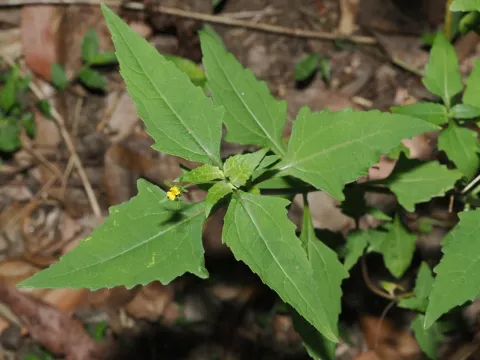
Sigesbeckia
Sigesbeckia L.
Sigesbeckia is a medicinal plant belonging to the Asteraceae family. Successful cultivation requires careful attention to seeding timing, as the plant is sensitive to soil temperature fluctuations during the germination phase.
What the section contains

Sigesbeckia
The optimal time for sowing is late spring, once the soil has warmed sufficiently to at least 12–15 degrees Celsius. Planting too early, when the ground is cold, significantly delays development and reduces the overall vigor of the crop.
Seeds should be sown at a shallow depth of approximately 1–2 centimeters. Maintaining uniform moisture is essential during the emergence period; however, the soil must be well-drained to prevent the seeds from rotting.
For industrial production, spacing is crucial for canopy management. Rows should be spaced 40 to 50 centimeters apart, allowing for adequate light penetration and ventilation, which are critical for the plant's healthy development.
In regions with cooler climates, starting plants in greenhouses as seedlings is recommended. This approach ensures a longer growing season and higher biomass yield compared to direct seeding in the open field.
Sigesbeckia thrives in fertile, well-drained loamy soils with a neutral pH. The plant is particularly sensitive to waterlogging, which often leads to root development issues and increased susceptibility to soil-borne pathogens.
As a light-loving species, Sigesbeckia requires full sun exposure to reach its peak medicinal potential. Shade-grown plants often show lower concentrations of secondary metabolites and reduced overall vegetative growth.
The plant prefers moderate climatic conditions with temperatures ranging from 18 to 25 degrees Celsius. Extreme heat or prolonged cold spells can stress the plant, necessitating adjustments in irrigation and field management.
Irrigation management is vital, especially during dry summer periods. While the plant can tolerate short periods of moderate dryness, consistent moisture levels are required to achieve the highest quality of raw material.
Regular agronomic practices, such as mechanical weeding and inter-row cultivation, are essential. Keeping the plantation free from competition during the first weeks of growth is the most important factor in ensuring a successful harvest.
Aphids and spider mites are the most common pests that affect Sigesbeckia plantations. These pests often congregate on the underside of leaves, and their feeding activity can cause stunted growth and reduced leaf quality.
Powdery mildew is a prevalent fungal issue, characterized by a white, powdery coating on the foliage. It spreads rapidly in high-humidity conditions, necessitating early intervention with organic fungicides to save the crop.
Root rot is a major threat linked to improper irrigation or poorly drained soils. Once established, it is difficult to treat, making preventative soil preparation and proper water management the most effective defenses.
Integrated pest management is recommended, focusing on biological controls to minimize the use of harsh chemicals. Given its medicinal use, maintaining a clean and chemical-free environment is of paramount importance.
Crop rotation serves as a critical preventive strategy. Sigesbeckia should not be planted on the same plot for consecutive years, particularly following other Asteraceae family members, to avoid the buildup of soil pathogens.