
Sigesbeckia orientalis
Sigesbeckia orientalis L.
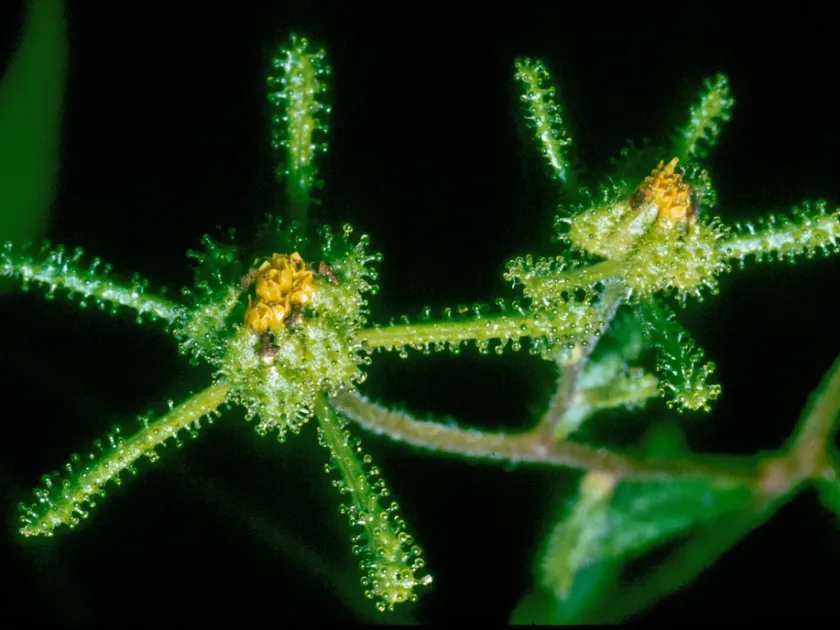
Description
Sowing dates
Sigesbeckia orientalis, commonly known as St. Paulswort, is an annual medicinal herb belonging to the Asteraceae family, native to tropical and temperate Asia.
In agricultural practice, seeds are typically sown in early spring once the soil temperature consistently reaches 12–15 °C for optimal germination.
The seeds require a shallow sowing depth of about 0.5 to 1 centimeter, as they need a degree of light exposure to trigger effective germination processes.
Proper spacing between plants, usually 30–40 centimeters, is crucial to prevent resource competition and ensure enough space for the plant's side-branching habit.
Initial irrigation is necessary to ensure the soil remains moist until seedlings are well-established and have developed their first set of true leaves.
Growing requirements
This crop thrives in well-drained, fertile soil rich in organic matter, preferring a slightly acidic to neutral pH range between 6.0 and 7.0 for best performance.
While the plant is somewhat adaptable, it performs best in full sun exposure; however, it can tolerate partial shade in regions with extremely high summer temperatures.
Consistent moisture is required throughout the growing season, though the plant is sensitive to waterlogged conditions which can lead to root damage.
Sigesbeckia is not particularly cold-hardy, requiring a frost-free environment to complete its growth cycle and produce high-quality aerial biomass.
Nutrient management focuses on moderate nitrogen application to promote vegetative growth without sacrificing the concentration of essential chemical compounds.
Yield
The economic value of Sigesbeckia orientalis lies primarily in its aerial parts, which are used extensively in traditional medicine for anti-inflammatory purposes.
Yield levels are dictated by plant density and the efficiency of weed management programs, as the plant is a slow grower during the initial seedling stage.
Under favorable management practices, growers can achieve a consistent harvest of dried herb, which is then processed for extraction in the pharmaceutical sector.
Regular monitoring of the crop canopy density is required to maximize biomass production while maintaining the desired level of active plant metabolites.
Strategic harvesting at the peak of the vegetative growth phase is essential to ensure that the yield meets stringent industry standards for quality control.
Main diseases and pests
Common agricultural pests affecting this crop include aphids, which can compromise plant health and act as vectors for various plant viral diseases.
Integrated pest management (IPM) strategies, including the use of beneficial insects or botanical extracts, are preferred to maintain the integrity of medicinal сырья.
Fungal issues such as powdery mildew can become a significant problem in dense stands where air circulation is restricted during humid weather conditions.
Root-rot pathogens may develop if irrigation management is poor or if the soil lacks adequate drainage, necessitating a careful approach to field site selection.
Weed competition represents a major threat during the first 4 weeks post-germination, requiring mechanical cultivation to maintain a clean crop stand.
Harvesting
Harvesting should be timed precisely to coincide with the onset of flowering when the content of bioactive diterpenoids is documented to be at its highest.
The harvest method involves mowing or manual cutting of the stalks, leaving sufficient base stems to avoid soil contamination and ensure cleanliness of the crop.
Immediate post-harvest processing is critical; plants must be transported to a drying facility without delay to prevent overheating and degradation of compounds.
Drying is conducted using forced-air ventilation or solar driers, ensuring temperatures do not exceed 45 °C to preserve the volatile oils and active constituents.
Storage of the finished product requires a cool, dry, and dark environment to minimize the loss of efficacy and to prevent spoilage during long-term storage.