
Common sage
Salvia officinalis L.
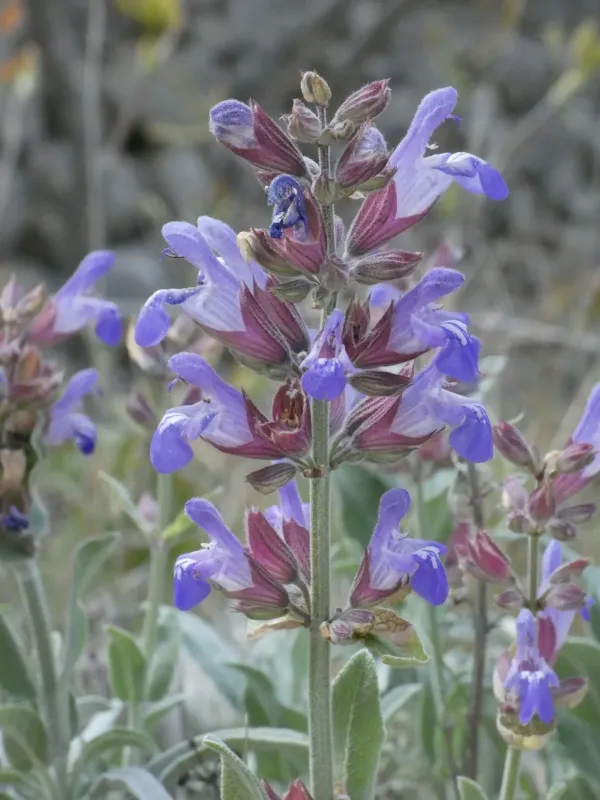
Description
Sowing dates
Common sage (Salvia officinalis) is a hardy perennial subshrub belonging to the Lamiaceae family. For large-scale production, direct seeding is conducted in early spring once soil temperatures reach at least 10 degrees Celsius.
Seeds are sown in rows spaced 50 to 60 centimeters apart to allow for proper mechanization and airflow. A planting depth of 1-2 centimeters is recommended to ensure optimal germination rates across the field.
Transplanting seedlings is often preferred by professional growers to establish a uniform crop density. Seedlings are typically raised in controlled environments for 6-8 weeks before being moved to the open field.
A well-prepared seedbed free of perennial weeds is crucial, as sage seedlings are susceptible to competition during the establishment phase. Pre-emergence cultivation should be managed to keep the site clean.
Vegetative propagation via cuttings is a common practice to ensure genetic uniformity and specific chemical profiles, especially for high-value essential oil production sites.
Growing requirements
Sage thrives in sunny environments and requires well-drained, fertile soil to reach its full potential. Sandy loam soils with a neutral to slightly alkaline pH are considered ideal for successful cultivation.
The plant is known for its high drought tolerance once established, making it a sustainable choice for semi-arid agricultural regions. However, adequate soil moisture is essential during the first growing season.
Proper drainage is paramount, as waterlogged conditions lead to root rot and other fatal soil-borne diseases. Avoiding low-lying, poorly drained areas is a key strategic decision for any sage farm.
Temperatures ranging from 18 to 25 degrees Celsius are optimal for biomass accumulation. The plant can withstand winter cold, though heavy frost may require protective mulching to prevent root damage.
Consistent weed management through inter-row cultivation is necessary to maintain nutrient availability for the sage plants. Proper aeration of the soil helps stimulate vigorous growth and prevents compaction.
Yield
Yields of dried sage leaves vary depending on soil fertility, climate, and variety, generally ranging from 3 to 6 tons per hectare. High-quality production requires precise harvesting timing.
Productivity typically peaks between the second and fourth years of growth. After this period, plant density often decreases, and growers usually rotate to other crops or replant to maintain economic efficiency.
Harvesting at the peak of bloom is critical to ensure high levels of volatile oils and polyphenols. This timing is standard for both the cosmetic and pharmaceutical ingredient markets.
Post-harvest processing involves rapid drying in a climate-controlled environment below 40 degrees Celsius. Excessive heat or improper ventilation during drying will degrade the essential oil quality.
Seed production is an secondary income stream for many farms, as properly managed sage plants produce viable seeds if allowed to mature after the primary leaf harvest.
Main diseases and pests
Downy mildew and powdery mildew are the most significant fungal threats to sage crops. Maintaining adequate spacing between plants improves airflow and serves as a primary preventative measure.
Root rot, primarily caused by excessive soil moisture, poses a constant risk. Implementing a strict crop rotation cycle of at least five years helps prevent the buildup of soil-borne pathogens.
Common pests include slugs, aphids, and certain types of caterpillars that feed on tender foliage. Integrated Pest Management (IPM) strategies, including biological controls, are highly recommended.
Weed infestation is a major threat during the plant's first year of development. Monitoring and early intervention are necessary to ensure the sage is not smothered by aggressive annual weeds.
- Ensure proper drainage to prevent root diseases.
- Utilize row spacing to promote air circulation.
- Perform regular field scouting for signs of infestation.
- Remove infected plant debris immediately after harvest.
- Use certified pest-free planting stock for new fields.
Harvesting
Harvesting is typically done using mechanical cutters, taking care to leave enough basal growth for plant recovery. Leaving 10-15 centimeters of stem ensures the plant can regenerate quickly.
Two harvests per season are standard in many regions: the first just before full bloom and the second in late summer. This schedule allows the plants sufficient time to prepare for the winter dormancy.
Harvesting during dry, sunny weather is essential to minimize moisture content and reduce the risk of spoilage. Freshly cut biomass must be transported quickly to avoid heat buildup.
Post-harvest nutrition management involves applying light fertilizer after the final cut to support root storage and plant vitality. This ensures the crop will return vigorously in the following spring.
Final storage of the dried product requires humidity-controlled rooms and breathable packaging. This maintains the herb's distinct aroma, therapeutic quality, and overall market value.