
Salvia lycioides
Salvia lycioides A. Gray
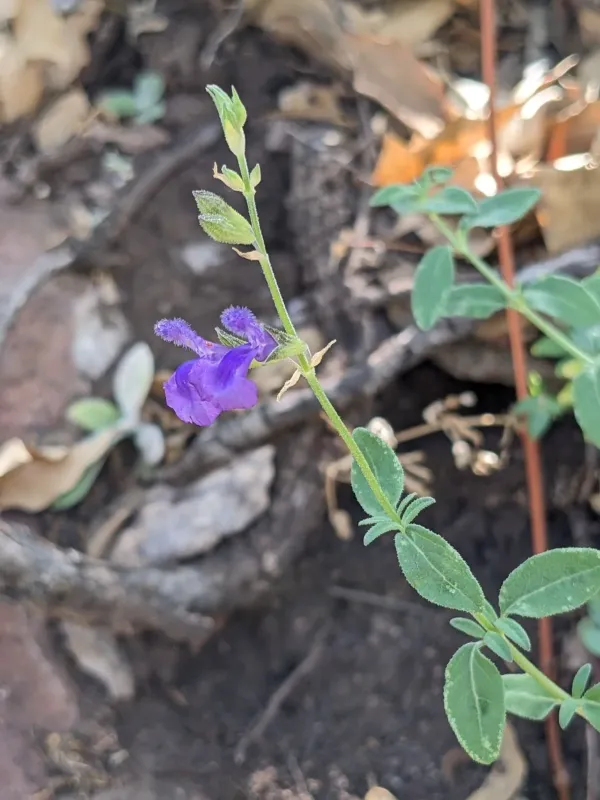
Description
Sowing dates
Salvia lycioides, a member of the Lamiaceae family, is a hardy perennial subshrub native to the mountainous regions of Mexico and the Southwestern United States. It is propagated primarily through seeds or semi-hardwood cuttings.
When starting from seeds, sow them in late winter or early spring in a light, well-draining substrate. Because these seeds require light to germinate, cover them only very lightly with sand or vermiculite.
Transplanting to the permanent field site should occur once all danger of frost has passed and the soil has warmed up significantly. Proper spacing of 40–50 cm is critical for air circulation.
Propagation by cuttings is best achieved in late summer. Use healthy, non-flowering stems and place them in a mix of perlite and peat to encourage rapid root development before the winter season begins.
Initial establishment requires careful monitoring of soil moisture, but once the root system is well-developed, the plant becomes remarkably resilient to environmental stress and low-maintenance.
Growing requirements
This species thrives in high-light conditions and requires a location with full sun exposure throughout the day. Inadequate sunlight results in leggy growth and reduced flowering potential.
The soil must have exceptional drainage. Salvia lycioides is naturally adapted to rocky, sandy, or alkaline soils and will suffer significantly in heavy clay or waterlogged conditions.
Fertilization should be kept to a minimum. This plant performs best in nutrient-poor soils, as excessive nitrogen promotes rapid, weak growth that is susceptible to wind damage and diseases.
Temperature requirements are moderate; while it handles heat well, it needs protection or indoor containment in areas with severe winter frost. It is considered moderately drought-tolerant once established.
Watering practices should focus on consistency rather than volume. Allow the soil to dry out almost completely between waterings to mimic the plant's native semi-arid environment.
Main diseases and pests
The most common threat to Salvia lycioides is root rot caused by stagnant water in the root zone. Proper site preparation with gravel or sand-based drainage is the primary defense.
Powdery mildew can occur in areas with high humidity and poor airflow. Regular pruning to keep the interior of the shrub open helps mitigate this risk significantly.
Pests such as spider mites may appear during periods of extreme heat and dry air. Monitoring the undersides of the leaves during the summer months is recommended for early detection.
Aphids can occasionally target new growth. If infestation levels are low, physical removal with a strong stream of water is often sufficient to manage the population without chemicals.
Fungal leaf spots are another potential issue in rainy seasons. Ensure that plants are not overcrowded and keep the area around the base free from decaying plant debris.
Harvesting
The primary harvest involves collecting the flowering stems and foliage for pharmaceutical, ornamental, or aromatic purposes. The best time for harvest is during the peak bloom phase.
Harvesting should be done in the morning, immediately after the dew has evaporated but before the intense midday sun heats the plant, ensuring maximum concentration of volatile oils.
Drying must be conducted in a shaded, well-ventilated area to preserve the chemical integrity and fragrance of the leaves and flowers. Avoid drying in direct sunlight or at high temperatures.
Once dried, the plant material should be carefully stripped from the stems and stored in airtight glass containers to maintain potency for future medicinal or culinary use.
Properly cured and stored, the harvested material maintains its active compounds for up to two years, provided it is kept in a cool, dark, and dry environment.