
Serjania subdentata
Serjania subdentata
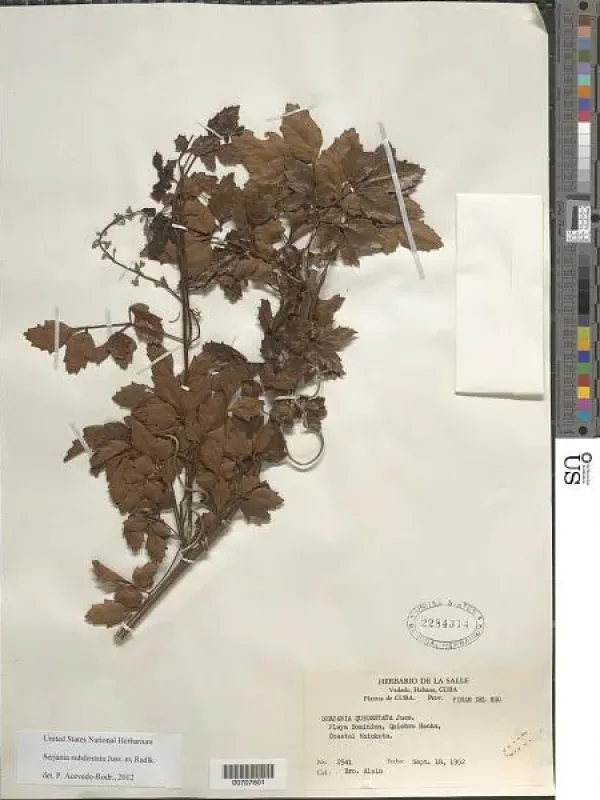
Description
Growing requirements
Serjania subdentata is a woody vine belonging to the Sapindaceae family. Known for its vigorous climbing habit, it naturally thrives in tropical ecosystems where it utilizes canopy trees to reach sunlight, showcasing remarkable adaptation strategies.
The native range of this species is primarily located in the tropical regions of the Americas. It is typically found in humid forests and edge habitats, where it plays an integral role in the vertical structure of the flora.
Botanically, the plant features complex foliage and small, clustered flowers. Its stems are initially flexible and herbaceous, gradually transitioning into woody structures that provide the necessary strength to support significant biomass as the vine matures.
Climatic requirements are strictly tropical, necessitating consistent temperatures and high atmospheric humidity. The plant does not possess mechanisms to endure frost or cold spells, making it exclusively suitable for specific geographic zones with stable warmth.
Regarding soil conditions, it demands fertile, well-draining media. A balance of moisture and aeration is essential to prevent root asphyxiation, as the plant is highly sensitive to waterlogged conditions which often lead to pathogenic fungal proliferation.
Main diseases and pests
The primary threats to Serjania subdentata include various root rot pathogens, which are favored by poorly drained soils. Managing soil moisture levels is the most critical factor in preventing these devastating diseases.
Insect pests, particularly aphids and scale insects, pose a significant risk by feeding on the sap of tender new growth. This feeding activity can stunt the plant's development and lead to secondary leaf infections.
Spider mites are frequently encountered in indoor or greenhouse cultivation, especially when air humidity drops. Their presence is easily identified by the fine webbing and yellowing of the leaves, requiring immediate mitigation.
Effective management strategies involve regular pruning to improve airflow, which inherently reduces the humidity levels that pests and fungi prefer. This cultural practice is fundamental for maintaining the long-term health of the vines.
- Monitor leaf undersides for early signs of infestation.
- Use systemic biological control agents where applicable.
- Maintain consistent, but not excessive, irrigation.
- Ensure proper spacing between individual vines.