
Scorzoneroides carpetana
Scorzoneroides carpetana
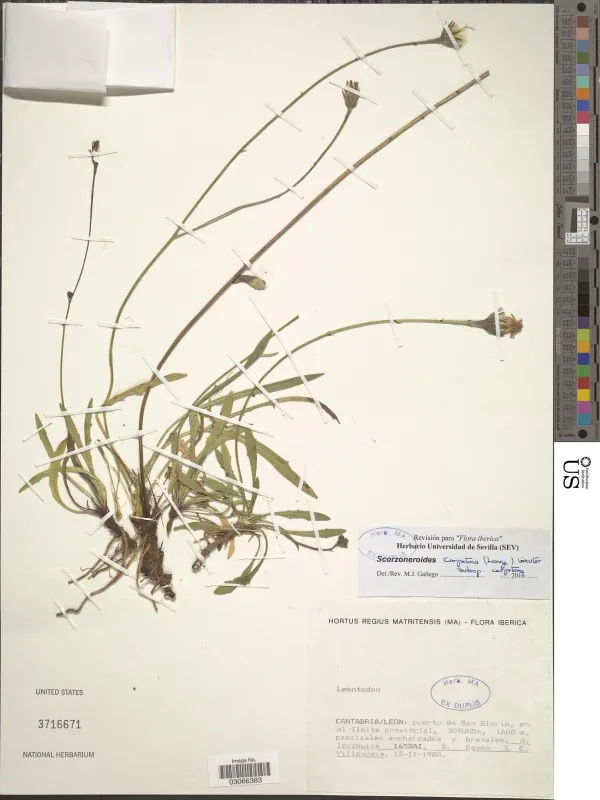
Description
Growing requirements
Scorzoneroides carpetana is a perennial herbaceous plant belonging to the Asteraceae family. Historically associated with the genus Leontodon, this species exhibits distinct biological adaptations suitable for mountainous terrain.
The plant is endemic to the high-altitude regions of the Iberian Peninsula, particularly the central mountain ranges such as the Sierra de Guadarrama. It has evolved to thrive in alpine and subalpine environments with distinct seasonal cycles.
Cultivation requires well-drained, stony, or sandy substrates that mimic its natural habitat. The species prefers areas with excellent soil aeration, as it is susceptible to root diseases when waterlogged conditions are present.
Scorzoneroides carpetana is highly cold-hardy, capable of enduring significant temperature fluctuations and prolonged winter dormancy. Full sun exposure is essential for maintaining plant vigor and promoting regular flowering cycles.
Management techniques should prioritize minimal fertilizer application, as the species is adapted to nutrient-poor, thin mountain soils. Maintaining the appropriate soil pH, ideally between 5.5 and 6.8, is critical for optimal nutrient uptake.
Harvesting
The practical use of Scorzoneroides carpetana is currently focused on botanical research and specialized ornamental gardening. It serves as an interesting subject for studies on plant resilience in high-altitude ecosystems.
Harvesting the seed material requires careful timing, as the seeds are equipped with a pappus designed for wind dispersal. It is recommended to bag the seed heads before full dehiscence occurs to ensure high yields.
For scientific analysis or herbal utilization, the above-ground biomass is collected during the peak flowering stage. This period ensures the highest concentration of specialized secondary metabolites within the plant tissues.
Post-harvest handling involves drying the material in a cool, ventilated environment to prevent degradation. Seed storage should be conducted in sealed, moisture-proof containers maintained at stable low temperatures.
The potential for utilizing the root systems as a source of prebiotic fibers, such as inulin, remains a niche interest within agricultural research, reflecting the broader economic potential of the Asteraceae family members.