
Scarlet sage
Salvia splendens Sellow ex Schult.
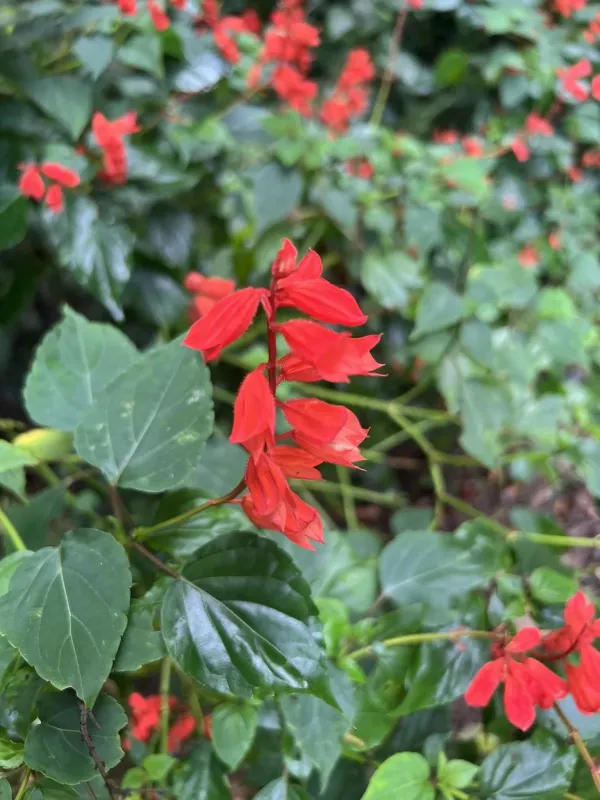
Description
Sowing dates
Scarlet sage (Salvia splendens) is a popular tender perennial from the Lamiaceae family, primarily grown as an annual in most climates. It is native to the subtropical regions of Brazil, which defines its high demand for warmth and sunlight.
For early bloom, seeds should be sown indoors in late winter or early spring. Use a sterile, well-draining seed-starting mix to prevent damping-off disease, which is common in early-stage seedlings.
Sow seeds on the surface of the soil and cover them very lightly with fine vermiculite, as they require light to germinate effectively. Maintain a temperature of 22–25 degrees Celsius and keep the surface consistently moist.
Germination typically occurs within two weeks. Once seedlings have emerged, move them to a bright location and lower the ambient temperature slightly to encourage sturdy, compact growth rather than leggy stems.
Transplant the seedlings into larger containers once the first set of true leaves develops. Harden off the plants gradually before moving them outdoors to ensure they can withstand environmental changes.
Growing requirements
Scarlet sage thrives in full sun but can tolerate partial shade in regions with extremely hot summers. Exposure to direct light is crucial for maintaining the deep, vivid coloration of its characteristic red bracts.
The plant performs best in loose, fertile, and well-drained soil. Heavy clay soils should be amended with organic compost and grit to improve aeration and prevent root rot, which is a major risk for this species.
Regular irrigation is essential, especially during the peak of summer. While the plants are relatively drought-tolerant once established, consistent moisture ensures continuous blooming throughout the entire growing season.
Feeding the plants with a balanced, water-soluble fertilizer every two to three weeks promotes vigorous growth. Avoid excessive nitrogen, as this will lead to abundant foliage but fewer flower spikes.
Deadheading spent flowers is highly recommended to encourage the production of new blooms. Keeping the plants tidy also improves airflow around the base, which helps in preventing various fungal diseases.
Main diseases and pests
Spider mites are the most significant pest for Scarlet sage, particularly in hot and dry environments. They cause stippling on the leaves and can lead to plant decline if not managed promptly with appropriate miticides.
Whiteflies are another common nuisance that gathers under the leaves to feed on plant sap. Regular monitoring and the use of insecticidal soap or systemic insecticides are effective measures against large infestations.
Powdery mildew often appears during periods of high humidity and poor air circulation. It manifests as a white, dusty layer on the leaves, which can be mitigated by improving spacing between plants and applying fungicides.
Root rot is a common ailment resulting from waterlogged soil or excessive rainfall. It often causes the plant to wilt suddenly and fail to respond to irrigation, necessitating immediate removal and destruction of affected specimens.
Aphids can infest the tender tips of the plant, stunting growth and distorting new leaves. These pests should be controlled early in the season to prevent the spread of viral diseases and secondary infections.