
Scaevola thesioides
Scaevola thesioides Benth.
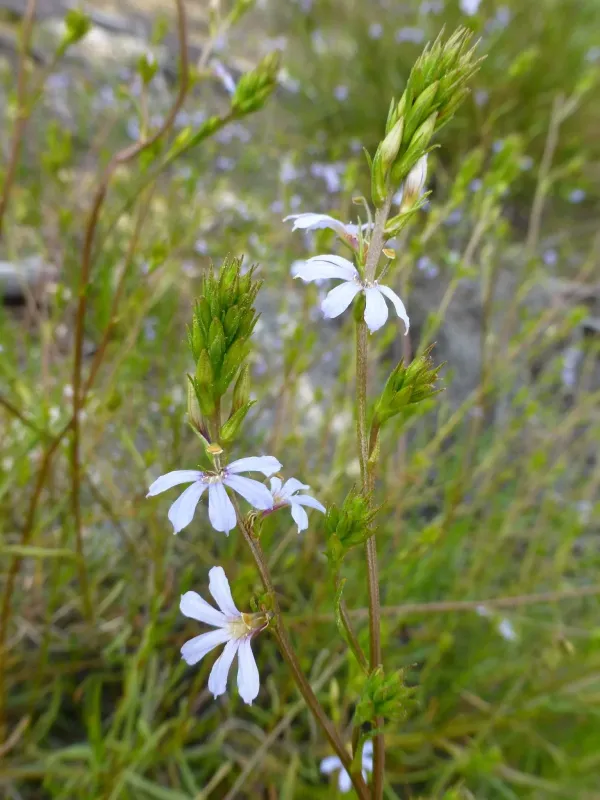
Description
Growing requirements
Scaevola thesioides is a perennial herbaceous plant belonging to the Goodeniaceae family. It originates from Western Australia, where it has evolved to thrive in sandy, well-draining soils characteristic of its native habitat.
The plant is distinguished by its unique fan-shaped flowers, which provide significant ornamental value. Its growth habit is typically spreading or prostrate, making it an excellent choice for ground cover in warm-climate gardens.
This culture requires high light intensity for optimal performance. It performs best when exposed to full sunlight, which promotes dense vegetative growth and consistent flowering throughout the season.
Soil requirements are strict: the medium must provide excellent drainage. Clay-heavy soils should be avoided or heavily amended with sand and gravel to prevent the root suffocation that often leads to plant loss.
While adapted to harsh Australian conditions, in colder climates, it is often treated as an annual or a container plant moved indoors during winter. Proper spacing is essential to ensure adequate airflow around the foliage.
Main diseases and pests
The most significant threat to the health of Scaevola thesioides is root rot. This condition is primarily caused by overwatering and poor drainage, which creates an anaerobic environment for beneficial bacteria and fungi.
Pests such as whiteflies and spider mites can become an issue, particularly in protected or greenhouse environments. These insects drain plant sap, causing leaves to yellow and growth to become stunted.
Powdery mildew may occur if the ambient humidity is high and there is insufficient airflow between the plants. Maintaining adequate space between specimens helps reduce the risk of such outbreaks.
Aphids can be problematic during the early stages of the growing season, clustering on new buds. Regular monitoring and, if necessary, the application of insecticidal soaps can manage these populations.
To prevent disease transmission, avoid overhead watering. Aiming water directly at the base of the plant keeps the foliage dry and drastically reduces the chances of foliar fungal pathogens taking hold.