
Scaevola saligna
Scaevola saligna G. Forst.
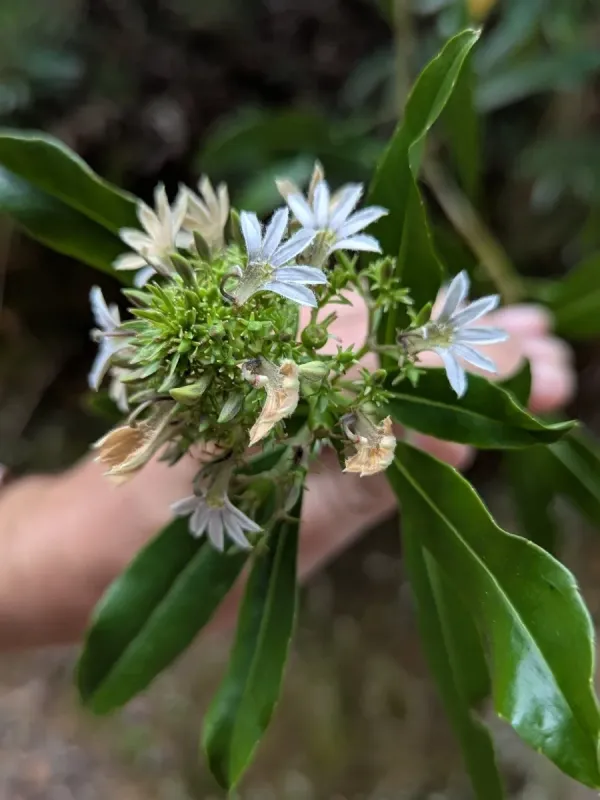
Description
Growing requirements
Scaevola saligna, commonly known as the willow-leaf scaevola, belongs to the Goodeniaceae family. It is a perennial herbaceous plant or semi-shrub that originates from regions with mild to subtropical climates.
Botanically, this species is distinguished by its narrow, lanceolate leaves, which bear a strong resemblance to willow foliage, providing the plant with its specific epithet. It typically develops into a spreading or mound-forming habit.
Successful cultivation requires a well-drained, nutrient-rich soil medium with a neutral to slightly acidic pH level. Soil drainage is critical, as the roots are highly susceptible to rot if water stagnation occurs.
The plant thrives in full sun exposure. While it can adapt to partial shade, consistent bright light is necessary to maintain compact growth and ensure maximum floral production throughout the season.
Regarding climate, Scaevola saligna prefers warm conditions and is intolerant to frost. In temperate zones, it is typically treated as an annual or overwintered in frost-free indoor environments.
Main diseases and pests
The primary threats to Scaevola saligna include fungal pathogens such as root rot, which are often caused by overwatering or poor environmental conditions.
In terms of pests, plants can be susceptible to aphids, whiteflies, and spider mites, especially in greenhouse settings where air movement might be restricted.
Integrated pest management strategies, including the use of targeted insecticides or biological control agents, should be employed at the first sign of an infestation.
Maintaining adequate plant spacing is a crucial prophylactic measure to improve airflow and reduce the humidity levels that favor fungal spore germination.
Regular maintenance, including the removal of dead foliage and spent blooms, helps keep the plant vigorous and reduces the likelihood of localized pest or disease outbreaks.