
Scaevola phlebopetala
Scaevola phlebopetala F. Muell.
Description
Sowing dates
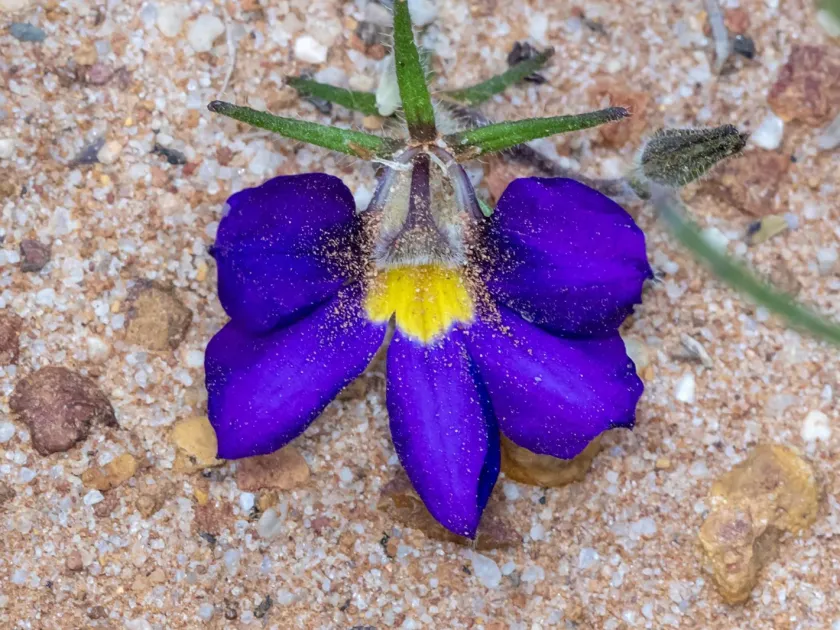
Scaevola phlebopetala is a distinct member of the Goodeniaceae family, native to the arid and semi-arid regions of Australia, known for its unique veined floral structure.
Propagation is typically carried out via seeds sown in early spring, requiring high-quality, well-draining substrate and warm conditions to trigger successful germination.
Seeds may benefit from light scarification or specialized pre-treatment to mimic natural conditions, significantly improving the overall germination percentage for gardeners.
Seedlings should be kept in a bright, airy environment and moved into individual pots as soon as they develop their true leaf sets to ensure healthy root development.
Careful hardening off is essential before transplanting the young plants outdoors, as the species needs to adapt slowly to the intensity of direct natural sunlight.
Growing requirements
The primary environmental requirement for Scaevola phlebopetala is intense solar radiation; it thrives in full sun, which is essential for developing its dense, spreading habit.
The soil must be exceptionally well-drained, ideally sandy or gravelly, to prevent the moisture accumulation that leads to root rot, the most common failure in its cultivation.
While known for its drought tolerance once established, the plant requires consistent, light irrigation during the active flowering season to maintain its decorative appearance.
Soil pH should ideally be maintained between slightly acidic and neutral, avoiding heavy liming which can interfere with nutrient uptake for this specific species.
It performs best in low-humidity environments, making it a suitable candidate for xeriscaping or rock gardens where airflow is naturally high and constant.
Main diseases and pests
Root pathogens represent the most significant threat to the survival of the plant, often resulting from improper watering schedules or poorly formulated, heavy growing media.
Pests like aphids and spider mites may occasionally infest the plants, particularly if grown in confined or poorly ventilated conditions where humidity levels fluctuate.
Integrated pest management, including regular inspection and the use of insecticidal soaps, is the preferred method for managing infestations without harming the plant.
Maintaining a clean cultivation area and removing any withered leaves or debris helps to discourage fungal colonization and promotes overall plant longevity.
Effective drainage management is the best prophylactic measure against the wide range of soil-borne diseases that can affect the health of the Scaevola genus.