
Sansevieria singularis
Sansevieria singularis N. E. Br.
Description
Growing requirements
Sansevieria singularis is a distinctive perennial succulent belonging to the Asparagaceae family. Native to the arid regions of Central Africa, this plant has evolved to thrive in nutrient-poor, rocky substrates, making it an exceptionally hardy species for indoor cultivation.
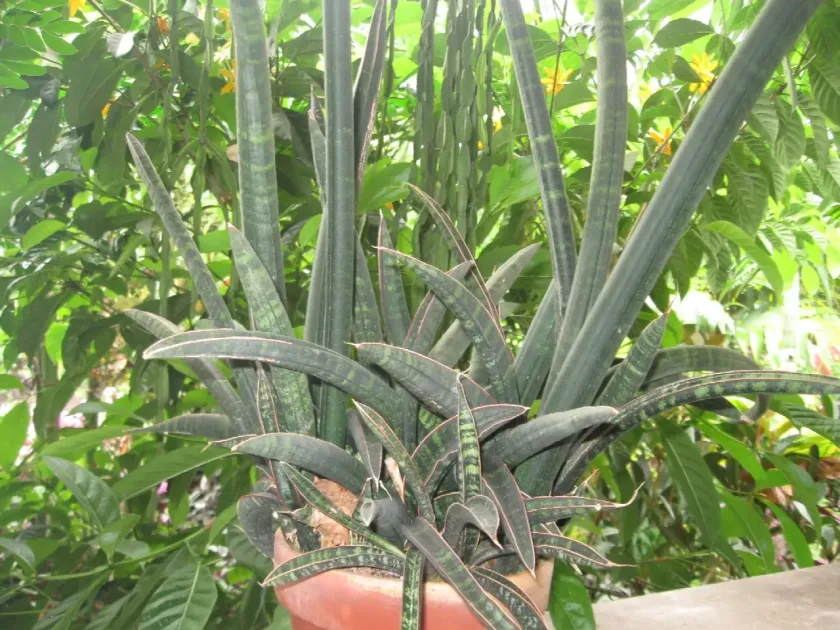
Botanically, it is defined by its solitary, stiff, cylindrical leaves that grow vertically from a rhizome. The foliage is deep green, often featuring subtle horizontal bands, which gives the plant a minimalist, architectural appearance suitable for modern landscapes.
This species is highly adaptable to various lighting conditions, though it flourishes best in bright, indirect light. While it can survive in darker corners, the growth rate will naturally decrease, and the leaf color may become less vibrant without sufficient photosynthesis.
Regarding soil, Sansevieria singularis requires a well-draining, gritty medium. A mixture specifically formulated for cacti and succulents is ideal, as it prevents root suffocation and promotes the necessary airflow required for the plant's health.
Temperature management is straightforward: the plant prefers warmth ranging between 20°C and 25°C. It is crucial to ensure that temperatures do not drop below 10-12°C during winter months, as prolonged exposure to cold can compromise the plant's internal water balance.
Main diseases and pests
Overwatering is the primary threat to the health of Sansevieria singularis. Excess moisture in the soil quickly leads to root rot, causing the base of the leaves to turn mushy and dark, eventually leading to the death of the entire plant if left unaddressed.
Pests such as mealybugs and spider mites are common adversaries. These pests typically congregate in the crevices of the plant, where they extract sap, causing stunting and visible yellowing of the otherwise dark green leaf tissues.
Prevention relies on rigorous irrigation discipline. The potting mix must be allowed to dry out completely before any water is introduced. Furthermore, providing good ventilation around the plant reduces the risk of fungal proliferation and insect infestation.
Should an infestation occur, systemic insecticides or horticultural soaps are recommended to eliminate the pests. It is essential to apply these treatments consistently to disrupt the life cycle of the insects and ensure full recovery of the plant's vitality.
Finally, keeping the foliage clean from dust is a simple but effective practice. Wiping the leaves with a soft, damp cloth every few weeks aids in efficient respiration and ensures the plant remains free from subtle environmental stressors.