
Sansevieria ehrenbergii
Sansevieria ehrenbergii Schweinf. ex Baker
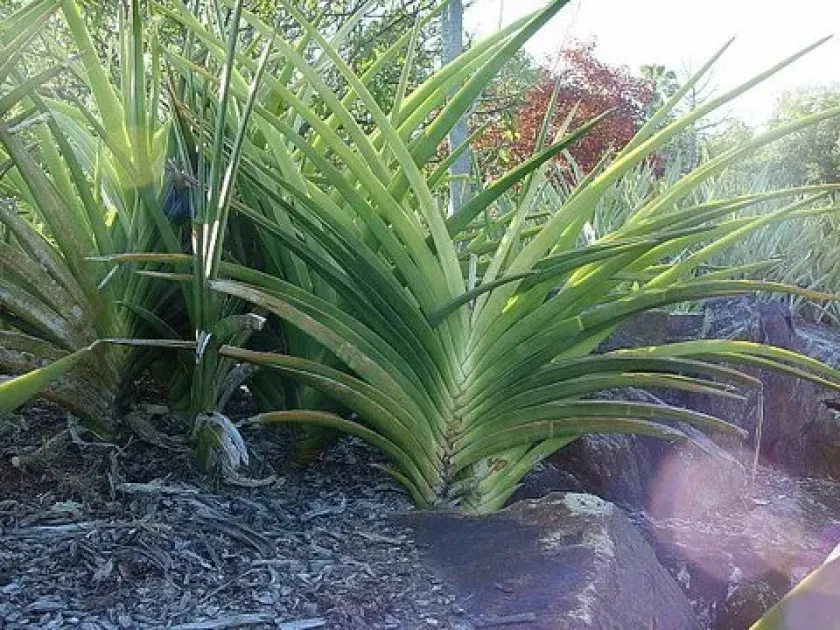
Description
Growing requirements
Sansevieria ehrenbergii is a perennial succulent plant belonging to the Asparagaceae family. It is native to the arid and semi-arid regions of East Africa and the Arabian Peninsula.
The plant thrives in intense light conditions, preferring direct sunlight to maintain the robustness of its characteristic thick, architectural leaf structure.
Regarding soil requirements, it demands highly porous, well-draining sandy soils that prevent any moisture accumulation around the succulent root system.
Watering management is critical; the plant should only be watered when the substrate is entirely dry, as it is exceptionally prone to root rot in moist conditions.
Growth rates are characteristically slow, requiring long-term maintenance cycles and patience, with vegetative propagation through rhizome division being the preferred method.
Yield
The primary agricultural utility of Sansevieria ehrenbergii lies in its leaves, which are rich in high-quality, durable fibers used in traditional cordage and specialty textile production.
Recent research highlights the plant as a potential source of medicinal compounds, specifically anti-inflammatory and antiseptic agents extracted from its dense foliage.
Harvesting involves the selective cutting of mature, full-sized leaves to optimize fiber quality while allowing the base of the plant to continue productive growth.
Fertilization should be handled with care, using mineral-based formulas low in nitrogen to avoid succulent tissue rot while promoting fiber strength.
Due to its resilience, the crop is suitable for low-input agricultural models, making it an economically viable option for arid land management and biomass production.
Main diseases and pests
Root rot, caused by fungal pathogens such as Pythium or Phytophthora, remains the most significant threat, usually initiated by poor drainage or excessive irrigation.
Mealybugs are the most common pests that infest the leaf axils, causing significant damage by sap-sucking and creating conditions for secondary bacterial infections.
Scale insects pose a persistent danger, forming dense layers on the epidermis of the leaves, which stunts growth and reduces the overall yield of fiber.
Spider mites can become problematic in dry, hot environments with poor airflow, causing discoloration and eventual tissue necrosis if left untreated.
Integrated Pest Management (IPM) practices, including mechanical cleaning and systemic biological control, are recommended to preserve the integrity of the harvestable leaves.