
Sansevieria aethiopica hybrid
Sansevieria aethiopica Thunb x S. canaliculata Carrière
Description
Growing requirements
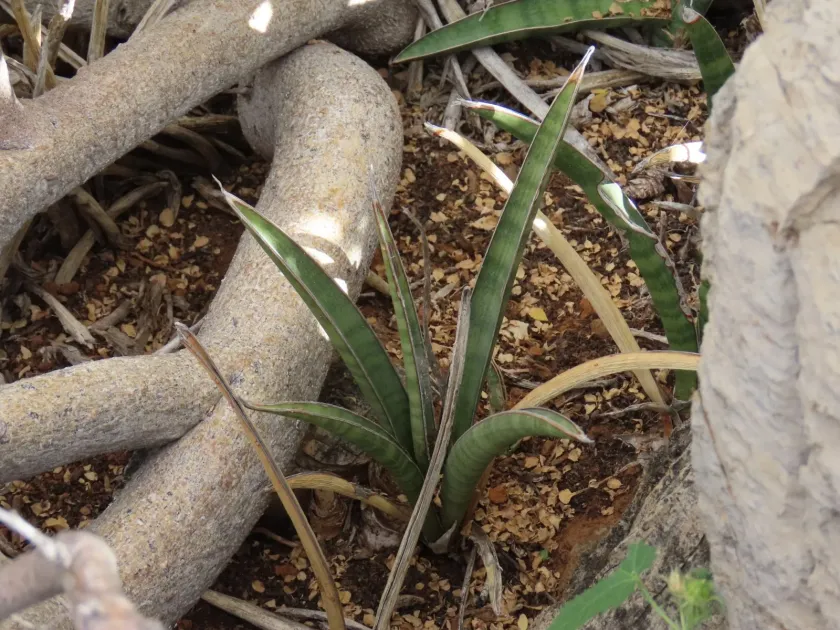
The Sansevieria aethiopica hybrid (Sansevieria aethiopica x S. canaliculata) is a succulent perennial plant belonging to the Asparagaceae family. This specific cross-breeding combines the robust, rosette-forming nature of S. aethiopica with the distinctive, elongated cylindrical leaf structure of S. canaliculata.
Native to the arid regions of Southern Africa, this crop has evolved to thrive in nutrient-poor, rocky substrates. For optimal development in an agricultural or commercial greenhouse setting, the plant requires well-aerated, sandy-loam soil mixtures to ensure efficient water drainage and aeration.
Regarding climate requirements, the hybrid thrives in temperatures ranging from 20°C to 30°C. It is highly intolerant of waterlogged soil conditions, which can quickly lead to anaerobic respiration in the root zone and subsequent tissue necrosis in the underground rhizomes.
Light exposure is a critical factor in maintaining the plant's morphological integrity. It performs best under high-intensity, filtered light conditions, which promote the synthesis of chlorophyll and maintain the characteristic structural rigidity of the succulent foliage throughout the growing season.
Agrotechnical management involves a cycle of infrequent but deep watering, allowing the substrate to achieve near-total desiccation between irrigation events. This mimics the environmental rhythms of its native habitat, fostering healthy rhizome development and preventing fungal growth.
Main diseases and pests
The primary threats to this crop are soil-borne pathogens, specifically fungal genera such as Pythium and Rhizoctonia, which attack the root systems if the growing medium remains persistently moist. Effective prevention relies on strict irrigation scheduling and the use of sterile growing media.
Pest management focuses on monitoring for mealybugs (Pseudococcidae) and spider mites, which can proliferate rapidly in low-humidity greenhouse environments. These pests penetrate the leaf epidermis, causing chlorosis and weakening the plant's natural immune response to environmental stressors.